
No products in the cart.
Return To Shop
Whey Protein vs Desi Food for Muscle Gain: What Actually Works?
Muscle gain has become one of the most discussed fitness goals in South Asia. Walk into any gym and you’ll hear debates about supplements, especially whey protein, versus traditional desi foods. Some swear by scoops and shakers, while others insist that dal, eggs, and chicken are more than enough.
So what really works for building muscle? Is whey protein superior, or can desi food deliver the same results?
Let’s break it down scientifically, culturally, and practically.
The Influence of Western Fitness Trends
Much of today’s supplement culture comes from Western fitness marketing. Whey protein gained popularity because it was convenient, fast-digesting, and easy to standardize in research studies. Over time, it became synonymous with muscle gain.
However, South Asian diets evolved very differently. Desi food has always been protein-inclusive through lentils, dairy, eggs, and meat just not packaged as “fitness nutrition.” The real issue isn’t tradition versus modernity; it’s whether your diet meets muscle-building requirements.

Understanding Muscle Gain: Protein, Calories, and Consistency
Muscle growth happens when three conditions are met consistently:
- Adequate protein intake
- A slight calorie surplus
- Progressive resistance training
Protein provides the building blocks (amino acids), calories fuel workouts and recovery, and training provides the stimulus. Whether protein comes from whey protein or desi food matters less than whether these conditions are fulfilled daily.
How Much Protein Do You Actually Need for Muscle Gain?
For most people aiming to build muscle, protein needs range between 1.6 — 2.2 grams per kg of body weight per day. For example, a 70 kg individual would need roughly 110–150 grams of protein daily.
This requirement can be fulfilled through desi food, whey protein, or a combination of both. While whole foods build a strong nutritional base, supplements like high-protein whey-based formulas can improve practicality and consistency especially for hard gainers or busy gym-goers. Products such as MuscleMeds Carnivor Shred help bridge protein gaps when meeting daily targets through meals alone becomes difficult.
The Lactose Tolerance Issue in South Asian Diets
Many South Asians have some level of lactose intolerance. While whey protein isolate contains minimal lactose, whey concentrate and excessive dairy intake may cause bloating or discomfort for some individuals.
Desi diets often include fermented or cooked dairy forms like yogurt and paneer, which are easier to digest. Choosing the right protein source should always consider personal digestion, not trends.
The Power of Desi Protein Sources
Traditional desi foods are nutritionally dense and sustainable long-term.
Moong Sprouts and Mixed Dals
Dals provide plant-based protein along with fiber, minerals, and slow-digesting carbs. While they lack a complete amino acid profile individually, combining dals with grains improves protein quality.
Homemade Paneer
Paneer is rich in casein protein, which digests slowly and supports muscle recovery over extended periods. It works especially well in evening or dinner meals.
Chana & Chickpea
Chickpeas offer protein, fiber, and sustained energy. They are ideal for people aiming for lean muscle gain without excessive calories from fats.
Egg
Eggs are one of the most complete natural protein sources. The combination of egg whites and yolks provides high-quality protein, fats, and micronutrients crucial for hormone balance.
Chicken
Chicken breast remains one of the best desi-friendly lean protein sources. It’s high in protein, low in fat, and easy to portion according to daily requirements.
What Is Whey Protein and Why Gym-Goers Use It?
Whey protein is a dairy-derived supplement extracted during cheese production. Its popularity comes from its high leucine content, fast digestion, and convenience.
For gym-goers with busy schedules, whey protein offers a quick way to meet daily protein targets without cooking or chewing large meals.
Whey Protein Benefits for Muscle Growth
Whey protein supports muscle gain by:
- Delivering rapidly absorbed amino acids
- Stimulating muscle protein synthesis efficiently
- Supporting post-workout recovery
- Helping meet protein goals when appetite is low
Clear whey options, such as Sanaxium Nutrition Gold Clear Whey, are especially useful for individuals who prefer a lighter, juice-like protein source that digests easily after workouts.
However, whey protein does not build muscle on its own. It only works when combined with training and sufficient calories.
The Role of Digestibility and Timing
Timing and digestion are often overlooked. Whey protein digests quickly, making it ideal post-workout. Desi foods digest slower, providing prolonged amino acid release.
Both have advantages:
- Whey protein: fast, convenient, ideal after training
- Desi food: satiating, nutrient-dense, ideal for meals
Muscle gain improves when both digestion speed and total daily intake are optimized.
Whey Protein vs Desi Food for Muscle Gain: Head-to-Head Comparison
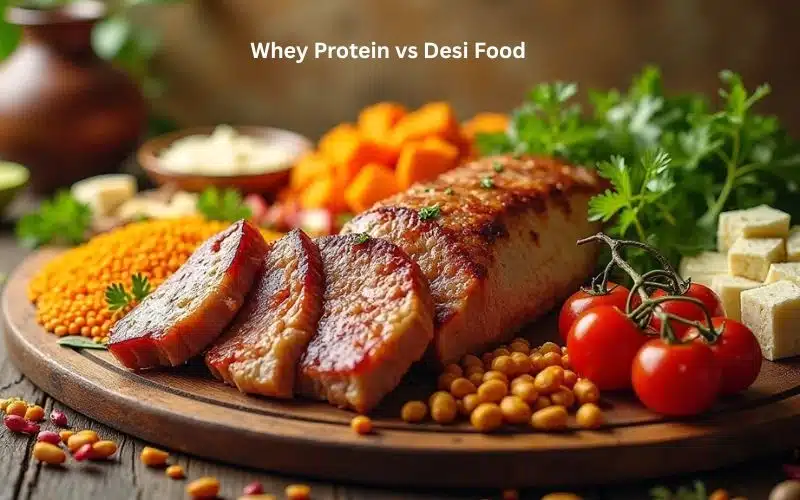
When comparing whey protein vs desi food for muscle gain, several practical differences emerge that influence results:
- Digestibility: Whey protein digests quickly, making it ideal post-workout, while desi food digests slower and supports prolonged nutrient release.
- Amino acid profile: Whey protein provides a complete amino acid spectrum, whereas desi food may require strategic combinations for completeness.
- Convenience: Whey protein is easier to consume, while desi meals need preparation and planning.
- Cost: Desi food is often more affordable long-term, while supplements involve upfront expense.
- Satiety: Desi food keeps you full longer, whereas whey protein is lighter and quicker to digest.
For individuals who struggle to meet calorie and protein targets through meals alone, mass gainer formulas can offer a practical bridge between food and supplementation. Products like Sanaxium Nutrition Premium Gold Mass Gainer combine protein with calories to support consistent muscle gain during high-volume training phases.
Ultimately, neither option is universally superior. The better choice depends on lifestyle, digestion, budget, and long-term consistency.
Can You Build Muscle Without Whey Protein?
Yes, absolutely. Many athletes build muscle using only whole foods. As long as protein intake, calories, and training are aligned, whey protein is optional not mandatory.
Who Should Prefer Whey Protein?
Whey protein may suit:
- Busy professionals
- Hard gainers struggling to meet protein needs
- People training early mornings
- Those needing quick post-workout nutrition
Who Should Rely More on Desi Food?
Desi food works well for:
- Individuals with digestive sensitivity
- People on a budget
- Those preferring natural, whole foods
- Long-term sustainable muscle gain
Best Approach: Combining Whey Protein with Desi Diet

The most effective strategy isn’t choosing sides. Combining whey protein with desi food creates balance.
For example:
- Whey protein post-workout
- Eggs or chicken at meals
pro - Dal and rice for sustained energy
- Paneer in the evening
This hybrid approach maximizes muscle gain while supporting digestion and consistency.
Common Myths About Whey Protein and Desi Diets
- Whey protein is not a steroid
- Desi food is not inferior for muscle gain
- Supplements don’t replace meals
- More protein isn’t always better
Muscle growth depends on structure, not extremes.
Let’s Eat Smart, Not Trendy
The debate around whey protein vs desi food for muscle gain often misses the bigger picture. Muscle is built through discipline, balanced nutrition, and patience not marketing claims. Whey protein is a tool. Desi food is a foundation. Use what fits your body, lifestyle, and goals. When nutrition becomes practical instead of trendy, results follow naturally.
If you decide to include whey protein as part of your plan, quality matters. At SportsOne, you’ll find authentic, gym-tested whey protein options that fit perfectly into a desi diet-based muscle plan. Explore trusted supplements, expert guidance, and genuine products at https://sportsone.com.pk/ to support your journey toward stronger, healthier muscle gains.
FAQs: Whey Protein vs Desi Food for Muscle Gain
Is whey protein better than desi food for muscle gain?
Whey protein digests faster and is convenient, while desi food provides sustained nutrition. For muscle gain, results depend on total protein intake, calories, and training consistency, not one source alone.
Can desi food alone build muscle without whey protein?
Yes, desi food can build muscle if protein needs are met through eggs, chicken, dals, and dairy. Whey protein only helps when food intake is insufficient or impractical.
Is whey protein safe for daily use in Pakistan?
High-quality whey protein is generally safe for daily use when taken within recommended limits. People with lactose sensitivity should choose whey isolate and avoid excessive intake without medical advice.
Which is more affordable for muscle gain: whey protein or desi food?
Desi food is usually more affordable long-term, while whey protein offers convenience. A balanced combination often provides the best cost-to-benefit ratio for consistent muscle gain.
Should beginners choose whey protein or desi food for muscle gain?
Beginners should prioritize desi food to build nutrition habits first. Whey protein can be added later for convenience, recovery, or when meeting daily protein targets becomes difficult.


About author

Related posts

For most healthy adults, collagen peptides are well tolerated. The side effects people actually report are mild: a feeling of fullness, bloating, an aftertaste or... Continue reading

The short answer: the best time to take collagen is whichever time you will repeat every single day. Research on hydrolysed collagen peptides has not... Continue reading

Neither is universally better. Marine collagen is often preferred for skin, hair and people who avoid beef, while bovine collagen is usually cheaper and offers... Continue reading

Collagen may help support joint comfort in some people, but the evidence is modest, results are slow, and it is not a substitute for medical... Continue reading

Most people notice their first change from collagen supplements after 4 to 8 weeks, with clearer skin and joint results building between 8 and 12... Continue reading
Add comment