
No products in the cart.
Return To Shop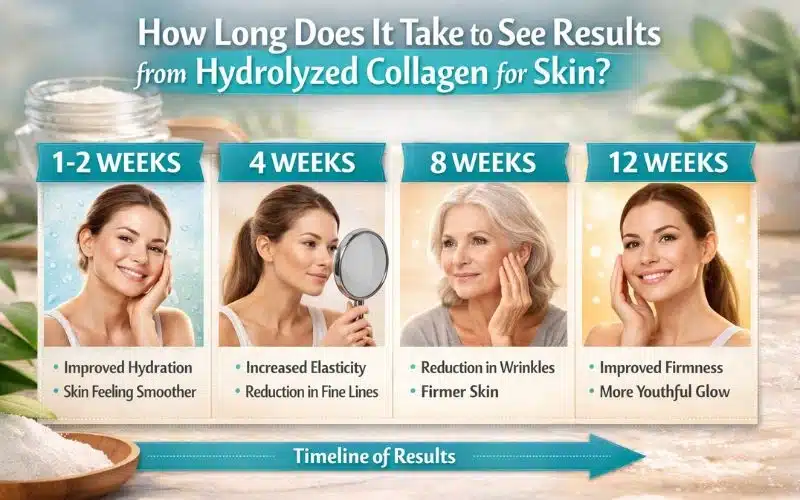
How Long Does It Take to See Results from Hydrolyzed Collagen for Skin
Collagen supplements have moved from niche wellness circles into mainstream nutrition conversations, and for good reason. But one question consistently sits at the top of every buyer’s mind before committing to a daily supplement routine: how long does it take to see results from hydrolyzed collagen for skin? The answer is not as simple as a single number, and the factors that influence your timeline are worth understanding before you form expectations , or give up too early because results seem slow.
What Hydrolyzed Collagen Actually Is and Why the Form Matters
Before diving into timelines, it helps to understand why hydrolyzed collagen behaves differently from regular collagen in the body. Native collagen molecules are large, tightly wound protein structures that the digestive system struggles to absorb efficiently. Hydrolysis breaks these chains down into shorter peptide fragments called collagen peptides, which are small enough to be absorbed through the intestinal wall and enter the bloodstream intact.
Once in circulation, these peptides are transported to skin fibroblasts , the cells responsible for producing collagen, elastin, and hyaluronic acid in the dermis. The peptides act as signalling molecules, stimulating fibroblasts to ramp up their own collagen synthesis. This is the mechanism that makes hydrolyzed collagen meaningfully different from simply eating more protein, and it is also why the quality and molecular weight of the hydrolysate affects how quickly results appear.
- Lower molecular weight peptides, typically under 5,000 daltons, absorb more efficiently than larger fragments
- Marine collagen peptides tend to have smaller molecular weights than bovine sources, potentially offering faster bioavailability
- The collagen peptide concentration per serving matters , most effective research doses fall between 2.5 and 10 grams daily
- Consistency of intake drives results far more than any single high dose

The Realistic Timeline:What to Expect Week by Week
Setting realistic expectations is the most important thing anyone starting hydrolyzed collagen can do for themselves. The skin is not like a muscle that responds to stimulus within days , it operates on a much slower biological clock, governed by the natural turnover rate of skin cells and the collagen synthesis cycle in the dermis.
The earliest changes that most people notice are not visible , they are tactile. Skin tends to feel slightly more hydrated and plump within the first two to four weeks of consistent supplementation. This is partly because collagen peptides stimulate hyaluronic acid production alongside collagen synthesis, improving the skin’s water-retention capacity at a cellular level. These changes are real, but they are subtle enough that people who are not paying close attention may miss them entirely in the early weeks.
- Weeks 1 to 4: improved skin hydration and a subtle plumping effect, particularly noticeable in dry or dehydrated skin types
- Weeks 4 to 8: some users report reduced dryness, early improvement in skin texture, and less visible fine lines under good lighting conditions
- Weeks 8 to 12: more consistent improvement in skin elasticity begins to emerge, with visible reduction in fine surface lines for many users
- Weeks 12 to 24: the most significant and visible changes in skin firmness, wrinkle depth, and overall skin quality occur in this range
The 12-week mark is where clinical studies most commonly measure outcomes, and the results at that point consistently show statistically significant improvements in skin elasticity, hydration, and the appearance of periorbital wrinkles , the fine lines around the eyes that are often the first to show collagen decline.
Why Some People See Results Faster Than Others
The timeline above represents an average, and individual variation is wide. Several factors genuinely shift where someone falls on that spectrum, and understanding them helps set a more personalised expectation rather than measuring progress against someone else’s results.
Age is the most significant variable. Younger skin already has a more active collagen synthesis cycle, so adding exogenous peptides to stimulate fibroblasts produces a faster and more pronounced response. Someone in their late twenties may notice texture and hydration improvements within four weeks, while someone in their fifties, whose fibroblast activity has naturally slowed, may need eight to twelve weeks before similar changes become visible.
Baseline skin condition also matters considerably. Skin that is significantly dehydrated, sun-damaged, or has experienced substantial collagen loss will show more dramatic improvement once supplementation takes effect , simply because there is more deficit to fill. Conversely, someone with already healthy, well-hydrated skin may notice subtler changes even though the biological response is equally active.
- Sun exposure history: chronic UV damage degrades collagen faster and makes it harder for new synthesis to outpace breakdown
- Smoking and alcohol consumption slow collagen synthesis and accelerate breakdown, extending the visible results timeline
- Dietary vitamin C intake is critical , collagen synthesis requires vitamin C as a cofactor, and deficiency will blunt results regardless of supplementation dose
- Sleep quality directly affects skin cell turnover and repair, influencing how quickly supplementation translates to visible changes
The Role of Vitamin C in Accelerating Collagen Results
One of the most actionable things anyone can do to see faster results from hydrolyzed collagen is to ensure consistent vitamin C intake alongside supplementation. This is not a marketing claim , it is biochemistry. Vitamin C is an essential cofactor for two enzymes, prolyl hydroxylase and lysyl hydroxylase, that are required to stabilise the collagen triple helix structure during synthesis. Without adequate vitamin C, procollagen cannot be converted into stable, functional collagen regardless of how much substrate is available.
Why vitamin C supplements are important for adult health goes beyond immune support , it directly intersects with skin quality and collagen production. Combining hydrolyzed collagen with a vitamin C supplement or vitamin C-rich foods creates a synergistic effect where the peptides provide the stimulus and the raw material signal while vitamin C ensures the synthesis process can actually be completed efficiently.

Collagen Types and Their Specific Skin Benefits
Not all collagen supplements are targeting the same outcome, and understanding the different collagen types helps explain why some products produce faster skin results than others. The skin is primarily composed of type I and type III collagen, both of which are abundant in marine and bovine collagen sources.
Type I collagen is the most structurally dominant in the dermis and the primary target for anti-ageing applications , it provides tensile strength and the firm, taut appearance of healthy skin. Type III collagen is associated with skin elasticity and the flexible, resilient quality that allows skin to spring back after being stretched or pressed. Most high-quality collagen supplements designed for skin benefit target both types simultaneously.
- Marine collagen: predominantly type I, highest bioavailability, particularly effective for fine lines and skin hydration
- Bovine collagen: rich in both type I and type III, well-studied for skin elasticity and joint support simultaneously
- Collagen peptides from eggshell membrane: contain type I, III, and V collagen along with naturally occurring hyaluronic acid
- Collagen blends: combine multiple sources to cover the full spectrum of structural skin proteins
What Happens to Skin When You Stop Taking Collagen
This is a question that deserves a direct answer because it affects how people approach supplementation long-term. When you discontinue hydrolyzed collagen after a period of consistent use, the fibroblast stimulation that was maintaining elevated collagen synthesis rates gradually returns to baseline. The skin does not immediately revert to its pre-supplementation state , the new collagen that was synthesised during the supplementation period does not disappear overnight.
However, the natural collagen degradation process, driven by age, UV exposure, and other environmental factors, continues uninterrupted. Without ongoing stimulation from collagen peptides, the balance shifts back toward net collagen loss rather than net collagen synthesis.
Choosing the Right Hydrolyzed Collagen Product for Skin Results
With the supplement market saturated with collagen options at every price point, knowing what to look for in a product becomes practically important. The difference between a supplement that produces visible skin results and one that does not often comes down to a few key quality markers.
- Molecular weight of the peptides: look for products specifying low-molecular-weight peptides, ideally under 5,000 daltons, for optimal absorption
- Dose per serving: clinical studies showing skin benefits use 2.5 to 10 grams daily , single-gram doses are unlikely to produce meaningful results
- Third-party testing or certifications: ensures the collagen content matches label claims and the product is free from contaminants
- Added cofactors: products that include vitamin C, hyaluronic acid, or zinc alongside collagen peptides provide a more complete approach to skin support

Marine collagen products specifically formulated for skin represent one of the most targeted options available, given marine collagen’s superior bioavailability and its natural concentration of type I collagen , the dominant structural protein in the skin’s dermis.
Building a Complete Skin-Supportive Routine Around Collagen
Hydrolyzed collagen works best as part of a broader skin health strategy rather than in isolation. The supplement addresses collagen synthesis from the inside, but the rate at which results appear is heavily influenced by what else is happening in the body , dietary quality, hydration status, sleep, sun protection, and micronutrient availability all interact with collagen supplementation in ways that either amplify or blunt its effects.Why water intake matters for overall health extends directly to skin quality , dehydrated skin shows less response to collagen supplementation because the plumping and hydration effects of collagen-stimulated hyaluronic acid production require adequate water availability to express themselves visibly. Pairing consistent hydration with daily collagen supplementation is one of the simplest ways to accelerate the timeline and make results more apparent earlier in the process.


About author

Related posts

For most healthy adults, collagen peptides are well tolerated. The side effects people actually report are mild: a feeling of fullness, bloating, an aftertaste or... Continue reading

The short answer: the best time to take collagen is whichever time you will repeat every single day. Research on hydrolysed collagen peptides has not... Continue reading
Neither is universally better. Marine collagen is often preferred for skin, hair and people who avoid beef, while bovine collagen is usually cheaper and offers... Continue reading

Collagen may help support joint comfort in some people, but the evidence is modest, results are slow, and it is not a substitute for medical... Continue reading
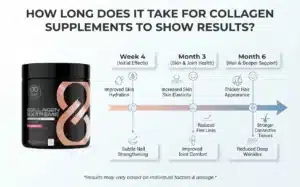
Most people notice their first change from collagen supplements after 4 to 8 weeks, with clearer skin and joint results building between 8 and 12... Continue reading
Add comment