
No products in the cart.
Return To Shop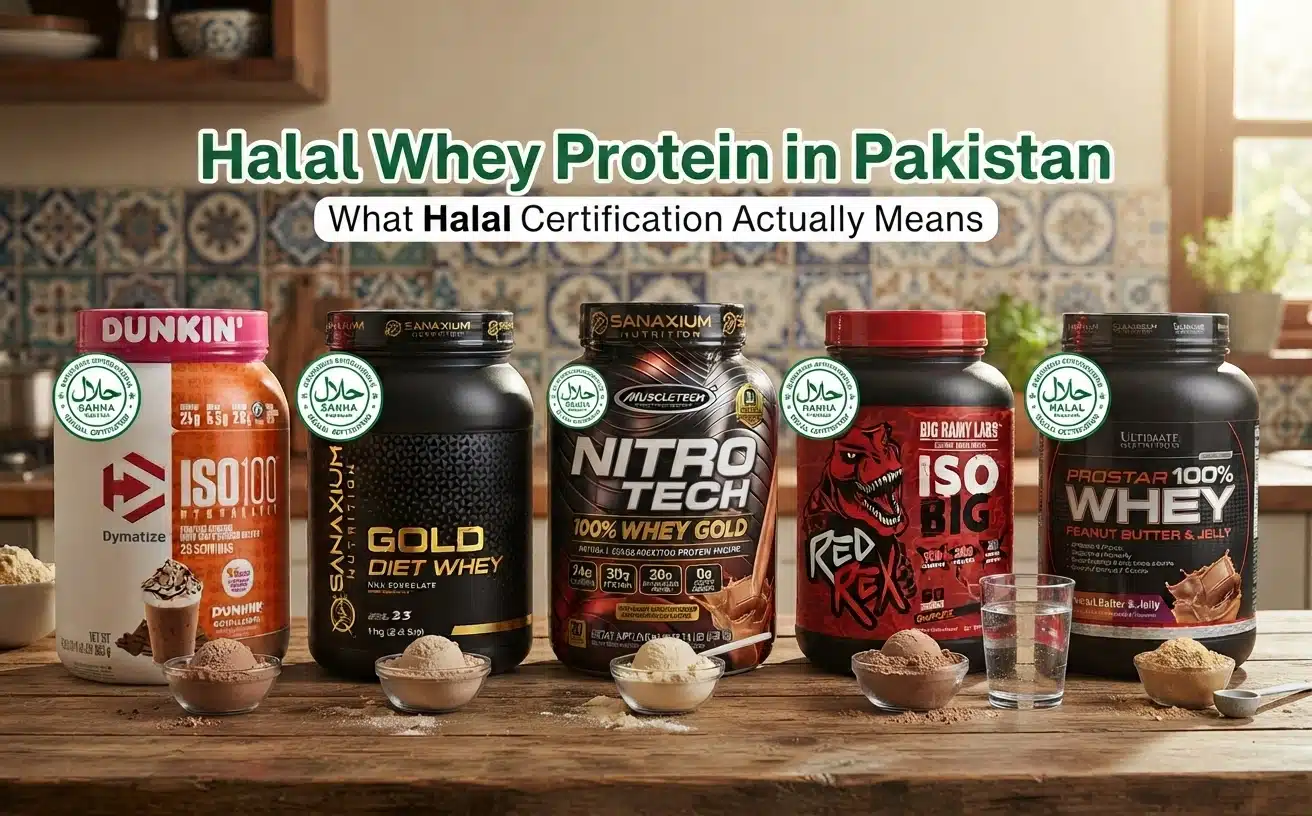
Halal Whey Protein in Pakistan: What Halal Certification Actually Means
If you’ve ever stood in front of a supplement shelf and wondered, “Is whey protein halal?” you’re not alone. This question concerns many Pakistani gym-goers because most whey protein brands sold here come from overseas, while only some carry recognized halal certification. Choosing halal whey protein in Pakistan requires more than simply looking for the word “halal” on a label. You also need to understand what the certification covers and how it confirms the product’s ingredients and manufacturing process.
This guide breaks down what halal certification means for protein supplements, why it matters more than most buyers realize, and how to tell real halal certified supplements apart from products that simply claim to be.
Is Whey Protein Halal? The Short Answer
Whey comes from dairy, so the whey itself isn’t inherently haram. The concern lies in the ingredients manufacturers add during processing. Flavoring agents, emulsifiers, and enzyme-based processing aids may come from animal sources, including gelatin or enzymes linked to non-halal slaughter practices. As a result, the same whey protein formula may qualify as halal in one batch but raise concerns in another, depending on the ingredient suppliers and manufacturing facility.
If you’re new to whey processing, our whey protein for beginners guide explains how manufacturers turn raw milk into the protein powder you add to your shaker.
What Does “Halal Certified” Actually Mean?
Halal certification isn’t just a marketing sticker. An accredited certification body conducts a formal audit to verify whether a whey protein meets halal requirements. The certification authority checks:
- The source of the milk and whey used
- Every flavoring, sweetener, and processing aid in the formula
- The equipment and facility used for manufacturing (to rule out cross-contamination with non-halal ingredients)
- The supply chain, from raw material sourcing to final packaging
A product is only as halal as its weakest ingredient. That’s why two whey powders with near-identical nutrition labels can have completely different halal status: one uses a certified emulsifier, the other doesn’t.
Why Halal Certification Matters for Whey Protein in Pakistan
For the vast majority of buyers in Pakistan, halal compliance isn’t optional; it’s a baseline requirement before anything else, including price or flavor. Yet many imported whey brands sold locally target markets where halal certification isn’t a priority, so manufacturers may not formulate or certify them specifically for Pakistani or broader Muslim consumers. That gap is exactly why questions like “is whey protein halal” trend so heavily in local searches buyers are trying to fill in information that international brands don’t provide.
This is also where local sourcing and distribution matter. Our imported proteins in Pakistan breakdown covers how supplements actually reach Pakistani shelves, and why the distributor matters just as much as the brand.
SportsOne: Halal-Certified Since 2002
This is where SportsOne stands apart from most competitors in the local market. We’ve held halal certification since 2002 not as a recent rebranding move, but as a standard we built the business around from day one. Every whey protein we distribute is checked against that standard before it reaches our shelves, and we operate as an authorized halal-certified distributor of food supplements and proteins, which means the certification isn’t just claimed, it’s documented and traceable.
That two-decade track record is rare in an industry where “halal” is often added to packaging without any audit behind it. If halal compliance is non-negotiable for you, working with a distributor whose entire authorization is built around it removes the guesswork.
Common Ingredients That Can Make Whey Protein Non-Halal
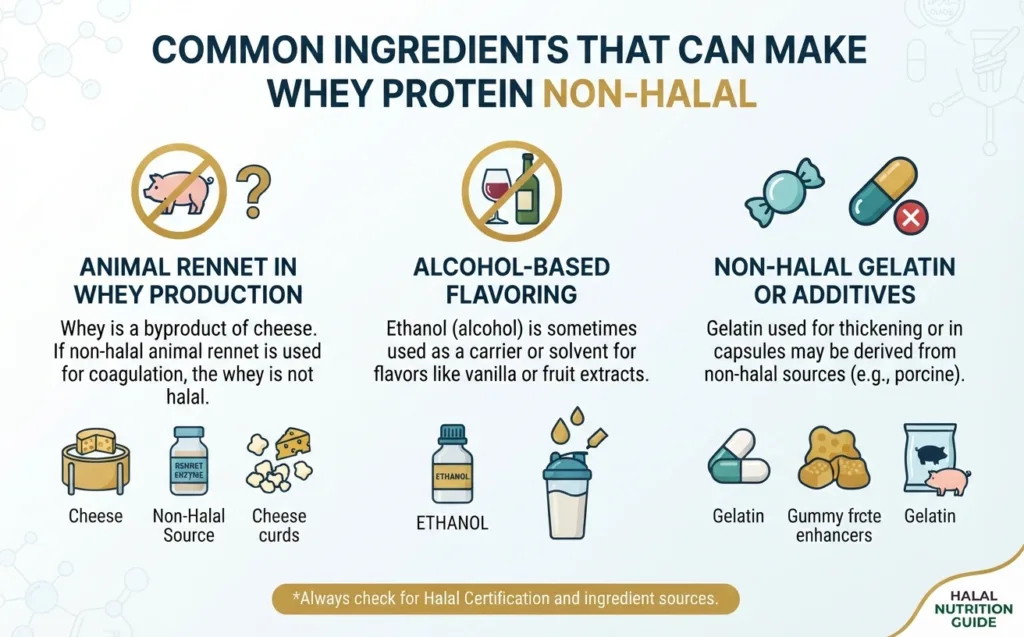
Even well-known international whey brands can fail halal standards because of what’s mixed in, not the whey itself. Watch out for:
- Gelatin-based capsules or thickeners often derived from non-halal-slaughtered animals
- L-cysteine an amino acid sometimes sourced from animal hair or feathers
- Animal-derived enzymes used in flavor processing
- Alcohol-based flavor extracts used in some artificial flavorings
- Cross-contamination on shared manufacturing lines with non-halal products
None of these will necessarily show up as obvious red flags on a label which is exactly why certification, not label-reading alone, is the reliable check.
How to Choose Genuine Halal Whey Protein in Pakistan
A few practical steps before you buy:
- Look for the certification body’s logo and license number, not just the word “halal” printed on the pack.
- Buy from an authorized distributor rather than unverified resellers, since certification can be batch-specific.
- Cross-check the batch with the certifying authority’s public database when available.
- Start with beginner-friendly basics if you’re new to supplementation. Our whey protein concentrate guide is a good starting point for understanding formulation differences.
- Compare options using a buyer’s guide to the best whey protein in Pakistan before settling on a brand.
If you’re also supplementing with creatine, the same certification logic applies see our halal creatine guide for Pakistan for a category-specific breakdown, and our broader halal supplement guide for Pakistani consumers for how this applies across your entire supplement stack.
Once you know what to check for, browse our protein supplements range every product listed has been vetted under our halal-certified sourcing standard.
Frequently Asked Questions
Is all whey protein halal by default?
No. Whey itself comes from milk, which is halal, but processing aids, flavoring agents, and emulsifiers added afterward may not be. A product is only reliably halal if it carries verified certification covering the full ingredient list and manufacturing process, not just the base whey.
How can I verify a whey protein’s halal certification is real?
Check for the certifying body’s name, logo, and license number on the packaging, then cross-reference it with the certifier’s official records if available. Buying only from authorized distributors also reduces the risk of counterfeit or unverified halal claims reaching you.
Why do so few whey protein brands carry proper halal certification?
Most international whey brands are formulated for markets where halal status isn’t a manufacturing requirement, so certifying an existing formula after the fact is costly and complex. Brands built or distributed specifically for Muslim-majority markets, like SportsOne since 2002, are the exception rather than the rule.
Does halal certification affect the taste or quality of whey protein?
No, certification only governs sourcing, ingredients, and processing standards, not flavor or nutritional performance. A halal-certified whey protein can match or exceed the taste and macros of any non-certified equivalent, since certification is a compliance check, not a formulation constraint.
Is halal whey protein more expensive than regular whey protein?
Not necessarily. Pricing depends more on brand, protein type, and import costs than on certification status. Halal-certified options from established distributors are often priced competitively with non-certified imports, since certification is a sourcing decision, not a premium ingredient.
SportsOne has been a halal-certified supplement distributor in Pakistan since 2002. Browse our full whey protein range to shop products vetted under that standard.
About author

Related posts

Walking into a supplement store or browsing one online for the first time can feel overwhelming. Rows of tubs promise faster muscle growth, better recovery,... Continue reading

If you’ve spent years hearing “you’re so thin, eat more” at every family gathering despite cleaning your plate at every meal, you already know the... Continue reading
If you have stood in front of a supplement shelf wondering whether to pick up a tub of whey protein or a bag of mass... Continue reading
If you have ever opened a tub of creatine monohydrate, you have probably seen the instructions telling you to “load” for the first week. It... Continue reading
The best time to take creatine is whenever you can take it consistently, every single day. If you want a more specific window, taking creatine... Continue reading
Add comment