
No products in the cart.
Return To Shop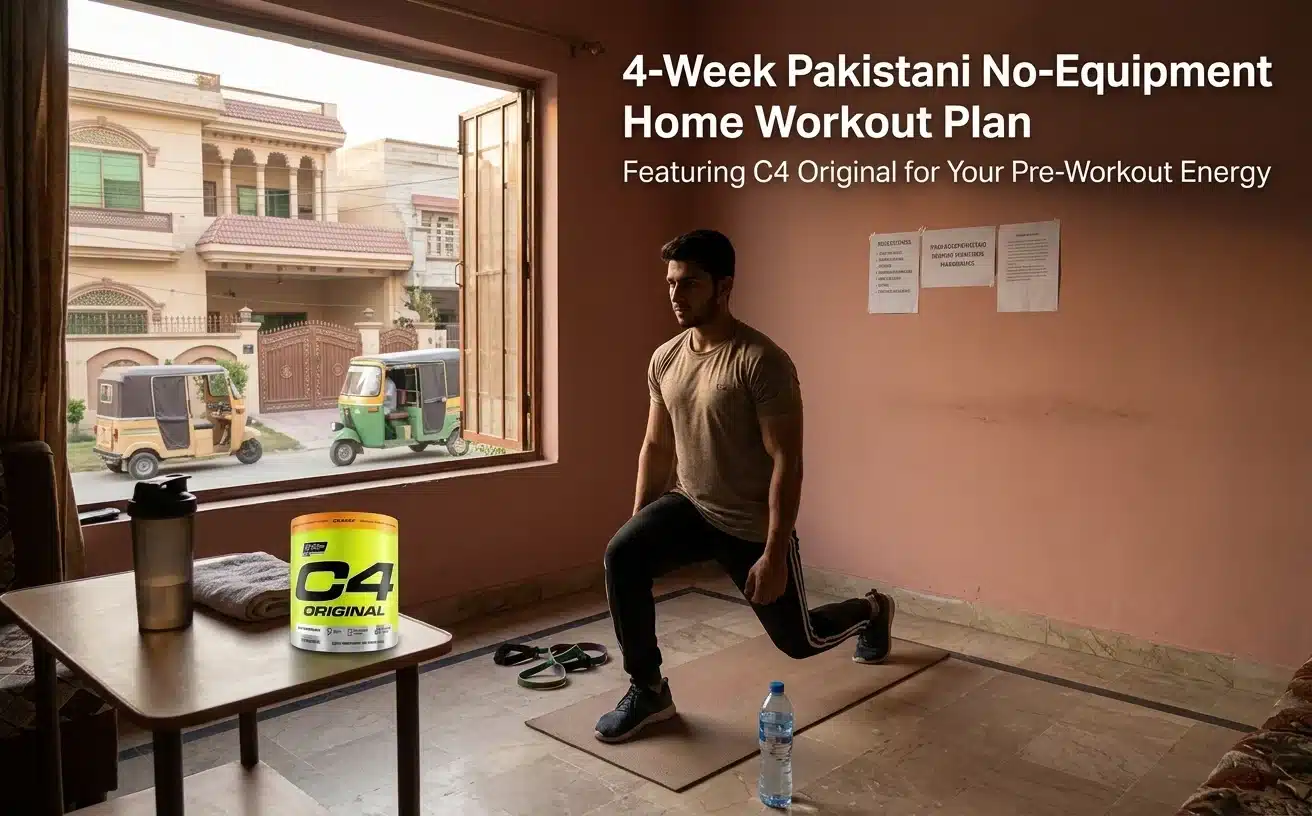
Home Workout Plan Pakistan: A 4 Week Plan With No Equipment (Plus What to Take)
You do not need a gym membership to get stronger. This home workout plan for Pakistan uses only your bodyweight, a chair, a wall and a sturdy table. It runs for four weeks, three sessions a week, and each week gets slightly harder so your body keeps adapting. Below the plan, you will also find an honest look at which supplements are worth buying when you train at home, and which are not.
If you want a wider exercise reference as you progress, read our list of all exercises for each body part.
Health note: speak to a doctor before starting a new exercise routine, especially if you are under 18, pregnant, injured or managing a medical condition.
A Four Week Bodyweight Workout Plan
This no equipment workout for beginners uses three full body sessions per week, such as Monday, Wednesday and Friday. In Pakistan’s hotter months, train in the early morning or later in the evening and keep water nearby. Warm up for five minutes with arm circles, hip circles, marching on the spot and ten slow bodyweight squats.

Do the exercises in each workout one after another, resting between sets as shown in the table below.
A Workout: Squat and Push
- Bodyweight squat
- Incline push-up (hands on a sturdy table or sofa edge)
- Glute bridge
- Plank
B Workout: Lunge and Hinge
- Reverse lunge
- Floor push-up (or from your knees)
- Single leg hip hinge (hold a wall for balance)
- Dead bug
C Workout: Strength and Core
- Tempo squat (three seconds down)
- Pike push-up (hips high, head towards the floor)
- Table row (lie under a heavy, stable table and pull your chest up, only if the table is solid)
- Side plank, each side
| Week | Sets per exercise | Reps or hold | Rest between sets | Focus |
| Week 1 | 2 | 8 to 10 reps, 20 second plank | 60 seconds | Clean technique |
| Week 2 | 3 | 8 to 10 reps, 25 second plank | 60 seconds | Add a third set |
| Week 3 | 3 | 10 to 12 reps, 30 second plank | 45 to 60 seconds | Slow the lowering phase |
| Week 4 | 3 to 4 | 12 to 15 reps, 40 second plank | 45 seconds | Harder variations |
Stop each set one or two reps before form breaks down. That keeps the effort high without risking your joints.
Progression Without Adding Weight
Muscle responds to harder work, and weight is only one way to make work harder. When you train without equipment, use these levers in order:
- More reps: add one or two reps per set each session until you reach the top of the range.
- Slower tempo: take three seconds to lower yourself in squats and push-ups.
- Pauses: hold the bottom of a squat or push-up for one to two seconds.
- Harder angles: move from incline push-ups to floor push-ups, then to feet-elevated push-ups.
- One leg at a time: move from squats to split squats, then to chair-assisted single leg work.
- Shorter rest: cut rest by 10 to 15 seconds while keeping the same reps.
An old backpack filled with books is also a free way to add load once bodyweight sets feel easy. For cardio variety between sessions, our jump rope exercise guide is a good next step.
What You Can Build at Home and What Needs a Gym
Bodyweight training is more capable than many people expect, but it has limits. Being honest about both saves you months of frustration.
| Goal | At home with no equipment | Gym or extra equipment helps |
| Beginner strength and muscle | Works well | Not required at first |
| Fitness and stamina | Works well | Optional |
| Fat loss support | Works with consistent meals and walking | Optional |
| Back and biceps size | Limited without a bar or bands | Pull-up bar, bands or cable machines |
| Heavy leg strength | Limited after the early months | Barbell squats and deadlifts |
Once your plan feels easy even with harder variations, resistance work becomes the natural upgrade. Our guide to resistance training for lean muscle explains how to make that move.
Which Supplements Are Worth It When Training at Home
Training is the engine and food is the fuel. Supplements are the smallest part of the picture, so treat them as convenience tools rather than shortcuts. For anyone searching for home gym supplements, this is the short, honest list.
- Whey protein (useful if your meals fall short): a scoop is a fast way to add protein when you are short on time. Compare options for whey protein in Pakistan, and read the label for protein per serving.
- Creatine monohydrate (optional, well researched): it may help you squeeze out extra reps in hard sets. See the range of the best creatine in Pakistan and our creatine benefits, usage and safety guide.
- Shaker bottle (practical): a leak-proof gym shaker bottle makes shakes and water breaks easier.
- Protein bar (convenient, not essential): something like the Applied Nutrition Protein Crunch Bar is handy on busy days, but do not use it to replace meals.
You can skip fat burners, “mass” blends and BCAAs for a beginner home plan. If your daily protein is covered, BCAAs add very little. When you do buy, choose authentic stock. Browse Imported Supplements in Pakistan from an authorised distributor with Halal-certified products and COD delivery.
Supplement Dosage, Timing and Safety at Home
Supplements work best when they are boring, consistent and matched to your meals. Use the guidance below as general information, and always follow the label of the specific product you buy.
Whey protein. Many people use one scoop, which commonly provides roughly 20 to 30 g of protein depending on the brand. You can take it after your workout, with breakfast or as an evening snack. The timing matters less than reaching your total daily protein. Mix it with water or milk and treat it as part of your protein total, not an extra on top of a full diet. If dairy upsets your stomach, an isolate may be easier to tolerate, although individual responses differ.
Creatine monohydrate. A common maintenance intake is 3 to 5 g per day, taken at any time with water or a meal. Taking it daily matters more than taking it before training. Creatine may cause small water weight gain in the first weeks, which is normal. Stay hydrated, which is especially relevant in Pakistan’s summer heat. People with kidney conditions should speak to a doctor before using creatine.
Safety first. Start with one product at a time so you can notice how you respond. Check the label for allergens such as milk, soy or nuts. Avoid stacking multiple stimulant products, and keep supplements away from children. If you are under 18, pregnant, breastfeeding or taking medicines, ask a doctor before starting any supplement. A supplement should never replace sleep, regular meals or medical advice. If you feel dizzy, develop a rash or have stomach pain, stop using the product and seek advice.
Finally, buy from a trusted seller. Counterfeit supplements are a real risk in the market, so check batch codes, sealed packaging and the seller’s authorisation before you pay. Keep your receipt, store powders in a cool, dry place and close the lid tightly after every use.
Protein Targets Without Gym-Level Volume
Home sessions are shorter and lighter than gym sessions, so your protein target does not need to be extreme. For most healthy adults who are training to build or keep muscle, a practical range is about 1.2 to 1.6 g of protein per kg of bodyweight per day. Someone weighing 70 kg would aim for roughly 84 to 112 g. Our guide on how much protein per day for a beginner goes deeper.
Spread protein across three or four meals rather than one large dinner. Approximate protein from common foods:
| Food | Approx. protein |
| 1 whole egg | 6 g |
| 100 g cooked chicken breast | about 30 g |
| 1 cup cooked daal (lentils) | about 18 g |
| 1 cup cooked chana | about 15 g |
| 1 glass milk (250 ml) | about 8 g |
| 1 scoop whey protein | roughly 20 to 30 g (check label) |
Values are approximate and vary by recipe and brand. On a budget, our budget gym supplements guide shows where to spend and where to save.
Cheap Home Equipment That Is Actually Worth Buying
You can follow this plan with nothing. If you want to upgrade later, these items give the most value for the least money.
- Resistance bands: cheap, portable and useful for rows, curls and assisted pull-ups. Worth it.
- Doorway pull-up bar: the best fix for the back training gap. Make sure it is rated for your weight and fitted properly.
- Skipping rope: great for cardio in a small space. Worth it.
- Exercise mat: protects wrists and knees on hard floors. Worth it if you have tiles.
- Adjustable dumbbells: useful later, but not needed in the first month.
Skip gadgets such as ab rollers, vibration belts and “toning” machines. They do not replace a progressive plan. If you enjoy the burpee style of training, see our guide to muscles worked by burpees.
FAQs
Can I build muscle with a home workout plan and no equipment?
Yes, beginners can build muscle with bodyweight training if sets are hard and progress each week. Use slower reps, harder variations and enough protein every day. Over time, you will need extra resistance, such as bands or a pull-up bar, to keep gaining.
How many days a week should I follow a bodyweight workout plan?
Three non-consecutive days a week suits most beginners, for example Monday, Wednesday and Friday. Rest days let muscles recover and adapt. Add a short walk on other days if you like, but avoid training the same movements on consecutive days, especially in your first month.
Do I need protein powder for a no equipment workout?
No. Food can cover your protein target with eggs, chicken, daal, chana and dahi. Protein powder is a convenient top-up when meals fall short, especially on busy days or while travelling. Check the label for protein per scoop and treat it as part of your daily total.
Is creatine worth taking if I only train at home?
Creatine monohydrate is one of the best studied supplements and may help you complete extra reps. A common intake is 3 to 5 g daily. It is optional, so build consistent training, sleep and meals first, and ask a doctor if you have a kidney condition.
How long until I see results from a home workout plan?
Most beginners notice better endurance and strength within two to four weeks. Visible changes usually take longer and depend on sleep, protein intake and consistency. Track your reps, holds and workout notes each week, not just the mirror, because numbers show progress sooner.
Disclaimer: this article is for general information only and is not medical advice. Consult a doctor or qualified professional before starting an exercise or supplement routine.

About author

Related posts

Clear whey looks like juice, drinks like juice and still delivers whey isolate protein. Regular whey looks and tastes like a milkshake. If you are... Continue reading

Search for drap registered supplements pakistan and you will find a lot of confident claims and very little explanation. Sellers say “DRAP approved” on banners,... Continue reading

Ramadan does not stop your training, but it squeezes everything into two short windows. Most gym members guess their way through the month: protein at... Continue reading

Yes, you can take whey protein in Ramadan, but only in your eating window. Whey protein in Ramadan works best when it is taken between... Continue reading

Most people guess their protein intake and guess wrong. This guide gives you protein in Pakistani foods per standard serving, from roti, daal and chicken... Continue reading
Add comment