
No products in the cart.
Return To Shop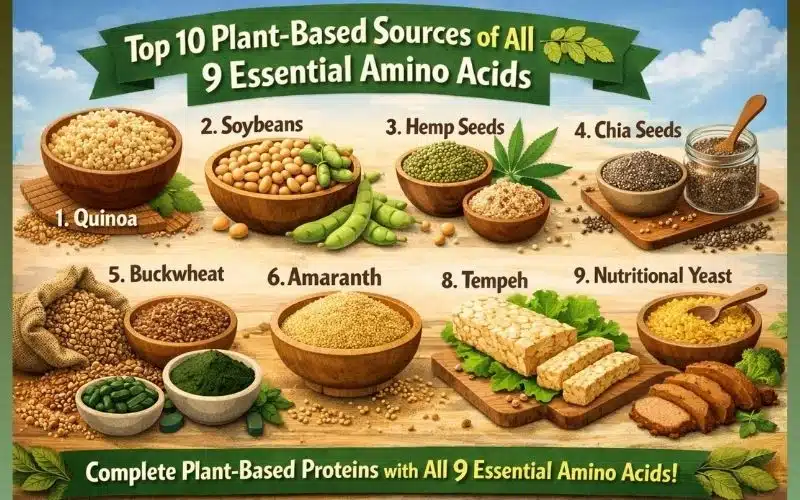
Top 10 Plant-Based Sources of All 9 Essential Amino Acids
One of the most persistent myths in nutrition is that getting a complete amino acid profile is impossible on a plant-based diet. That claim was never entirely true, and modern food science has thoroughly dismantled it. There are plant foods , and combinations of plant foods , that deliver all nine essential amino acids your body cannot produce on its own: histidine, isoleucine, leucine, lysine, methionine, phenylalanine, threonine, tryptophan, and valine. The key is knowing which sources are genuinely complete and which require a complementary pairing strategy to close the gaps.
Why Essential Amino Acids Matter for Muscle and Health
Essential amino acids (EAAs) are the nine amino acids the human body cannot synthesise from other compounds , they must come entirely from diet. Among them, leucine, isoleucine, and valine form the branched-chain amino acid (BCAA) group that drives muscle protein synthesis and provides fuel during training. Lysine and threonine support collagen and connective tissue formation. Tryptophan is the precursor to serotonin, affecting mood and sleep quality. Methionine is central to methylation processes and liver health. Getting all nine in adequate quantities is not just a bodybuilding concern , it is foundational to immune function, hormonal balance, recovery, and long-term structural health.
- Leucine: the primary trigger for the mTOR anabolic signalling pathway , without adequate leucine, muscle protein synthesis cannot fully activate
- Lysine: frequently the limiting amino acid in grain-heavy plant diets , the one most likely to be deficient if plant protein sources are not varied
- Methionine: often low in legumes , the main reason legume-plus-grain combinations create a more complete amino acid profile than either alone
- Tryptophan: required in smaller amounts but critical for neurological function , most whole plant proteins contain enough when total protein intake is sufficient
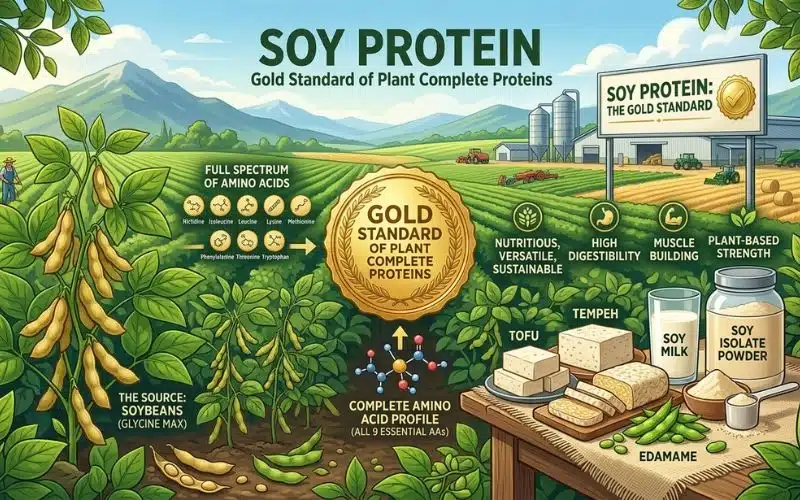
1. Soy Protein: The Gold Standard of Plant Complete Proteins
Soy is the most studied complete plant protein on the planet. It contains all nine essential amino acids in ratios close to those found in animal proteins and has a Protein Digestibility Corrected Amino Acid Score (PDCAAS) of 1.0 , the maximum achievable score, matching whey and egg. Edamame, tofu, tempeh, and soy milk are all practical whole-food sources. Soy protein isolate, derived from defatted soy flour, concentrates the protein content to 90 percent or above, making it the most efficient plant-based protein supplement available for athletes who cannot or choose not to use whey.
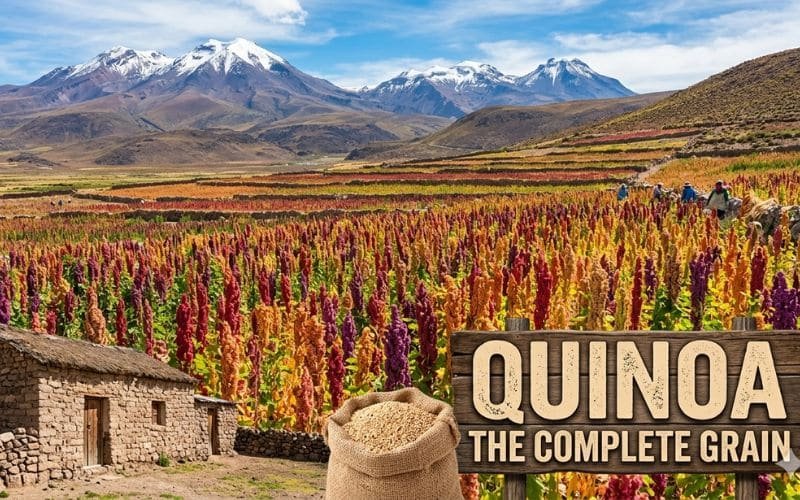
2. Quinoa: The Complete Grain
Quinoa is technically a seed but is used and nutritionally categorised as a grain. It is one of the few plant foods that naturally contains all nine essential amino acids without requiring any combination with other protein sources. Per 100g cooked, quinoa provides roughly 4.4g of protein with a notably higher lysine content than most grains , which is precisely the amino acid that grain proteins are typically weakest in. It is also gluten-free, making it a versatile carbohydrate and protein source for those with gluten sensitivity.
- Contains 8 grams of protein per cooked cup with a complete essential amino acid profile
- Lysine content approximately 300mg per 100g cooked , significantly higher than wheat or rice
- Also provides iron, magnesium, and phosphorus , micronutrients frequently low in plant-heavy diets
- Works as both a carbohydrate and protein source in a single food, useful for calorie-conscious plant-based athletes
3. Buckwheat: A Complete Protein Masquerading as a Grain
Despite its name, buckwheat contains no wheat and is not a grass , it is a flowering plant whose seeds are used as a grain substitute. Like quinoa, it provides all nine essential amino acids in a single food, with particularly strong levels of lysine and arginine.

Buckwheat groats, soba noodles, and buckwheat flour are all practical ways to integrate this food into a daily eating pattern. It has a moderate glycaemic index relative to most refined carbohydrates, making it suitable for sustained energy around training.For plant-based athletes specifically, buckwheat pairs well with legume-based dishes to further elevate the overall lysine and methionine content of a meal.
4. Hemp Seeds: Complete Protein with Bonus Omega-3s
Hemp seeds are one of the most nutritionally dense complete plant proteins available. Three tablespoons deliver approximately 10 grams of protein containing all nine essential amino acids, with a particularly good ratio of arginine to leucine that supports both cardiovascular health and muscle protein synthesis. What separates hemp from most other plant proteins is its simultaneous delivery of omega-3 fatty acids in the form of alpha-linolenic acid (ALA), which reduces systemic inflammation and supports recovery between training sessions.
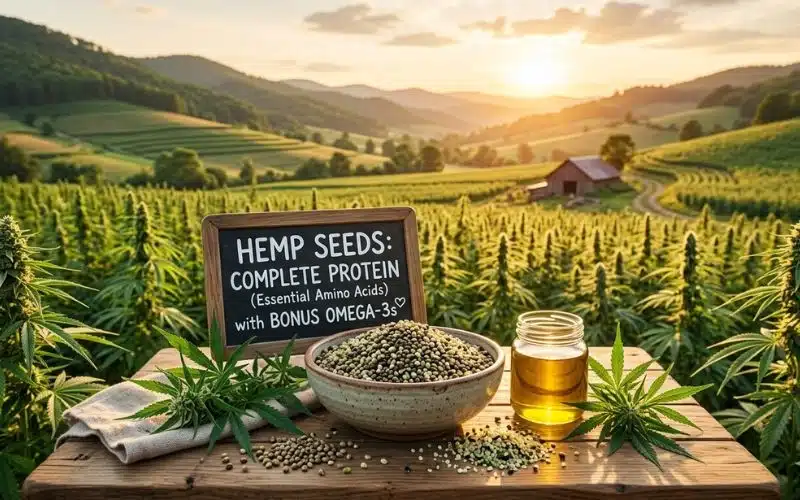
- Protein content: approximately 31g per 100g , higher than most seeds and nuts
- Contains gamma-linolenic acid (GLA), an omega-6 with anti-inflammatory properties distinct from most omega-6 sources
- Soft texture makes it easy to add to smoothies, oats, yoghurt, or salads without cooking
- Digestibility is high relative to other plant proteins due to the absence of trypsin inhibitors present in legumes
5. Chia Seeds: Small Seeds with a Surprisingly Complete Profile
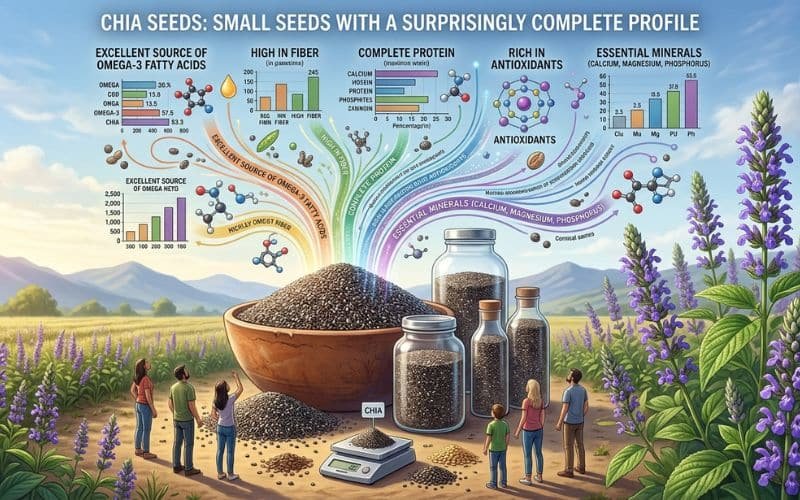
Chia seeds contain all nine essential amino acids and deliver roughly 5 grams of protein per 28g serving alongside 10 grams of fibre and 5 grams of omega-3 fatty acids. They are not a high-protein food by percentage, but their complete amino acid profile combined with their anti-inflammatory omega-3 content makes them a valuable addition to a plant-based diet aimed at muscle retention and recovery. The combination of protein and soluble fibre also helps slow digestion, producing a more sustained amino acid release similar in effect to the slow-release protein strategy that dairy-based casein provides.
6. Spirulina: The Most Protein-Dense Plant Food on Earth
Spirulina is a blue-green algae that contains between 60 and 70 percent protein by dry weight , a concentration that no other whole plant food comes close to matching. It contains all nine essential amino acids, with particularly strong levels of leucine, valine, and isoleucine , the three BCAAs most directly involved in muscle protein synthesis and training recovery. It is not a realistic primary protein source due to serving size practicality, but as a concentrated supplement added to smoothies or shakes, it delivers a dense amino acid hit with minimal caloric overhead.
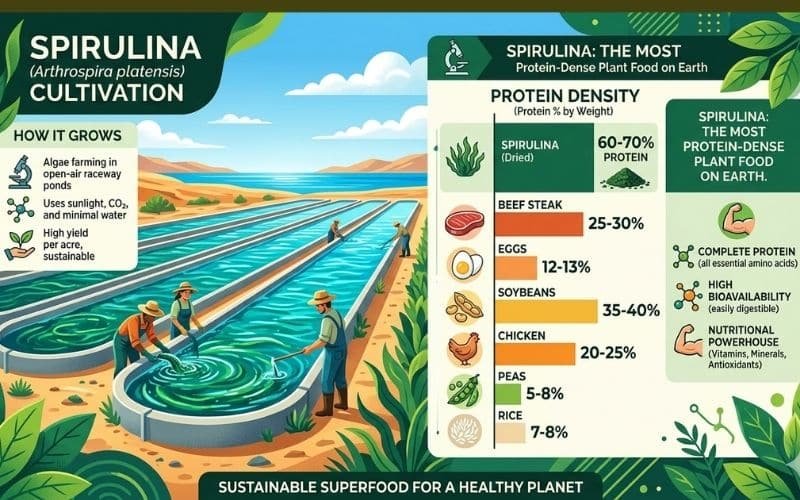
- Phycocyanin , the blue pigment in spirulina , has documented anti-inflammatory and antioxidant properties that complement the recovery function of its amino acids
- Rich in iron, B vitamins, and beta-carotene , micronutrients that plant-based athletes frequently need to monitor
- One tablespoon (7g) provides approximately 4g complete protein , a small but highly bioavailable amino acid contribution per calorie
7. Amaranth: An Ancient Grain with Modern Relevance
Amaranth is a pseudocereal , used as a grain but botanically a seed , that provides all nine essential amino acids with a notably high lysine content relative to other grain-category foods. At approximately 9 grams of protein per cooked cup, it rivals quinoa in protein density and has a slightly higher lysine-to-total-protein ratio, making it one of the best grain-category foods for plant-based athletes who rely heavily on cereal staples in their diet. Amaranth flour, puffed amaranth, and whole grain amaranth are all available forms.

Amaranth also contains squalene , a compound with documented antioxidant and cholesterol-modulating properties , and is gluten-free, making it an accessible option across a wide range of dietary needs.
8. Edamame: Whole Soy in Its Most Natural Form
Edamame , young, green soybeans harvested before full maturity , delivers all nine essential amino acids in a whole-food format that is both practical and nutritionally rich. One cup of cooked edamame provides approximately 18 grams of complete protein alongside significant amounts of folate, vitamin K, and manganese. Unlike processed soy products, edamame retains the natural fibre of the whole bean, which slows digestion and creates a more gradual amino acid release into the bloodstream.
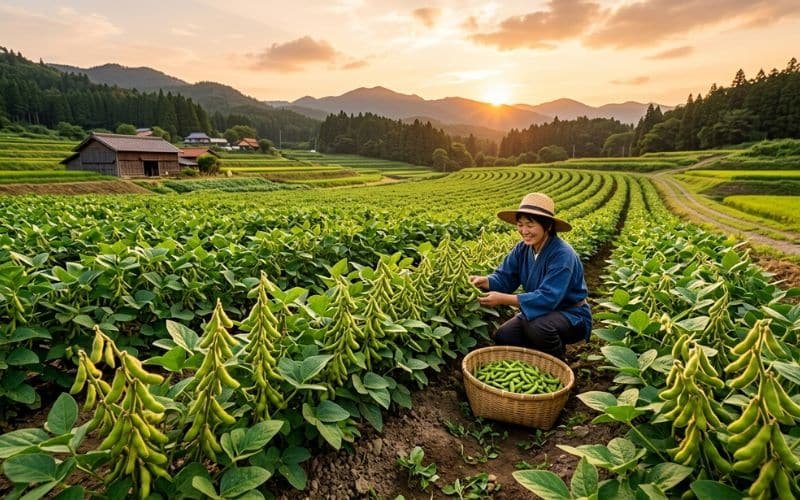
- 18g of complete protein per cooked cup , one of the highest whole-food plant protein yields per serving
- Lower in phytates than mature soybeans, meaning better mineral absorption alongside the protein
- High in folate , critical for DNA synthesis and cell repair, which directly supports the muscle remodelling process that follows training
- Mild flavour and easy preparation make it one of the most practical high-protein plant snacks for active individuals
9. Pumpkin Seeds: Dense Protein with a Standout Mineral Profile
Pumpkin seeds , pepitas , contain all nine essential amino acids and deliver around 9 grams of protein per 28g serving. Their amino acid standout is tryptophan, where they rank among the highest of any plant food, providing a meaningful contribution to serotonin and melatonin synthesis , both relevant to recovery quality and sleep. Pumpkin seeds are also exceptionally rich in zinc, magnesium, and phosphorus, three minerals directly involved in testosterone production, muscle contraction, and ATP synthesis respectively.
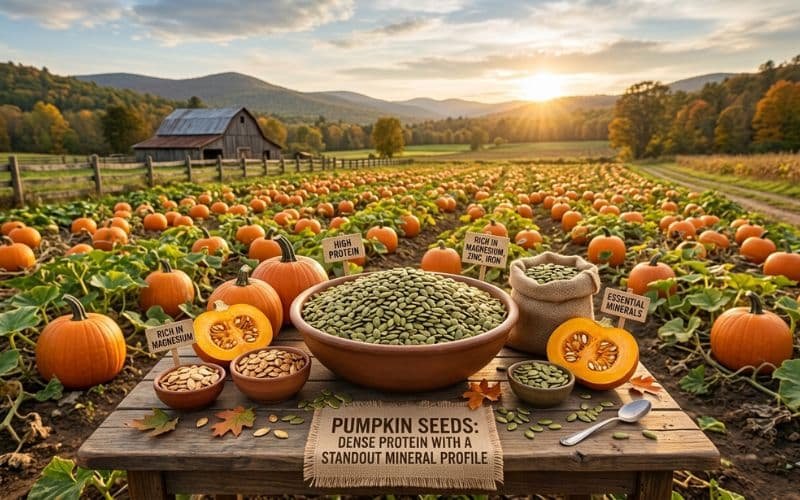
For plant-based athletes tracking micronutrient intake alongside macros, pumpkin seeds represent a rare food that contributes meaningfully to both the amino acid and mineral gaps common in plant-heavy diets.
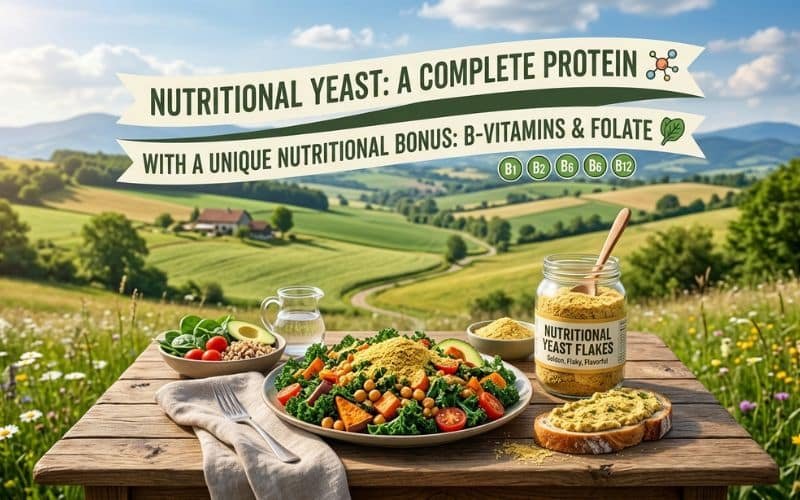
10. Nutritional Yeast: A Complete Protein with a Unique Nutritional Bonus
Nutritional yeast is a deactivated yeast product with a savoury, cheese-like flavour that works as a seasoning, sauce base, or shake additive. Two tablespoons provide approximately 8 grams of complete protein containing all nine essential amino acids. Its most distinctive feature is its naturally high B12 content , the one vitamin essentially absent from most plant foods and the most commonly deficient micronutrient among long-term vegans. For plant-based athletes, nutritional yeast uniquely addresses both the amino acid coverage challenge and the B12 supplementation challenge in a single whole food.
- Fortified versions contain 100 percent or more of the daily recommended B12 intake per two-tablespoon serving
- Contains beta-1,3-glucans , immune-modulating polysaccharides that support recovery from intense training stress
- Works in savoury dishes, sauces, and protein shakes without altering flavour significantly
- Provides chromium, which supports insulin sensitivity and glucose metabolism , relevant for nutrient partitioning around training
Combining Sources for Maximum Amino Acid Coverage
While all ten sources listed above provide complete or near-complete amino acid profiles, combining multiple plant proteins throughout the day consistently produces a broader and more abundant essential amino acid supply than relying on any single source. The classic legume-plus-grain combination , rice and lentils, corn tortillas with beans, hummus with wholemeal bread , covers the methionine strength of grains against the lysine strength of legumes, creating a complementary profile that surpasses what either achieves alone. For plant-based athletes with high protein targets , typically 1.6 to 2.2 grams per kilogram of body weight , whole food sources alone can become practically difficult to meet without consuming very large volumes of food.
This is where a plant-based protein supplement bridges the gap cleanly, providing a concentrated dose of complete amino acids in a convenient serving that complements rather than replaces a diet built around the ten foods above.The vegan weight loss shakes guide and the applied nutrition vegan pro protein are two practical resources for those who want to bring supplemental plant protein into a structured training diet. Combined with whole foods from this list, a plant-based athlete can build a complete, high-quality amino acid supply that supports muscle growth, recovery, and long-term health without relying on any animal-derived source.
Related posts
The word anabolic gets thrown around a lot in the supplement world, often as a marketing label rather than a precise biological claim. But when... Continue reading
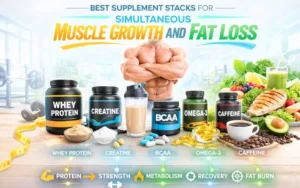
Most fitness goals fit neatly into one of two camps: bulking or cutting. But a growing number of athletes, natural lifters, and everyday gym-goers want... Continue reading
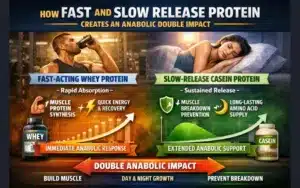
Most people walk into the gym, train hard, and then reach for a single scoop of whey right after. That routine works , but it... Continue reading

If you have been searching for a protein supplement that actually supports fat loss while keeping your hard-earned muscle intact, clear whey isolate might be... Continue reading

For Pakistani women struggling with being underweight, the journey to healthy weight gain can feel overwhelming. Between cultural expectations, busy schedules, and conflicting nutrition advice,... Continue reading
Add comment