
No products in the cart.
Return To Shop
6 Benefits of Strawberries and Bananas in Fitness (2026)
Updated
The benefits of strawberries and bananas in fitness come down to simple, affordable nutrition: bananas deliver fast carbohydrates and potassium for energy, while strawberries provide vitamin C and polyphenol antioxidants that support recovery. Together they make a practical pre or post-workout combination for athletes, gym-goers and anyone staying active.
Below you will find the nutrition numbers, six evidence-based benefits, smoothie combinations, a timing guide and honest notes on what these fruits cannot do.
Strawberries vs Bananas: Nutrition at a Glance
This quick comparison shows what one medium banana and one cup of strawberries offer a training body.
| Nutrient | 1 medium banana (118 g) | 1 cup strawberries (150 g) | Why it matters |
|---|---|---|---|
| Calories | About 105 kcal | About 48 kcal | Energy per serving |
| Carbohydrates | About 27 g | About 12 g | Fuel for training and glycogen |
| Fibre | About 3 g | About 3 g | Digestion and fullness |
| Potassium | About 420 mg | About 230 mg | Fluid balance and muscle function |
| Vitamin C | About 10 mg | About 85 mg | Immunity and collagen formation |
| Best timing | 30 to 60 minutes before training | With breakfast or after training | Match the fruit to your goal |
- Bananas are the better pre-workout fuel because of their carbohydrate and potassium content.
- Strawberries are the better recovery and immunity fruit because of their vitamin C and anthocyanin antioxidants.
- Together they cover energy, electrolytes, fibre and antioxidants for roughly 150 kcal, with almost no fat.
1. Steady Energy and Better Endurance
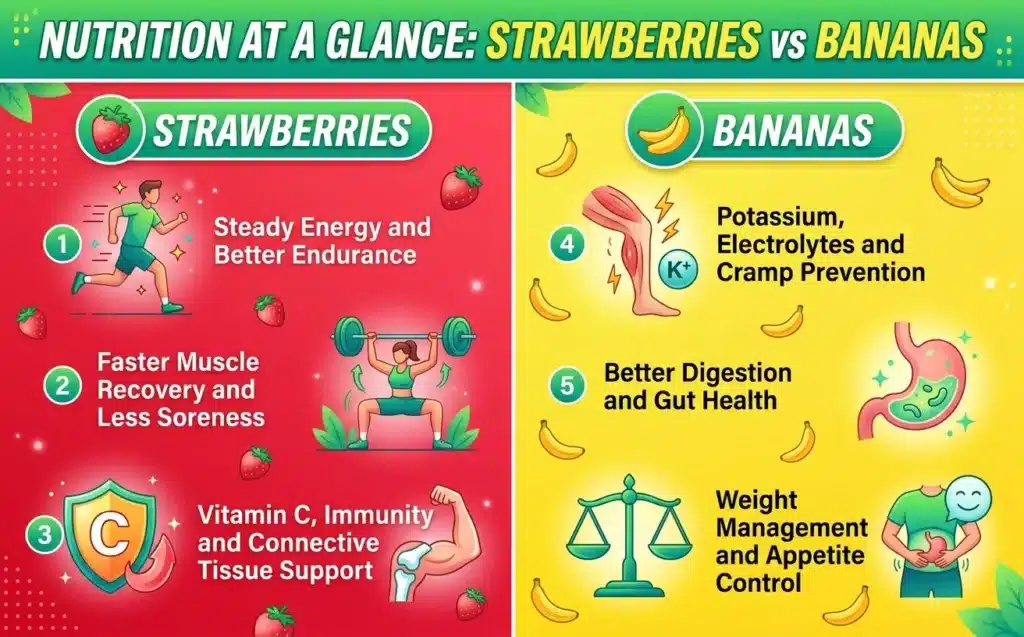
Carbohydrates are the main fuel for moderate and high-intensity exercise, and a banana is one of the easiest ways to supply them. A medium banana gives about 27 g of carbohydrate, mostly as glucose, fructose and sucrose, plus fibre that slows digestion slightly. That is why many runners and cricketers reach for one before a session.
- Bananas are a convenient, easily digested carbohydrate source that works well 30 to 60 minutes before training.
- Strawberries add a smaller amount of natural sugar and fibre, so a bowl of them alongside a banana gives sustained energy without the heaviness of processed snacks.
- For sessions longer than 60 minutes, sports nutrition guidelines suggest 30 to 60 g of carbohydrate per hour, which is roughly one to two bananas.
Ripeness matters. A ripe, yellow banana digests faster and suits quick energy, while a slightly green one contains more resistant starch and releases energy more slowly.
2. Faster Muscle Recovery and Less Soreness
Recovery starts with replacing glycogen and giving muscle the protein it needs to repair. Bananas help with the first part, and strawberries add antioxidants that may help with the second.
- Bananas provide quick carbohydrates that replenish muscle glycogen, especially when eaten with protein within a couple of hours after training.
- Strawberries contain anthocyanins and vitamin C. Early research on berry polyphenols suggests a modest reduction in exercise-related soreness, though results vary and they are not a replacement for sleep or protein.
- Adding either fruit to a post-workout shake is an easy way to combine carbohydrates with protein. Our guide to post-workout nutrition and whey protein explains the protein side in detail.
3. Potassium, Electrolytes and Cramp Prevention
Potassium works with sodium to keep fluid balance and nerve signalling normal, which is why athletes pay attention to it. One banana provides about 9 percent of the daily potassium target, and strawberries add a useful extra amount.
It is worth being realistic here. Muscle cramps have several causes, including fatigue, heat, dehydration, sodium loss and sudden increases in training load. Bananas contribute to your electrolyte intake, but eating one will not guarantee a cramp-free session. For long or hot workouts, pair fruit with fluids and an electrolyte tablet.
4. Better Digestion and Gut Health
Both fruits contribute fibre, and a comfortable gut makes it easier to absorb the protein, carbohydrates and fats that fuel training.
- Strawberries provide about 3 g of fibre per cup, supporting regular digestion and fullness.
- Bananas contain fibre and, especially when slightly under-ripe, resistant starch that acts as a prebiotic for gut bacteria.
- If you get bloated during training, avoid a large portion right before a hard session and test your tolerance in practice first.
5. Weight Management and Appetite Control
For people trying to lose fat while keeping muscle, both fruits are useful because they satisfy sweet cravings with fibre and water. A cup of strawberries has under 50 calories, and a banana has roughly 105, which is far less energy-dense than most packaged snacks.
To stay full longer, pair them with protein or healthy fats such as Greek yogurt, nuts or seeds, or blend them with whey protein in Pakistan. Portion size still matters, because fruit calories count like any other.
6. Vitamin C, Immunity and Connective Tissue Support
One cup of strawberries supplies roughly the full daily vitamin C requirement for most adults, and a banana adds a little more. Vitamin C supports immune function and is needed by the body to form collagen, which matters for tendons, ligaments and skin. Heavy training can leave you run down, so regular vitamin C intake from food is a sensible habit.
Note that potassium does not build collagen. That job belongs to vitamin C, protein and adequate calories. If your diet is limited, you can explore our vitamins and minerals range as a backup, but whole fruit should come first.
Strawberry Banana Combinations for Training
These simple combinations make the benefits easy to use. Quantities are for one serving.
- Pre-workout snack: one banana with a handful of strawberries and a few almonds, eaten 45 to 60 minutes before training.
- Post-workout recovery shake: one banana, one cup of strawberries, 250 ml milk and one scoop of protein powder. For more ideas, see our whey protein smoothie recipes.
- Breakfast bowl: oats topped with sliced banana, strawberries and yogurt. This works well on rest days, and our high carb meals guide shows how to scale it up for heavy training weeks.
- Endurance fuel: a banana and an electrolyte drink during long sessions to replace both carbohydrate and sodium.
Expert Guide: Timing, Portions and Safety
Fruit works best when you match the portion and timing to the session. Use these practical guidelines, which follow general sports nutrition recommendations.
Before training (30 to 60 minutes): one medium banana, roughly 25 to 30 g of carbohydrate, is enough for most gym sessions of 45 to 60 minutes. If you are sensitive to fibre, choose a ripe banana and skip the large strawberry bowl until after training.
During long sessions (over 60 minutes): aim for 30 to 60 g of carbohydrate per hour. One banana gives about 27 g, so pair it with a sports drink or gel if you need more. Add fluids and sodium in hot conditions.
After training (within 2 hours): combine 20 to 30 g of protein with 30 to 60 g of carbohydrate. A banana and a cup of strawberries blended with a scoop of protein powder lands in that range. If you train again within 8 hours, prioritise carbohydrates sooner.
Choosing the right form: fresh fruit is best, but frozen strawberries are nutritionally comparable and keep well outside the local season, which makes them practical for smoothies. Avoid canned fruit in syrup and sweetened dried banana chips, since added sugar changes the calorie count quickly. If you are cutting, weigh your portions for a week to learn what a banana or cup of strawberries really adds to your day.
Daily intake: one banana and one to two cups of strawberries fit comfortably within the five-a-day fruit and vegetable target for most healthy adults.
Safety notes: people with kidney disease or those taking medication that raises potassium, such as some ACE inhibitors or potassium-sparing diuretics, should ask a doctor before increasing banana intake. People with diabetes should count the carbohydrates and monitor their response. Strawberry allergy, and latex-fruit sensitivity linked to bananas, can cause itching or swelling, so stop eating and seek advice if symptoms appear. Wash strawberries well, as their surface is hard to clean and often carries residue.
Where Supplements Fit with Strawberries and Bananas
Whole foods are the foundation of a good sports diet, and supplements simply fill the gaps. If your protein intake is low or your training load is high, the following can work well with strawberry and banana recipes.
- Protein powders: blend whey or plant protein with fruit for a complete post-workout shake.
- BCAA supplements: useful for fasted or long sessions when you cannot eat a full meal.
- Pre-workout: a stimulant-based option for hard sessions, to be used alongside, not instead of, fuel from food.
- Electrolyte tablets: helpful during long or hot sessions when sweat loss is high.
If you want authentic products with reliable sourcing, browse our range of Imported Supplements in Pakistan, supplied by SportsOne International as an authorised distributor.
Frequently Asked Questions
Are strawberries and bananas good for a workout?
Yes. Bananas supply fast carbohydrates and potassium for fuel, while strawberries add vitamin C and antioxidants for recovery. Eaten together before or after training, they give you energy, fibre and micronutrients with very little fat, which makes them an easy, affordable option.
Is it better to eat a banana before or after a workout?
Both work. A banana 30 to 60 minutes before training tops up energy, while one after training helps replace muscle glycogen. Pair the post-workout banana with 20 to 30 g of protein to support better muscle repair after hard sessions.
Do bananas really stop muscle cramps?
Not reliably. Bananas provide potassium, but cramps are linked to fatigue, hydration, sodium loss and training load as much as potassium. Bananas help your overall electrolyte intake, but they are not a guaranteed cramp cure for every athlete.
Can I eat strawberries and bananas every day?
For most healthy adults, one banana and a cup of strawberries daily fits a balanced diet. People with kidney problems, diabetes or medication that affects potassium should check portions with their doctor or dietitian first to stay safe.
Can I blend strawberries and bananas with protein powder?
Yes. Blend one banana, a cup of strawberries, milk or water and one scoop of whey or plant protein. It makes a balanced post-workout shake with carbohydrates, protein and fibre in a single easy glass that is simple to prepare after training.
Conclusion
Strawberries and bananas will not replace a well-planned diet, but they are an easy, affordable way to support energy, recovery, hydration and digestion. Use bananas when you need fast fuel, lean on strawberries for vitamin C and antioxidants, and combine them with protein after training. Keep portions sensible, test what your stomach tolerates and add supplements only where food falls short.
Disclaimer: This article is for general information and does not replace advice from a doctor or registered dietitian. Consult a healthcare professional before changing your diet, especially if you have a medical condition or take medication.


About author

Related posts

For most healthy adults, collagen peptides are well tolerated. The side effects people actually report are mild: a feeling of fullness, bloating, an aftertaste or... Continue reading

The short answer: the best time to take collagen is whichever time you will repeat every single day. Research on hydrolysed collagen peptides has not... Continue reading
Neither is universally better. Marine collagen is often preferred for skin, hair and people who avoid beef, while bovine collagen is usually cheaper and offers... Continue reading

Collagen may help support joint comfort in some people, but the evidence is modest, results are slow, and it is not a substitute for medical... Continue reading
Most people notice their first change from collagen supplements after 4 to 8 weeks, with clearer skin and joint results building between 8 and 12... Continue reading
Add comment