
No products in the cart.
Return To Shop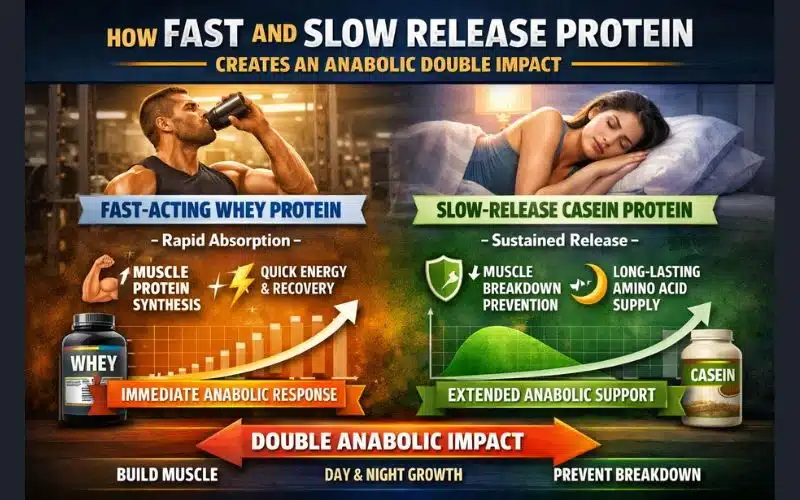
How Fast and Slow Release Protein Creates an Anabolic Double Impact
Most people walk into the gym, train hard, and then reach for a single scoop of whey right after. That routine works , but it only tells half the story. What actually drives muscle growth over 24 hours is not just one protein hit at one moment. It is the sustained delivery of amino acids across hours, created by pairing fast-digesting and slow-digesting proteins together.
What Fast and Slow Release Protein Actually Means
Fast-release proteins , primarily whey , are digested and absorbed quickly, flooding the bloodstream with amino acids within about 30 to 60 minutes. This creates a sharp, high spike in muscle protein synthesis that is ideal right after training when muscles are most receptive.
Slow-release proteins, most notably casein, behave completely differently. They form a gel-like substance in the stomach that breaks down over several hours, releasing amino acids gradually. Instead of a spike, you get a steady, sustained stream of nutrition that can last anywhere from 5 to 7 hours. Each type has a distinct role, and using them together rather than separately is where the real anabolic advantage lies.
The Science Behind Muscle Protein Synthesis and Breakdown
Your muscles are in a constant tug-of-war between muscle protein synthesis (MPS) and muscle protein breakdown (MPB). For growth to happen, synthesis must outpace breakdown over time. A single fast-digesting protein does a great job of spiking MPS, but that window is short. Once blood amino acid levels fall, the anabolic signal drops off , and if breakdown continues without another amino acid stimulus, you end up in a net catabolic state.
A study published in the Journal of Nutrition institutes of heath confirmed that a blend of fast and slow proteins produced greater overnight muscle retention than whey alone. The slow-release component acts as a buffer, keeping amino acid levels elevated and preventing the body from dipping into muscle tissue for energy , a process especially relevant during sleep or long gaps between meals.
The Anabolic Window Is Longer Than You Think
The concept of the anabolic window , that narrow 30-minute period post-workout where protein is supposedly critical , has been significantly revised in recent sports nutrition research. While the post-workout period does matter, the actual window for muscle protein synthesis remains elevated for up to 48 hours after a training session. This means your protein strategy throughout the entire day and night matters far more than just what you consume immediately post-workout.
Fast protein immediately post-workout initiates the spike. But to take advantage of that extended window, a slow-release protein ensures that amino acids remain available during later hours when you are not eating.
When to Use Each Protein Type for Maximum Results
Timing is where theory becomes practical. Here is how to apply fast and slow release proteins strategically throughout the day:
- Post-workout (within 30 to 60 minutes): whey protein or a hydrolysed option for rapid absorption and immediate MPS activation
- Before bed: casein protein to maintain amino acid levels throughout the 7 to 8 hour overnight fast and prevent muscle catabolism
- Between meals or during long breaks: a protein blend that includes both fast and slow fractions to sustain nitrogen balance
- Meal replacement: a multi-phase formula paired with carbohydrates supports both lean muscle goals and energy stability
Each timing window serves a distinct biological purpose. Thinking of protein as a one-size-fits-all supplement misses the layered approach that competitive athletes and experienced bodybuilders have used for years.
Why Blended Proteins Outperform Single-Source Formulas
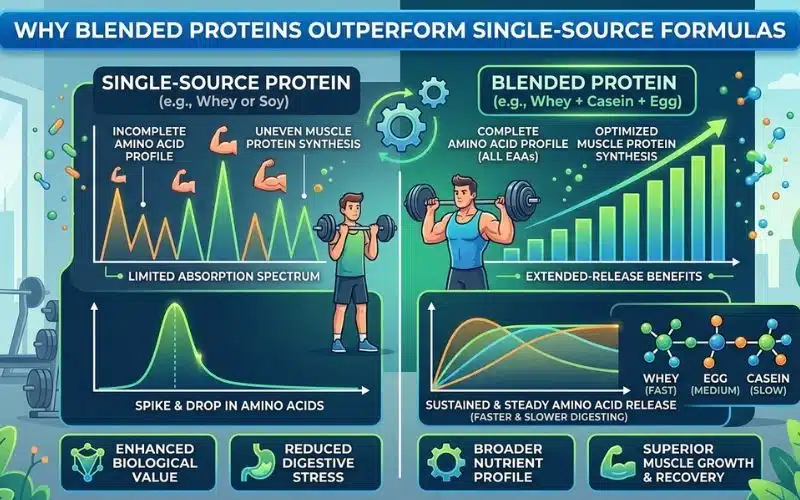
Single-source proteins are not bad , whey isolate, for example, is one of the most researched and effective muscle-building supplements available. But a blended formula that stacks fast and slow proteins together creates a pharmacokinetic advantage: the combined amino acid curve is broader, higher in total delivery, and more aligned with how muscle tissue actually uses protein over time.
The practical outcome of this broader amino acid curve is that muscle protein synthesis stays elevated for longer after each serving. This means more total time in an anabolic state per day , and over weeks and months, that compounds into significantly greater muscle retention and growth.
Key Advantages of a Fast and Slow Protein Blend
- Prolongs muscle protein synthesis beyond the initial post-workout spike
- Reduces overnight muscle protein breakdown during sleep
- Maintains positive nitrogen balance across longer periods between meals
- Provides both leucine-driven anabolic signalling and a sustained amino acid reservoir
- More closely mimics the ideal amino acid delivery curve for hypertrophy
The Role of Leucine in Triggering the Anabolic Response
Among all amino acids, leucine holds a special place in muscle protein synthesis. It acts as the primary trigger for the mTOR pathway , the central anabolic signalling system in muscle cells. Fast-release proteins like whey deliver a large leucine dose quickly, which is why they are so effective at initiating MPS. The threshold for leucine to trigger mTOR is approximately 2 to 3 grams per serving, and whey typically delivers this within a single scoop.
Casein also contains leucine, but releases it more gradually. This means the anabolic trigger is not as sharp , but it keeps signalling active for far longer. Combining both ensures you get the sharp trigger from fast protein and the sustained signal from slow protein.
Protein Timing Around Sleep for Overnight Anabolism
Sleep is the most anabolic period of the day. Growth hormone secretion peaks during deep sleep, and the body prioritises muscle repair and synthesis during this window , provided the raw materials are available. The problem is that an 8-hour fast essentially cuts off the amino acid supply midway through this process. A casein protein supplement taken 30 minutes before bed addresses this directly, releasing amino acids throughout the night and allowing the body to fully capitalize on the GH spike.
Research from Maastricht University has shown that pre-sleep casein ingestion significantly increases muscle protein synthesis rates overnight and improves whole-body protein balance compared to a placebo. This is not a marginal benefit , it represents an entirely untapped anabolic window that most recreational lifters ignore. The combination of training-induced MPS during the day and overnight synthesis supported by slow protein creates a genuine double impact on muscle growth.
Choosing the Right Fast and Slow Protein Product
Not all protein blends are equal. When evaluating a product, look for formulas that clearly list their protein matrix , specifically the inclusion of both whey fractions (concentrate or isolate for fast release) and micellar casein or calcium caseinate for slow release. Products that use proprietary blends without disclosing ratios make it harder to assess quality. For verified original supplements, Sports One International is a trusted source for imported and authentic protein products in Pakistan.
Here is what to look for on a label when choosing a multi-phase protein:
- Protein matrix that includes whey concentrate or whey isolate alongside micellar casein
- Minimum 20 to 25g of protein per serving with a complete amino acid profile
- Leucine content of at least 2g per serving to ensure mTOR activation , products like Kevin Levrone Anabolic Mass are designed with this in mind
- No excessive fillers, maltodextrin-heavy formulas, or amino spiking
- Third-party tested or from a verified distributor to ensure you are getting genuine product , check the authorized distribution page for confidence in your purchase
Who Benefits Most From the Anabolic Double Impact
While anyone serious about training can benefit from combining fast and slow proteins, certain groups gain disproportionately from this approach:
- Natural athletes: Without pharmacological assistance, every anabolic signal matters more. A sustained amino acid environment is critical for maximising natural muscle protein synthesis around the clock.
- People training in a calorie deficit: When calories are restricted, the risk of muscle catabolism rises. A slow-release protein before bed and between meals is one of the most effective tools for preserving lean mass while losing fat.
- Hardgainers: Those who struggle to build muscle often have faster muscle protein breakdown rates. A protein blend that stays active for longer helps tip the balance toward net synthesis.
- Older adults: Muscle protein synthesis becomes less efficient with age, requiring higher protein doses and more frequent stimulation. This connects closely to the strategy outlined in weight gain strategies for older men.
Putting It All Together: A Practical Daily Protocol
A simple, effective daily protein strategy built around the anabolic double impact does not need to be complicated. Start with a fast-digesting whey protein supplement post-workout to spike MPS. Use a multi-phase blend or casein during long gaps between meals to maintain nitrogen balance. Finish the day with a slow-release protein before bed to fuel overnight recovery.
This three-point protocol covers the acute spike, the sustained daytime delivery, and the overnight window , three distinct anabolic phases in a single day. Combined with solid training and adequate total calories, this approach creates the conditions for consistent, measurable muscle growth that neither fast nor slow protein alone can replicate.


Related posts
Most people who train seriously know that protein matters for muscle growth, but the conversation gets far more interesting when you zoom in on one... Continue reading

Fast cardio has a loyal following among fat-loss enthusiasts, and for good reason , training on an empty stomach pushes the body to tap into... Continue reading

Lahore is the food capital of Pakistan. From weekend breakfast Halwa Puri and Channa in Anarkali to late-night Karahi and Naan in Lakshmi Chowk, our... Continue reading

Starting your fitness journey is an exciting milestone. Whether you are hitting a local gym in Gulberg, DHA, or Johar Town, the goal is always... Continue reading

If you’ve ever looked in the mirror and felt like you’re somehow both too thin and carrying too much fat you’re not imagining it. The... Continue reading
Add comment