
No products in the cart.
Return To Shop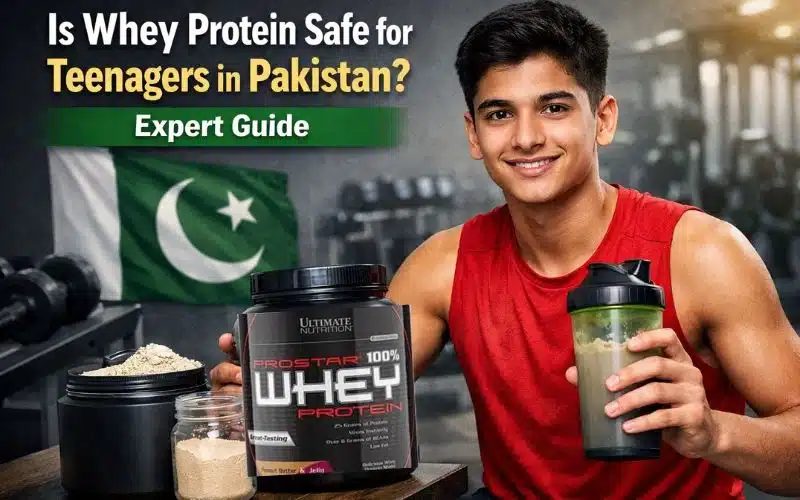
Is Whey Protein Safe for Teenagers 16 to 18 in Pakistan?
Yes, whey protein is safe for teenagers aged 16 to 18 in Pakistan, as long as it is used correctly and not treated as a replacement for real food. At this age, the body has higher protein demands due to growth, hormonal activity, and physical training, and a single daily scoop of a reputable whey protein can genuinely support those needs without causing harm.
Why Teenagers in Pakistan Are Turning to Whey Protein
Gym culture in Pakistan has grown significantly over the past few years, and teenagers are a big part of that shift. Young men especially, aged 16 to 18, are training harder and looking for ways to support muscle growth and recovery. Whey protein is usually the first supplement they consider, and in most cases, it is a reasonable starting point.
The concern among parents and doctors is understandable. A 16-year-old is still developing, and anything that enters the body regularly deserves scrutiny. But whey protein is derived from milk, contains no hormones or stimulants, and has been studied extensively across multiple age groups. For a healthy teenager with no underlying medical conditions, it does not pose a safety risk when used sensibly.

What Makes Teenagers Different From Adults When It Comes to Protein
Teenagers aged 16 to 18 actually have higher protein needs per kilogram of body weight than most adults, because the body is simultaneously managing growth and physical adaptation from training. The recommended dietary allowance for this age group sits around 0.85g per kg of body weight daily at a sedentary baseline, but for teenagers who are actively training, that number can climb to 1.4 to 1.8g per kg.
A 60kg teenager who trains four days a week needs roughly 84 to 108g of protein daily. Depending on how their desi meals are structured, they may or may not be hitting that target from food alone. This is where whey protein becomes genuinely useful rather than just a trend to follow.
How Desi Meals Factor In
The typical Pakistani teenager eats roti, daal, eggs, and some form of meat across their daily meals. In a well-fed household, that could already provide 80 to 100g of protein daily. In a lighter eating household where breakfast is just chai and paratha and lunch is mostly rice-based, the total might sit closer to 50 to 60g.
Understanding how much protein is actually needed daily before buying a tub of whey is the first step every teenager should take. Supplementing a gap that does not exist is just expensive and unnecessary.
Is It Safe Physically at This Age
For a healthy 16 to 18 year old with no pre-existing conditions, whey protein is physically safe. The kidneys of a healthy teenager can handle increased protein intake without any strain. The idea that protein supplements damage young kidneys is a myth that has not been supported by clinical research. Problems only arise when there is already an underlying kidney or liver condition present, which is why a basic health check before starting any supplement is a sensible step.
Whey protein does not affect hormones, does not stunt growth, and does not interfere with natural development at this age. These are common fears in Pakistani households but they are not grounded in evidence when the supplement being used is plain whey protein without added testosterone boosters or hormonal compounds.
What to Avoid at This Age
The concern is not whey itself. It is the products that teenagers in Pakistan sometimes end up buying. Pre-workouts, testosterone boosters, and fat burners are not appropriate for 16 to 18 year olds. These carry real risks and should not be used before the body has fully matured. Plain whey protein concentrate or isolate, with no added stimulants, is a very different product from those and does not carry the same concerns.
Teenagers should also avoid counterfeit supplements that flood the local market. A cheap tub with no verifiable brand, no amino acid label, and no batch number is not just ineffective. It can contain fillers, unknown compounds, or inaccurate protein content that misleads the user entirely.
How Much Whey Protein Should a Teenager Take
One scoop per day is sufficient for most teenagers aged 16 to 18. That typically provides 24 to 30g of protein, which is meaningful but not excessive. Two scoops may be appropriate for a teenager who is very active, training six days a week, and genuinely struggling to hit their protein targets from food alone.
Beyond two scoops, there is no added benefit and the money is better spent on actual food. Chicken, eggs, dahi, and daal provide protein alongside micronutrients, fiber, and satiety that whey protein does not replicate.
Best Time to Take It
Timing makes a difference at any age. For teenagers, the most effective approach is:
- Post-workout: Taking whey within 30 to 45 minutes after training supports muscle repair during the window when the body is most receptive to protein uptake
- Morning with breakfast: If the first meal of the day is light, adding a whey shake alongside it brings the protein content up before school or training
- Between meals: As a snack replacement rather than an addition to an already protein-rich meal
The post-workout nutrition window is particularly important for teenagers because growth and muscle repair overlap at this age, making recovery nutrition more impactful than it is for older adults.
Mixing Whey Protein the Right Way for Pakistani Teenagers
Plain water works but milk is a far better option for teenagers, especially in a Pakistani household where doodh is already part of the daily routine. Mixing one scoop of whey with 250 to 300ml of full-fat or semi-skimmed milk adds casein protein naturally, increases the calorie content slightly, and improves the taste significantly.
Blending with a banana, mango, or guava is another excellent option that adds carbohydrates for energy and makes the shake much more palatable for younger users. Those who prefer solid food over shakes can mix unflavored whey into dahi and eat it as a snack, which works especially well after training.
Whey protein smoothies are also a practical option for teenagers who find plain shakes boring, and combining whey with desi fruits makes the habit much easier to stick to long term.

Common Mistakes Teenagers Make With Whey Protein in Pakistan
Teenagers are enthusiastic but often underprepared when they start supplementing. These are the most frequent mistakes and how to avoid them.
- Taking three or four scoops daily thinking more is better: protein beyond what the body can use is simply excreted and does not build additional muscle
- Skipping meals and replacing them with shakes: whey is a supplement, not a food group
- Buying the cheapest product available without checking the label: protein content per serving and the amino acid profile are the only numbers that matter
- Starting whey alongside multiple other supplements at once: isolating one supplement at a time helps identify what is actually working
- Not drinking enough water throughout the day: higher protein intake requires adequate hydration to process efficiently
People who use whey protein incorrectly rarely get the results they expect, and teenagers often blame the supplement when the actual problem is the approach.
Top Whey Protein Options Suitable for Pakistani Teenagers
Not all whey proteins are equally appropriate for this age group. Teenagers should stick to straightforward whey concentrate or isolate products from established brands with no added stimulants, hormones, or proprietary blends that are unclear on the label.
Brands like Optimum Nutrition, Dymatize, MuscleTech, and Rule 1 are widely available in Pakistan through authorized distributors and offer clean, well-labeled products with consistent protein content. Anyone comparing options should look at whey proteins available in Pakistan and evaluate them based on protein per serving, ingredient transparency, and third-party credibility rather than price or packaging alone.
What Parents in Pakistan Should Know
For parents who are unsure whether to allow their teenage child to take whey protein, the key distinction to make is between whey protein and performance-enhancing supplements. Whey protein is food-derived, contains no drugs or hormones, and is not classified as a controlled substance anywhere in the world.
The practical questions worth asking are whether the teenager is already eating well, whether they are actually training consistently enough to justify supplementation, and whether they understand that whey is a tool to support their diet rather than a shortcut to muscle.
A teenager who eats poorly, skips meals, and then adds whey protein will not see meaningful results. A teenager who eats a solid desi diet, trains regularly, and adds one scoop of whey post-workout to close a genuine protein gap will absolutely benefit from it.
Women and girls in this age bracket are equally valid users of whey protein. The idea that it is only for boys or that it causes unwanted bulk in girls is simply not accurate. Pakistani teenage girls who are active, play sports, or train at the gym can use whey protein safely. Anyone uncertain about whey protein for female users will find that the concerns about masculinizing effects are not supported by the actual science of how whey works in the body.
Frequently Asked Questions
Can a 16-year-old take whey protein in Pakistan?
Yes. A healthy 16-year-old who is physically active and eating a balanced diet can take one scoop of plain whey protein daily without any health risk. The body at this age is capable of processing and utilizing supplemental protein efficiently, especially when training is part of the routine. The only exceptions are teenagers with pre-existing kidney conditions or other medical issues, in which case a doctor should be consulted first.
Will whey protein stunt growth in teenagers?
No. This is one of the most persistent myths around protein supplementation and it has no clinical basis. Whey protein does not interfere with growth hormone production, bone development, or height. Growth is determined by genetics and overall nutritional status. A teenager who is eating enough total calories and meeting their micronutrient needs will grow normally regardless of whether they supplement with whey protein.
Is it better for a Pakistani teenager to get protein from food or whey?
Both work and ideally both are used together. Whole food sources like chicken, eggs, daal, and dahi provide protein alongside vitamins, minerals, and fiber that whey does not contain. Whey protein is most valuable when the diet alone is not hitting the daily protein target, particularly on training days when demand is higher. High-protein foods should always form the foundation, with whey filling in the remaining gap.
Can a Pakistani teenage girl take whey protein?
Yes, absolutely. Whey protein is not gender-specific and does not cause unwanted bulk in girls. Teenage girls who play sports, train at the gym, or simply want to improve their body composition can benefit from whey protein in exactly the same way boys do. One scoop daily after training or with breakfast is a safe and practical starting point.
What type of whey protein is best for teenagers who are lactose intolerant?
Whey isolate is the better choice for teenagers with lactose intolerance. The filtration process used to produce isolate removes most of the lactose found in whey concentrate, making it significantly easier to digest. Teenagers who experience bloating or stomach discomfort after taking a standard whey concentrate should switch to an isolate protein rather than giving up on whey altogether.
Should teenagers take whey protein on rest days?
Yes. Muscle repair continues on rest days, not just on training days. Taking one scoop of whey on rest days helps maintain a consistent daily protein intake, which is more effective for muscle building and recovery than eating well only on workout days. The total daily protein target stays the same regardless of whether training happened that day.
The Bottom Line
Whey protein is safe for teenagers aged 16 to 18 in Pakistan when used sensibly. One scoop per day, mixed with milk or blended into a smoothie, is enough to meaningfully support a teenager who is training regularly and eating a typical desi diet. It does not cause hormonal disruption, does not harm the kidneys in healthy individuals, and does not interfere with growth.
The most important thing is that whey protein supports the diet rather than replacing it. Roti, daal, eggs, and chicken should still be the foundation. Whey fills the gap that food leaves behind on high-demand training days, and used that way, it is a practical and entirely safe tool for any active Pakistani teenager.


About author

Related posts

For most healthy adults, collagen peptides are well tolerated. The side effects people actually report are mild: a feeling of fullness, bloating, an aftertaste or... Continue reading

The short answer: the best time to take collagen is whichever time you will repeat every single day. Research on hydrolysed collagen peptides has not... Continue reading

Neither is universally better. Marine collagen is often preferred for skin, hair and people who avoid beef, while bovine collagen is usually cheaper and offers... Continue reading

Collagen may help support joint comfort in some people, but the evidence is modest, results are slow, and it is not a substitute for medical... Continue reading
Most people notice their first change from collagen supplements after 4 to 8 weeks, with clearer skin and joint results building between 8 and 12... Continue reading
Add comment