
No products in the cart.
Return To Shop
Best Squat Exercises for Weight Gain & Muscle Mass
Last updated: September 2026
If you could only do one lower-body exercise for the rest of your life, squats should be it. Whether you’re lifting heavy with a barbell or mastering your form with bodyweight, squats are widely regarded as the king of all muscle-building exercises — and for good reason.
Quick answer: Squats build muscle and support weight gain by recruiting your quads, hamstrings, glutes, and core in one compound movement, triggering a short-term testosterone and growth hormone response, and burning more calories per rep than isolation exercises — but the muscle only shows up when squat training is paired with a calorie surplus, adequate protein, and progressive overload over weeks, not days.
From elite athletes to complete beginners, squats play a central role in building muscle, increasing strength, and boosting athletic performance. In this guide, we’ll break down how squats (barbell or bodyweight) target your quads, hamstrings, glutes, and core, what the research says about supplementing around them, and why they belong in every serious workout plan.
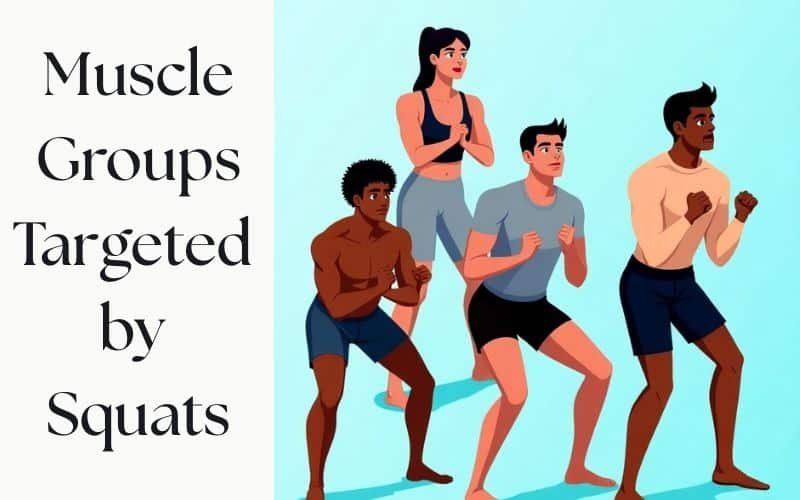
Muscle Groups Targeted by Squats
Squats are a compound movement, meaning they work multiple major muscle groups at once. This is what makes them so powerful for both muscle growth and functional strength.
Quadriceps (Front of Thigh)
The quads — rectus femoris, vastus lateralis, vastus medialis, and vastus intermedius — are the primary movers during the ascent of the squat. Barbell back squats especially load the quadriceps under tension, stimulating hypertrophy and strength.
Hamstrings (Back of Thigh)
Although they’re not the primary movers, the hamstrings stabilize the knee joint and hip throughout the lift, especially during the eccentric (lowering) phase.
Glutes (Buttocks)
Your gluteus maximus, the largest muscle in your body, plays a major role in hip extension at the top of the squat. Deep squats (hip below knee) significantly increase glute activation.
Core (Stabilizers)
Squats, particularly barbell variations, require a tight, braced core to maintain spinal integrity. This builds deep core strength, including your transverse abdominis, obliques, and erector spinae.
How to Perform Squats (Barbell or Bodyweight) with Proper Form
Whether you’re doing bodyweight squats at home or loading up a barbell at the gym, proper squat form is essential for muscle activation, safety, and long-term progress. Here’s a step-by-step guide to executing squats with perfect technique:
🧍 Bodyweight Squat: Step-by-Step Guide
- Start Position
- Stand tall with feet shoulder-width apart
- Toes slightly turned out (10–20 degrees)
- Keep arms extended in front or placed at chest level for balance
- Stand tall with feet shoulder-width apart
- Descent (Eccentric Phase)
- Initiate movement by pushing hips back and bending your knees
- Keep chest upright and spine neutral
- Lower down until thighs are at least parallel to the ground, or deeper if mobility allows
- Initiate movement by pushing hips back and bending your knees
- Bottom Position
- Knees aligned with toes, not caving inward
- Weight balanced midfoot to heel, not on toes
- Core engaged, back flat
- Knees aligned with toes, not caving inward
- Ascent (Concentric Phase)
- Push through heels, driving knees out
- Extend hips and knees simultaneously
- Return to standing without locking the knees hard at the top
- Push through heels, driving knees out
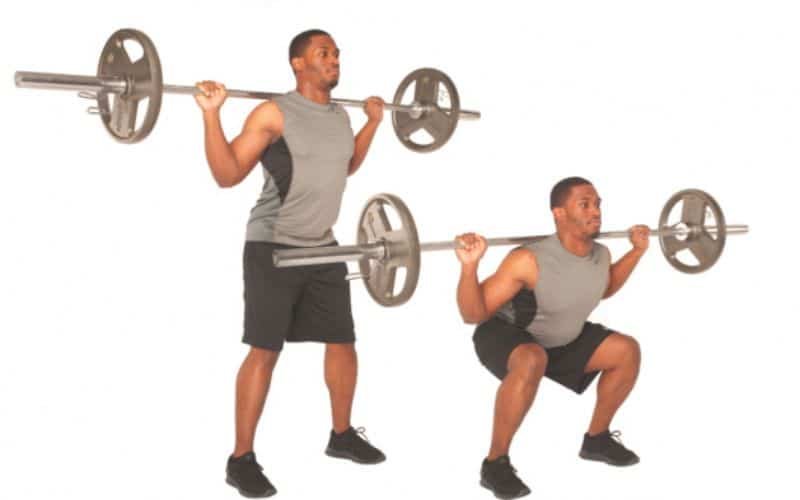
🏋️ Barbell Back Squat: Step-by-Step Guide
- Set Up Under the Bar
- Position barbell on your trapezius muscles (high bar) or rear delts (low bar)
- Grip the bar just outside shoulder-width, elbows down and back
- Step back from the rack with feet shoulder-width apart
- Position barbell on your trapezius muscles (high bar) or rear delts (low bar)
- Brace Your Core
- Take a deep breath into your belly (diaphragmatic breathing)
- Tighten your core and glutes before descending
- Take a deep breath into your belly (diaphragmatic breathing)
- Controlled Descent
- Break at the hips and knees simultaneously
- Lower to parallel or just below while maintaining an upright chest
- Break at the hips and knees simultaneously
- Drive Up
- Push the floor away through your heels
- Maintain tension in the core and glutes
- Exhale at the top once the lift is complete
- Push the floor away through your heels
Key Squat Form Cues to Remember:
- “Knees out” – Prevents valgus collapse and activates glutes
- “Chest up, back flat” – Keeps your spine neutral and safe
- “Push through heels” – Maximizes quad and glute engagement
- “Brace the core” – Protects your lower back and builds strength
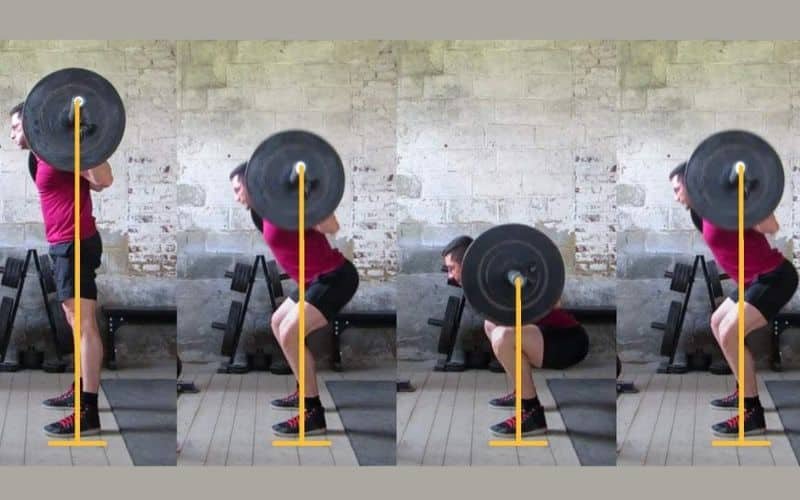
Bonus: Squat Depth and Safety
- Aim for at least parallel depth (hip crease below the knees) unless mobility or injury restricts you.
- Use spotter arms or a power rack when squatting heavy.
- Consider weightlifting shoes or flat soles (like Converse) for better stability depending on ankle mobility.
Proper squat technique not only boosts your gains but also helps prevent injuries and develop true functional strength. Before increasing load, master the form — especially in the bodyweight and goblet phases.
Expert Section: Squats, Creatine, and Muscle Growth — What the Research Actually Supports
Squats provide the mechanical stimulus for muscle growth, but the supplement with the strongest research backing for turning that stimulus into visible size and strength is creatine monohydrate — not a mass gainer, not a pre-workout, and not a testosterone booster. Decades of sports-science literature identify it as one of the most studied ergogenic aids for compound, multi-joint lifts like the squat, working by increasing phosphocreatine stores so your muscles can regenerate ATP faster during heavy sets.
Dosage
A daily maintenance dose of 3–5 grams is enough to fully saturate muscle creatine stores within roughly three to four weeks of consistent use. If you want faster saturation, a short loading phase of about 20 grams per day, split into four 5-gram doses, for five to seven days will get you there sooner — but it’s optional, not required, and the end result is the same either way.
Timing
Timing matters far less than consistency. Some research points to a small edge for taking creatine close to your training session, ideally with a source of carbohydrate or protein to support uptake, but daily use — on training days and rest days alike — is what actually drives the strength and lean-mass gains reported in the literature.
Safety
Creatine monohydrate is one of the most extensively safety-tested supplements available and is well tolerated by healthy adults at standard doses. Drink enough water throughout the day, since creatine draws additional water into muscle cells. If you have a pre-existing kidney condition, or are unsure about interactions with any medication you’re taking, speak with a doctor before starting any new supplement.
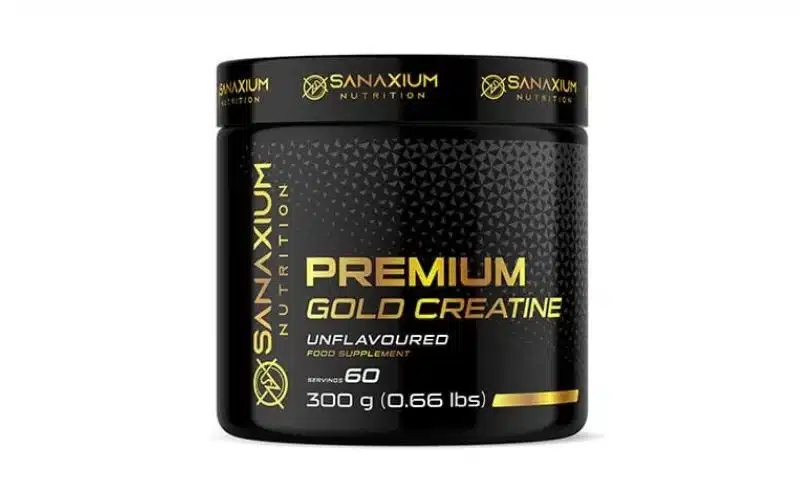
If you’re adding creatine to your squat program, choose an imported, lab-tested formula rather than an unverified local blend. ON Micronized Creatine Powder (300g, unflavored) is [INSERT CURRENT PRICE] through SportsOne’s authorized distribution network — meaning you’re getting the genuine imported product, not a repackaged or counterfeit version, with Cash on Delivery and WhatsApp ordering available across our Karachi, Lahore, Islamabad, and Gujranwala stores.
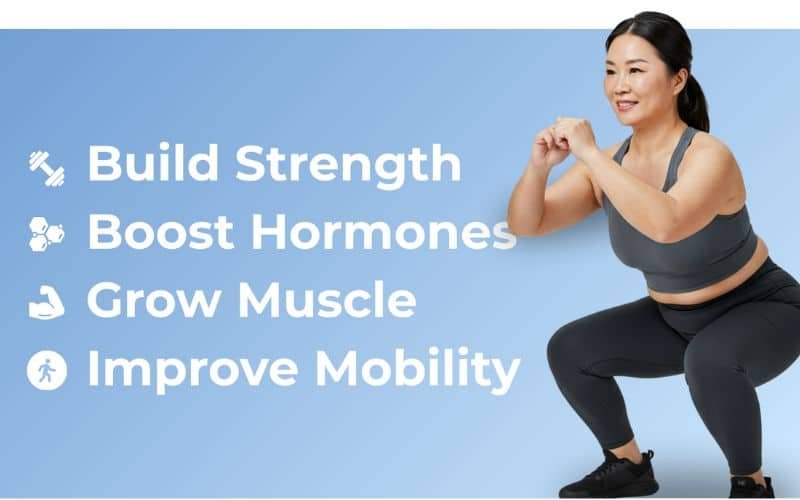
Barbell Squats vs Bodyweight Squats
Both barbell and bodyweight squats offer valuable training outcomes. The choice depends on your experience level, goals, and access to equipment.
Barbell Squats
- Pros: Heavy resistance → more muscle stimulation
- Best For: Muscle mass, max strength, progressive overload
- Requirements: Proper form, mobility, rack access
Bodyweight Squats
- Pros: Accessible anywhere, great for beginners and mobility work
- Best For: Conditioning, muscle endurance, rehab or warm-ups
- Limitations: Hard to progressively overload without added resistance
Progression Path:
- Bodyweight → Goblet Squats → Front/Back Barbell Squats
Key Form Cues (For Both):
- Keep chest up and spine neutral
- Drive knees outward, not inward
- Descend until thighs are parallel or below
- Heels stay flat on the floor
- Engage core and glutes throughout
Benefits of Squats for Muscle Gain & Strength
Squats don’t just build muscle — they optimize your entire hormonal and metabolic profile.
Hormonal Boost
- Increases testosterone and growth hormone naturally, more so than smaller isolation lifts, because squats recruit a large amount of total muscle mass at once
- Stimulates systemic muscle growth beyond the legs
Caloric Burn
- Squats burn more calories than most isolation exercises
- Promotes lean muscle mass and metabolic health
Functional Strength
- Improves jumping, running, and lifting performance
- Enhances stability and coordination across sports
Common Mistakes and How to Fix Them
Even experienced lifters can fall into poor squat patterns. Here’s how to correct them:
1. Mistake: Rounding the Lower Back
- Fix: Improve hip mobility and brace core with diaphragmatic breathing
2. Mistake: Knees Cave In
- Fix: Strengthen glutes and cue “push knees out” during ascent
3. Mistake: Not Squatting Deep Enough
- Fix: Increase ankle and hip mobility; practice goblet squats for depth
Mobility Drills:
- Deep squat holds
- Hip openers (90/90 stretch)
- Ankle dorsiflexion exercises
Squat Variations and When to Use Them
Each variation has a purpose, whether it’s improving form, building volume, or addressing imbalances.
Barbell Front Squat
- Shifts focus to quads and upper back
- Ideal for posture and Olympic-style lifters
Goblet Squat
- Great for beginners or warm-ups
- Improves depth and core engagement
Bulgarian Split Squat
- Emphasizes single-leg stability and glute isolation
Pistol Squat (Single-Leg)
- Builds balance, ankle mobility, and eccentric strength
- Progression: Box-assisted → Partial → Full depth
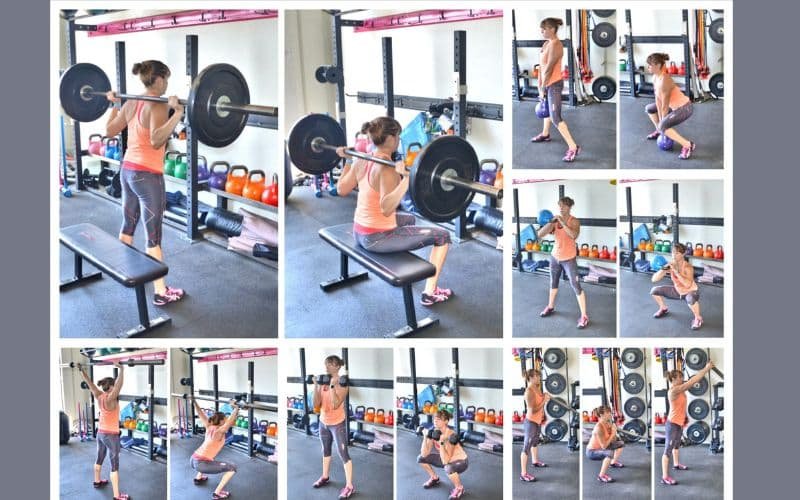
Summary:
| Variation | Best For |
| Back Squat | Mass, Strength |
| Front Squat | Quad Focus, Posture |
| Goblet Squat | Beginners, Mobility |
| Bulgarian Split Squat | Glutes, Balance, Hypertrophy |
| Pistol Squat | Control, Bodyweight Challenge |
Best Mass Gainers to Pair With Your Squat Program
Squats create the demand for growth; a caloric surplus supplies the raw material. If you’re a hardgainer struggling to eat enough through food alone, here’s how three imported, authorized-distribution mass gainers compare:
| Product | Best For | Price |
| Optimum Nutrition Serious Mass (12lb) | Skinny beginners needing a high-calorie, well-tolerated gainer | [INSERT CURRENT PRICE] |
| MuscleTech Mass Tech Extreme 2000 (6lb) | Intermediate lifters wanting a higher protein-to-carb ratio | [INSERT CURRENT PRICE] |
| Levro Legendary Mass (3kg) | Budget-conscious lifters wanting a smaller starter tub | [INSERT CURRENT PRICE] |
Programming Tips for Mass and Performance
To gain size and strength, squats should be programmed strategically based on training goals.
Weekly Frequency:
- Beginners: 2x/week
- Intermediates: 2–3x/week with variation
Volume Guidelines:
- Hypertrophy (Muscle Gain):
- 3–5 sets of 8–12 reps
- 3–5 sets of 8–12 reps
- Strength:
- 4–6 sets of 3–6 reps (heavier loads)
- 4–6 sets of 3–6 reps (heavier loads)
- Endurance or Bodyweight:
- 3–4 sets of 15–20 reps
- 3–4 sets of 15–20 reps
🧪 Sample Squat Workout (Intermediate):
Day 1 – Strength Focus:
- Barbell Back Squat – 5×5
- Romanian Deadlift – 4×8
- Weighted Lunges – 3×10/leg
Day 2 – Volume & Mobility:
- Front Squat – 4×8
- Goblet Squats – 3×12
- Bulgarian Split Squats – 3×10/leg
- Deep Squat Holds – 3×30 sec
Frequently Asked Questions
How many squats should I do a day to build muscle mass?
For hypertrophy, aim for 3–5 sets of 8–12 reps of weighted squats, 2–3 times per week, rather than high-rep daily bodyweight sets. High-rep daily squats build endurance and light toning but rarely add significant mass without progressive overload.
Can squats alone help you gain weight and build muscle?
Squats stimulate major muscle groups and support a favorable hormonal environment for growth, but muscle and weight gain ultimately depend on a caloric surplus and adequate daily protein alongside training — squats provide the stimulus, nutrition provides the raw material.
Is it okay to squat every day?
Light bodyweight squats are generally safe daily for most healthy adults, but heavy barbell squats need 48–72 hours of recovery between sessions so muscle fibers can repair and grow. Training the same muscle group too hard too often raises injury risk without added benefit.
Do squats really increase testosterone and growth hormone?
Yes — research on compound, multi-joint lifts like squats shows a short-term rise in testosterone and growth hormone after heavy training, which supports whole-body muscle growth, not just the legs. The effect is more pronounced with heavier loads and larger muscle recruitment.
How long does it take to see muscle growth from squatting?
Most beginners notice strength gains within 2–4 weeks and visible muscle definition within 8–12 weeks of consistent squat training, 2–3 times weekly, combined with progressive overload and sufficient protein intake.
Conclusion
Squats — whether barbell or bodyweight — are unmatched in their ability to target the quads, hamstrings, glutes, and core. Their compound nature, muscle-building potential, and carryover to real-life strength make them the undisputed king of all muscle-building exercises.
Whether you’re just starting with bodyweight or hitting triple-digit numbers under a barbell, one thing is clear: your fitness journey is incomplete without squats.
- Master your form
- Progress gradually
- Embrace the challenge
Your legs and your entire body will thank you. And when it’s time to fuel that growth, shop with confidence — SportsOne has been an authorized international distributor of Imported Supplements in Pakistan since 2002, with Cash on Delivery, WhatsApp ordering, and stores in Karachi, Lahore, Islamabad, and Gujranwala.

About author

Related posts

For most healthy adults, collagen peptides are well tolerated. The side effects people actually report are mild: a feeling of fullness, bloating, an aftertaste or... Continue reading

The short answer: the best time to take collagen is whichever time you will repeat every single day. Research on hydrolysed collagen peptides has not... Continue reading
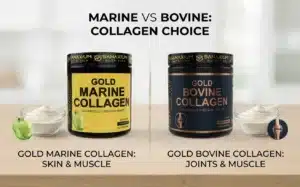
Neither is universally better. Marine collagen is often preferred for skin, hair and people who avoid beef, while bovine collagen is usually cheaper and offers... Continue reading
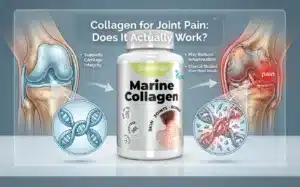
Collagen may help support joint comfort in some people, but the evidence is modest, results are slow, and it is not a substitute for medical... Continue reading
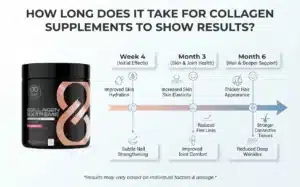
Most people notice their first change from collagen supplements after 4 to 8 weeks, with clearer skin and joint results building between 8 and 12... Continue reading
Add comment