
No products in the cart.
Return To Shop
Is Whey Isolate Worth the Extra Cost Over Concentrate?
If you’ve ever stood in a supplement store or scrolled through an online shop staring at two containers of whey , one labeled “concentrate” and one “isolate” , you’ve probably asked yourself the same question thousands of gym-goers ask every day: is it actually worth spending more? The price difference can be significant, and marketing doesn’t always make things clearer. This guide cuts through the noise and gives you a real, honest comparison so you can make a decision that actually fits your goals, your body, and your budget.
What Is Whey Protein Concentrate?
Before comparing cost and value, it helps to understand what you’re actually buying. Whey protein concentrate is the least processed form of whey. It’s produced when liquid whey , a byproduct of cheese manufacturing , undergoes filtration to remove most of the water, fat, and lactose. The result is a powder that typically contains between 70% and 80% protein by weight, with the remaining portion being fat, carbohydrates, and some lactose.
Because it goes through less processing, concentrate retains more of the naturally occurring growth factors, immunoglobulins, and bioactive compounds found in whole whey. Many nutrition experts argue that this makes concentrate a more “complete” food from a wellness standpoint. It also tends to mix more creamily and taste richer than isolate, which many users prefer. If you want a deeper dive into the benefits of whey protein in general, those bioactive compounds are a big part of the story.

What Is Whey Protein Isolate?
Whey isolate goes one step further in processing. Through additional filtration techniques , most commonly ion exchange or cross-flow microfiltration , almost all of the fat and lactose are removed, leaving a product that is typically 90% or higher in protein content per serving. This extra processing is what drives the higher price point.
- Protein per serving: Isolate typically delivers 25–28g of protein per 30g scoop, versus 20–24g from concentrate.
- Fat content: Isolate usually contains less than 1g of fat per serving; concentrate may contain 2–5g.
- Lactose: Isolate is nearly lactose-free, making it far better tolerated by people with dairy sensitivity.
- Carbohydrates: Isolate is lower in carbs, making it a better fit for low-carb or keto approaches.
- Absorption speed: Isolate is absorbed slightly faster due to lower fat and carb content, though both forms are still considered fast-digesting proteins.
For a detailed side-by-side breakdown, this comparison of whey protein vs whey isolate in 2025 goes into even more technical detail on the differences.
The Real Price Difference
On average, whey isolate costs 20–40% more than concentrate per kilogram in the Pakistani market. That might not sound like much per scoop, but over a month of daily use, it adds up considerably. The question isn’t whether isolate has more protein , it does , but whether that extra protein per rupee justifies the premium for your specific situation.
If you’re checking current isolate protein prices in Pakistan, you’ll notice that the gap between budget concentrate options and premium isolates can be quite significant. That gap is almost entirely explained by the additional processing steps involved, not by the raw ingredient quality.
When the Extra Cost IS Worth It
There are clear scenarios where paying more for isolation makes genuine sense, not just marketing sense.
- Lactose intolerance: If dairy gives you bloating, gas, or digestive discomfort, isolate is almost always tolerated much better. The near-zero lactose content makes a real quality-of-life difference. You can learn more about isolated protein for lactose-intolerant individuals here.
- Cutting and fat loss phases: When every calorie counts, isolate’s lower fat and carb content helps you hit higher protein targets without adding unwanted calories. It pairs naturally with approaches like using whey isolate for weight loss.
- Competitive athletes and body composition goals: Serious gym-goers trying to maintain a very lean physique often prefer isolate for its clean macros. For anyone focused on building lean muscle with minimal fat gain, the difference matters more.
- Post-workout timing sensitivity: If you’re highly optimized about your post-workout window and want the fastest possible absorption, isolate has a slight edge , though the actual difference in muscle-building outcomes is modest for most people.
When Concentrate Is Perfectly Fine
Being honest here is important: for the majority of gym-goers, recreational athletes, and people just trying to hit their daily protein target, concentrate does the job just as well. The extra fat and lactose aren’t problems unless they cause you digestive issues or push you over your calorie goal. A good whey protein guide for beginners will almost always recommend starting with concentrate simply because it’s more economical and still very effective.
If you’re eating a balanced diet, training consistently, and sleeping enough, the marginal difference between isolate and concentrate in terms of actual muscle gain is minimal. Research consistently shows that total daily protein intake matters far more than the specific form of protein you use.
Protein Quality – Does Form Affect the Amino Acid Profile?
Both concentrate and isolate come from the same source , whey , so they share an excellent amino acid profile. Both are complete proteins containing all nine essential amino acids, and both are naturally high in leucine, the key amino acid that triggers muscle protein synthesis. The amino acid profile in iso whey is virtually identical to concentrate , the processing changes the macro ratios, not the amino acid composition meaningfully.
- Both provide high levels of leucine, isoleucine, and valine (BCAAs).
- Both have a PDCAAS (protein digestibility-corrected amino acid score) close to 1.0 , essentially a perfect score.
- Neither is “superior” from a muscle-building standpoint when consumed in equivalent protein doses.
The only meaningful amino acid-related advantage of isolate is that you get slightly more protein per gram of powder, which allows for more precise dosing if you’re tracking macros tightly. If you’re also wondering about what BCAAs are and how they factor into recovery, that’s worth reading alongside this article.

Digestion and Gut Comfort
This is perhaps the most practical reason many people switch from concentrate to isolate, and it’s one that doesn’t get enough attention. Lactose sensitivity exists on a spectrum , some people are completely intolerant, others simply notice bloating or mild discomfort with large amounts of dairy protein. Because isolate removes almost all lactose during processing, it’s significantly easier on the digestive system for this group of people.
If you’ve ever noticed your concentrate shake leaving you feeling gassy or heavy after workouts, it’s almost certainly the lactose. Switching to isolation often resolves this entirely. For those who train twice a day or who consume protein shakes multiple times throughout the day, that comfort difference compounds quickly. Reviews of specific products like easy-on-digestion whey isolate often cite gut comfort as the primary reason for choosing isolate over concentrate.
Choosing the Right Product
Not all isolates are created equal, and neither are all concentrates. Whether you’re buying concentrate or isolate, there are key things to check before spending your money. The supplement market in Pakistan has grown rapidly, and knowing how to assess quality matters more than ever.
- Third-party testing: Look for brands that test for heavy metals and accurately label protein content. Underdosing is a real issue in some products.
- Ingredient list clarity: A good isolate should list whey protein isolate as the first or only protein source. If concentrate appears first on an “isolate” product’s label, you’re mostly buying concentrate at isolate prices.
- Halal certification: For consumers in Pakistan, this matters , check our halal supplement guide and look for certified products available at authorized halal-certified distribution.
- Brand reputation: Established brands from trusted distributors reduce the risk of buying counterfeit or under-dosed products. Check our top whey protein picks for 2025 for vetted options.
If you want to explore specific isolate options currently available, the best whey isolate supplements for 2025 covers leading products across different price points. For those on a budget, there are solid mid-range options that deliver genuine isolate quality without the premium price of top-tier brands.
What About Blends? A Middle-Ground Worth Knowing
There’s a third option that often gets overlooked in the isolate-vs-concentrate debate: protein blends. Many products combine whey concentrate, isolate, and sometimes casein to deliver a more complete nutrition profile at a cost somewhere between the two extremes. These blends can be a smart choice for people who want some of the benefits of isolation without fully committing to the price premium. Our guide on the best proteins for muscle gain , whey, casein, or blends explores this in depth.
Blends also tend to provide a slightly slower digestion curve, which some research suggests may be beneficial for sustained amino acid delivery over the hours following training. For most everyday gym-goers, a well-formulated blend can split the difference nicely between cost efficiency and macro cleanliness.
The Verdict: Who Should Buy Isolate and Who Should Stick With Concentrate?
After looking at all the factors, the answer to “is whey isolate worth the extra cost?” is genuinely: it depends on you specifically, not on a generic recommendation.
- Buy isolate if: You’re lactose intolerant or sensitive, you’re in a cutting phase where every calorie counts, you’re a serious athlete tracking macros precisely, or you simply want the cleanest possible protein source and budget allows.
- Stick with concentrate if: You’re a beginner building a supplement routine, you have no digestive issues with dairy, you’re in a bulking phase where a few extra calories don’t matter, or cost is a genuine constraint.
It’s also worth noting that the best protein supplement is the one you’ll actually use consistently. A concentrate you take every day beats an isolate you use sporadically because the price made you ration it. Consistency with your post-workout protein nutrition and meeting your daily protein targets will always matter more than which form of whey you choose.
About author

Related posts

For most healthy adults, collagen peptides are well tolerated. The side effects people actually report are mild: a feeling of fullness, bloating, an aftertaste or... Continue reading

The short answer: the best time to take collagen is whichever time you will repeat every single day. Research on hydrolysed collagen peptides has not... Continue reading
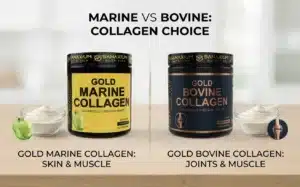
Neither is universally better. Marine collagen is often preferred for skin, hair and people who avoid beef, while bovine collagen is usually cheaper and offers... Continue reading
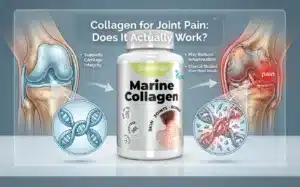
Collagen may help support joint comfort in some people, but the evidence is modest, results are slow, and it is not a substitute for medical... Continue reading
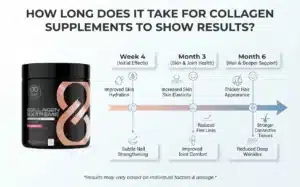
Most people notice their first change from collagen supplements after 4 to 8 weeks, with clearer skin and joint results building between 8 and 12... Continue reading
Add comment