
No products in the cart.
Return To Shop
How to Maintain Peak Testosterone Levels While Working a 9-to-9 Corporate Job in Pakistan
If you are grinding through a 9-to-9 desk job in Karachi, Lahore, or Islamabad, there is a high chance your testosterone levels are quietly taking a hit and you might not even notice it until it is too late. Chronic stress, poor diet, disrupted sleep, and zero movement throughout the day are exactly the conditions that drive testosterone into the ground. The good news? You can absolutely fight back, and it does not require quitting your job or spending hours at the gym. If you are searching for the best testosterone boosters in Pakistan, understanding the right ingredients and supplements can make a major difference.
Testosterone is not just about gym gains or masculinity. It is a master hormone that governs your energy, focus, mood, metabolism, libido, and even your ability to handle work pressure. When levels drop which they will under corporate stress everything starts to feel heavier. You get tired faster, your thinking gets foggy, your motivation crumbles, and your body starts storing more fat, especially around the belly. Understanding why this happens and what you can do about it is the first step toward reclaiming your edge.

Why Corporate Life in Pakistan Specifically Destroys Testosterone
The Pakistani corporate culture has some very specific testosterone-killing patterns that are worth calling out directly. Long commutes in traffic-heavy cities like Karachi and Lahore add 2-3 hours of cortisol-spiking stress before and after work even begins. Office culture often normalizes chai after chai, heavy biryani lunches, late-night client dinners, and a complete absence of structured physical activity.
Here is what your typical 9-to-9 day looks like from a hormonal perspective:
• Morning rush + traffic = cortisol spike before 9 AM
• Sitting for 8-10 hours = reduced circulation and sluggish metabolism
• High-carb, low-protein office meals = blood sugar crashes and hormonal disruption
• Evening stress from deadlines = elevated cortisol that suppresses testosterone production at night
• Late-night screen time = disrupted melatonin and poor sleep quality
This cycle repeats five to six days a week, 48 weeks a year. Over time, the cumulative hormonal damage is significant. But every single one of these factors is addressable.
The Cortisol–Testosterone Seesaw: What Every Corporate Professional Must Know
Before jumping into solutions, you need to understand one fundamental biological principle: cortisol and testosterone are hormonal opposites. When one goes up, the other tends to come down. Cortisol is your stress hormone. It is useful in short bursts but devastating when chronically elevated. In a high-pressure corporate environment, your body is essentially stuck in a low-grade fight-or-flight state all day long.
This is why simply going to the gym twice a week is not enough if you are not managing your stress. You need a comprehensive, lifestyle-wide strategy that reduces cortisol at every possible point throughout the day while simultaneously giving your body everything it needs to produce testosterone naturally.
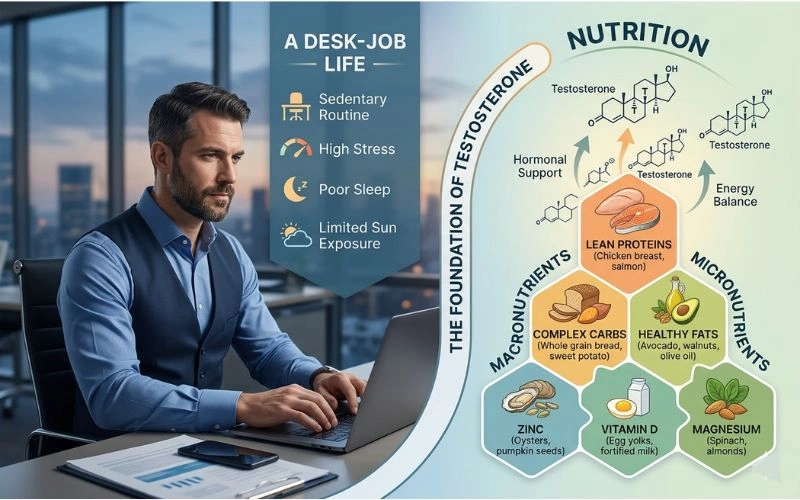
Nutrition: The Foundation of Testosterone in a Desk-Job Life
Diet is where most Pakistani corporate workers fail most dramatically. Between samosas at 11 AM, biryani at 2 PM, and fried snacks at 5 PM, the average office diet is a hormonal disaster. High refined carbohydrates spike insulin, which directly suppresses testosterone production. Chronic calorie restriction from ‘dieting’ is equally damaging.
What to Eat to Keep Testosterone High
Testosterone is made from cholesterol, which means healthy dietary fats are absolutely essential, not optional. This is one of the most overlooked facts in Pakistan’s health discourse, where fat is still demonized. Including eggs, desi ghee in moderation, nuts, and avocados in your diet gives your body the raw material to produce testosterone.
• Zinc-rich foods: Red meat, chicken, pumpkin seeds, and chickpeas are excellent choices widely available in Pakistan
• Magnesium sources: Spinach, almonds, and dark chocolate help with testosterone production and sleep quality
• Vitamin D: Despite Pakistan’s abundant sunshine, many office workers are deficient eat fatty fish or consider supplementation
• High-quality protein: Aim for 0.8–1g per pound of bodyweight to preserve muscle and support anabolic hormone levels
If you struggle to hit your protein targets through food alone which is genuinely difficult on a busy schedule a quality whey protein supplement can fill the gap without adding excess calories or preparation time. For those who are lactose-sensitive or want a cleaner option, isolate protein is an excellent alternative.
Strategic Supplementation for Testosterone Support
Supplementation for testosterone is not about taking magic pills, it is about correcting deficiencies and supporting the biological machinery that produces testosterone. Most working professionals in Pakistan are deficient in at least two or three key micronutrients that directly impact testosterone. Addressing these gaps can make a measurable difference within four to eight weeks.
Testosterone Boosters Worth Considering
Natural testosterone boosters typically contain ingredients like ashwagandha, zinc, fenugreek, D-Aspartic acid, and tribulus terrestris. Ashwagandha, in particular, has strong clinical evidence behind it; multiple studies show it can reduce cortisol by up to 30% and increase testosterone levels meaningfully in men under chronic stress, which describes every Pakistani corporate employee.
Ashwagandha works through the HPA (hypothalamic-pituitary-adrenal) axis, directly reducing the cortisol response. Less cortisol means the testosterone-suppressive signal is weakened, allowing your body to produce more of the hormone naturally. This is not a shortcut, it is a scientifically supported intervention for stress-driven hormonal decline.
Vitamins and Minerals That Matter
Before adding complex supplements, make sure you have the basics covered. Vitamins and minerals like zinc, magnesium, and vitamin D are foundational. Zinc is directly involved in testosterone synthesis even mild deficiency suppresses production. Magnesium improves sleep quality, which is when the majority of testosterone is produced. Vitamin D functions almost like a hormone itself, with receptors found in testicular tissue.
• Zinc: 25-45mg daily, ideally from zinc gluconate or zinc picolinate forms
• Magnesium Glycinate: 300-400mg before bed for sleep quality and testosterone support
• Vitamin D3: 2000-4000 IU daily, especially if you spend most daylight hours indoors
Exercise Strategy for the Time-Constrained Corporate Professional
Let’s be realistic if you are working 9 to 9, you do not have two hours a day for the gym. But here is what the research consistently shows: you do not need them. Short, intense resistance training sessions of 30-45 minutes, three to four times per week, are more effective at boosting testosterone than long, chronic cardio sessions.
What Types of Exercise Actually Raise Testosterone
Compound movements exercises that recruit multiple large muscle groups simultaneously produce the largest acute testosterone response. Think squats, deadlifts, bench press, and rows. If you can only do three exercises per session, make them compound movements. The testosterone spike from a heavy squat session is measurable and significant.
• Resistance training 3-4x/week: Focus on compound lifts, heavy enough that you hit failure between 6-12 reps
• Morning workouts: Testosterone peaks in the morning training at this time amplifies the hormonal benefit
• Avoid chronic endurance exercise: Running for an hour daily at moderate pace actually suppresses testosterone over time
• HIIT sessions: 10-20 minutes of high-intensity intervals maintain testosterone better than steady-state cardio
For energy and performance during these sessions, especially if you are training after a long day, a quality pre-workout supplement can make the difference between an effective session and simply going through the motions.

Recovery and Sleep: The Testosterone Factory
If you are only sleeping five to six hours a night because of late work or Netflix, you are sabotaging your testosterone more than any dietary mistake can. The majority of testosterone production happens during deep sleep, specifically during REM cycles. Research shows that every hour of sleep below seven reduces testosterone levels measurably and sleeping five hours produces about 10-15% less testosterone than sleeping eight hours.
Practical Sleep Optimization for Corporate Workers
The challenge in Pakistan’s corporate culture is that late nights are normalized whether because of international client calls, after-work socializing, or simply unwinding with screens after a stressful day. Changing this requires intentional effort and treating sleep as a non-negotiable performance variable, not a luxury.
• Set a hard cutoff at 10:30-11 PM for screen time blue light suppresses melatonin directly
• Keep your bedroom cool testosterone production is linked to core body temperature
• Avoid heavy meals within two hours of bedtime digestion interferes with sleep quality
• Consider magnesium glycinate 30 minutes before bed it genuinely improves sleep depth
• Aim for seven to eight hours consistently not just on weekends
Supporting your recovery also means managing muscle soreness so it does not compound into fatigue. Glutamine supplementation can help with gut health and recovery, while BCAA products support muscle repair after training, particularly if you train fasted or in a caloric deficit.
Stress Management: The Make-or-Break Factor
No testosterone protocol works optimally in the presence of unmanaged chronic stress. This is the piece that most men ignore because it feels ‘soft’ compared to lifting weights or taking supplements. But cortisol management is mechanically foundational without it, everything else is an uphill battle.
Evidence-Based Stress Reduction Tools
You do not need to become a meditation guru or adopt any spiritual practice. The bar here is much lower. Studies consistently show that even ten minutes of diaphragmatic breathing per day measurably reduces cortisol levels over time. Box breathing (inhale for 4 counts, hold for 4, exhale for 4, hold for 4) is a technique used by Navy SEALs and trauma therapists alike; it works through direct activation of the parasympathetic nervous system.
• 10-minute morning walks: Sunlight exposure in the morning regulates circadian rhythm and boosts morning testosterone naturally
• Breath work: Box breathing or 4-7-8 breathing during lunch or commute reduces cortisol response
• Limit caffeine after 2 PM: Chai in the evening disrupts sleep architecture and keeps cortisol elevated
• Social boundaries: Learning to say no to late meetings protects your hormonal recovery window
Body Composition and Weight Management
One of the most important but overlooked aspects of testosterone management is body fat percentage. Fat tissue, especially visceral (belly) fat contains an enzyme called aromatase that converts testosterone directly into estrogen. This creates a vicious cycle: low testosterone encourages fat storage, more fat increases aromatase activity, which further reduces testosterone.
This is why a Pakistani corporate worker carrying a significant amount of belly fat will struggle to maintain healthy testosterone regardless of supplementation. Weight management through diet and exercise is not vanity, it is hormonal strategy. If fat loss is a goal, fat burners used alongside a caloric deficit and training program can accelerate progress, while L-carnitine specifically helps with fatty acid metabolism and has some evidence for testosterone support as well.
Muscle Preservation During a Corporate Lifestyle
Maintaining muscle mass is as important as losing fat for testosterone optimization. Muscle tissue is metabolically active and helps regulate insulin sensitivity, which directly impacts testosterone production. If you are losing muscle which happens rapidly with sedentary work, poor protein intake, and high stress your hormonal environment shifts unfavorably.
For those looking to build or maintain muscle mass more aggressively, a weight gainer supplement can help ensure you are in a positive caloric balance on training days. Even a lean mass approach gaining muscle without excess fat supports better testosterone levels long-term.
The 9-to-9 Testosterone Maintenance Blueprint: Daily Routine
Here is what a testosterone-optimized day looks like for a Pakistani corporate professional. This is realistic, not idealistic, designed around real constraints like commute, office culture, and social obligations.
Morning Protocol (6:00 AM – 9:00 AM)
• Wake up, get 5-10 minutes of direct sunlight within 30 minutes of waking
• Cold or cool shower reduces cortisol and activates the nervous system
• High-protein breakfast: eggs, paneer, or a whey shake with fruit
• Take vitamin D, zinc, and any testosterone support supplements with breakfast
• 30-45 minute resistance training session 3-4 mornings per week
Midday Protocol (12:00 PM – 2:00 PM)
• Protein-first lunch: prioritize daal, chicken, or beef over rice-heavy options
• 10-minute post-lunch walk helps with blood sugar regulation
• Box breathing during afternoon slump instead of another cup of chai
Evening Protocol (6:00 PM – 11:00 PM)
• Limit chai after 6 PM
• Dinner at least 2 hours before sleep lighter, protein-focused
• Screens off or blue light glasses after 10 PM
• Magnesium glycinate 30 minutes before bed
• Target sleep by 11 PM, 7-8 hours minimum
Scenario-Based Guidance for Different Corporate Situations
Corporate life is not uniform. Different professionals face different specific challenges. Here is how to adapt the testosterone maintenance strategy to real-world scenarios you might face.
The Frequent Traveler / Client Meeting Professional
If your work involves frequent travel between cities or late client dinners, your biggest challenges are sleep consistency and diet control. Pack a quality amino acid supplement to take on travel days when meals are unpredictable. Prioritize protein at every meal even in restaurants chicken tikka, daal, and eggs are available almost everywhere in Pakistan. Use a sleep mask and earplugs religiously quality sleep in hotels is possible with the right tools.
The Sedentary IT / Finance Professional
If your job involves eight or more hours of uninterrupted sitting, your main tool is movement breaks. Set a timer for every 45-60 minutes and stand, stretch, or take a short walk. This is not about fitness, it is about preventing the hormonal and circulatory consequences of prolonged sitting. Studies show even brief walking breaks significantly improve insulin sensitivity throughout the day, which supports testosterone production.
The High-Stress Manager / Executive
Senior professionals dealing with high decision load and team management face the most severe cortisol burden. For this group, ashwagandha supplementation becomes particularly important. So does delegation learning to protect even a few hours of low-stress time per day for exercise, family, or simply doing nothing is not laziness; it is hormonal maintenance. The health and wellness category at SportsOne has products specifically designed for stress and hormonal support.
What to Avoid: Common Mistakes Pakistani Corporate Workers Make
Understanding what damages testosterone is just as important as knowing what builds it. Pakistani corporate culture has several very specific habits that are normalized but hormonally devastating.
• Excessive chai consumption: 4-6 cups per day creates a chronic low-grade cortisol elevation and disrupts sleep both directly harmful to testosterone
• Weekend binge drinking: Alcohol is directly toxic to the Leydig cells in the testes that produce testosterone even moderate consumption over years has measurable effects
• Crash dieting for Eid: Severe caloric restriction drops testosterone levels within days gradual, sustainable approaches are always better
• All cardio, no weights: Running on the treadmill daily without resistance training does not support testosterone it may actually suppress it
• Ignoring sleep for ambition: ‘I’ll sleep when I’m successful’ is literally a testosterone-destroying philosophy
Frequently Asked Questions
1. Can testosterone levels really drop from a desk job, or is this exaggerated?
It is not exaggerated at all. Multiple studies have documented that men in chronically stressful, sedentary work environments show measurably lower testosterone compared to active, lower-stress counterparts. Elevated cortisol from workplace stress directly suppresses the hormonal signals that trigger testosterone production in the testes. Combined with poor diet, sleep deprivation, and inactivity all common in Pakistani corporate culture the effect becomes clinically significant over time.
2. How quickly can I expect to see improvements in testosterone after making lifestyle changes?
Initial improvements in energy, mood, and libido can appear within two to four weeks of consistent changes to sleep, diet, and stress management. Measurable hormonal changes typically take six to twelve weeks of sustained effort. Supplementation with zinc, vitamin D, and ashwagandha can accelerate early improvements, particularly if deficiencies are being corrected. Consistency over months is what produces lasting hormonal optimization, not any single intervention.
3. Are testosterone booster supplements safe and legal in Pakistan?
Natural testosterone boosters sold at reputable stores likeSportsOne are completely legal and generally safe for healthy adults. They contain herbal and nutritional ingredients like ashwagandha, zinc, and D-Aspartic acid, not synthetic hormones. As always, consult a healthcare provider if you have any existing health conditions, are on medications, or have concerns about hormonal health before starting any supplement protocol.
4. I cannot afford a gym membership can I still maintain good testosterone levels?
Absolutely. Bodyweight resistance training push-ups, squats, lunges, pull-ups is highly effective for hormonal support. The key is progressive resistance and intensity, not equipment. Diet, sleep, and stress management are actually more impactful than gym training for testosterone, meaning someone eating well, sleeping enough, and managing stress without gym access will likely have better testosterone than someone training daily on poor sleep and a bad diet.
5. Should I get my testosterone levels tested, and where can I do this in Pakistan?
Yes, if you have persistent symptoms like chronic fatigue, low libido, poor focus, mood changes, or unexplained weight gain, getting a blood panel including total testosterone, free testosterone, LH, FSH, and cortisol is worth the investment. Most major path labs in Pakistan (Chughtai, Agha Khan, Islamabad Diagnostic Centre) offer hormone panels. Baseline testing lets you track your progress objectively rather than guessing whether your interventions are actually working.
Final Thoughts: Your Hormones Are a Performance Variable
Maintaining peak testosterone while grinding through a 9-to-9 corporate job in Pakistan is absolutely possible but it requires treating your hormonal health with the same strategic seriousness you bring to your career. The seven pillars are nutrition, sleep, resistance training, stress management, targeted supplementation, body composition, and avoiding the specific lifestyle traps that Pakistani corporate culture normalizes.
None of this requires a perfect life or unlimited time. It requires consistent, smart choices stacked on top of each other daily. Start with sleep and protein and get those two right this week. Add a morning resistance training habit next week. Build from there. Within three to four months, the difference in energy, focus, body composition, and overall vitality will be significant enough that your colleagues will notice it before you do.
For all your supplementation needs from whey protein and creatine to test boosters and vitamins and minerals SportsOne International offers genuine, verified products with free delivery on orders above Rs. 2,000. Do not shortchange your hormonal health with counterfeit supplements. Your testosterone levels and your career performance depend on getting this right.


About author

Related posts

If you’ve been searching for the Xtend BCAA price in Pakistan for the 30 servings tub, you’ve probably noticed a lot of outdated listings and... Continue reading
If you have been searching for the Testrol Gold ES price in Pakistan, you have likely already come across it as one of the more... Continue reading
If you’ve been researching how to cut stubborn body fat without losing hard-earned muscle, chances are you’ve come across the CLA + L-Carnitine combo. It’s... Continue reading
Typing “gym supplement shop near me” into Google usually means one thing: you need whey protein, creatine, or a pre-workout today, not next week, and... Continue reading

If you’re a hard gainer struggling to add size no matter how much desi food you eat, Labrada Muscle Mass Gainer 6lb is one of... Continue reading
Add comment