
No products in the cart.
Return To Shop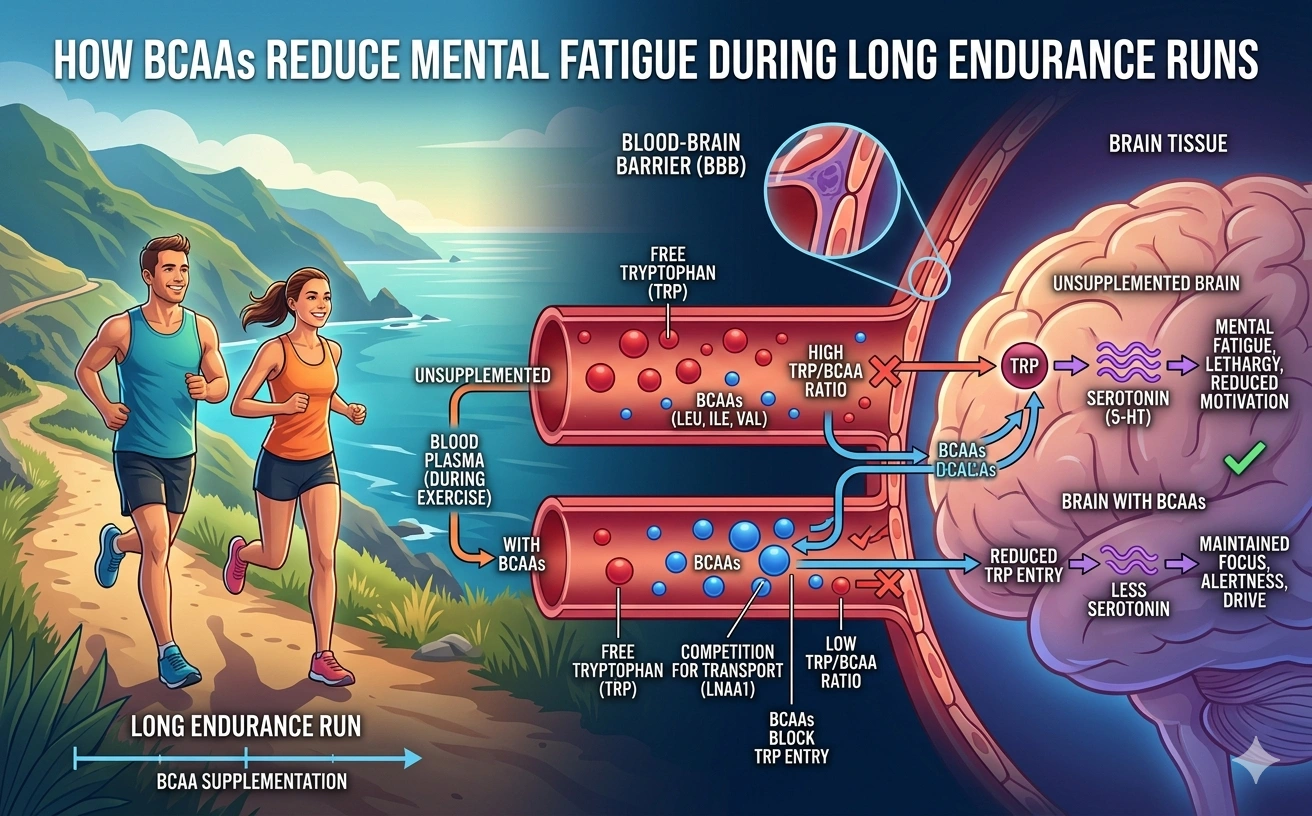
How Do BCAAs Reduce Mental Fatigue During Long Endurance Runs?
Anyone who has pushed past the 25 kilometre mark of a long run knows the feeling. Your legs still have something left, but your brain starts negotiating. Thoughts get foggy, motivation drops, and every kilometre feels heavier than the last. This is not just physical exhaustion, it is central fatigue, a brain-based phenomenon that BCAAs have been studied for specifically. Understanding how BCAAs interact with brain chemistry during endurance exercise helps explain why so many long-distance runners keep a tub on hand before race day.
What Is Central Fatigue and Why Does It Hit Runners So Hard?
Central fatigue refers to a decline in your brain’s ability to drive sustained physical effort, separate from the muscular fatigue happening in your legs. It is regulated largely by neurotransmitter activity, particularly serotonin, which increases during prolonged exercise and contributes to feelings of tiredness, reduced motivation, and impaired concentration.
During a long endurance run, your body burns through carbohydrate stores and increasingly relies on fat metabolism for fuel. This shift triggers a release of free tryptophan into the bloodstream, the precursor to serotonin. The longer the run, the more tryptophan crosses into the brain and the more serotonin gets produced, which is a major driver of that heavy, foggy feeling late in a race.

Where BCAAs Enter the Picture
Branched chain amino acids, specifically leucine, isoleucine, and valine, compete with tryptophan for the same transporter system that carries amino acids across the blood-brain barrier. This is the core mechanism behind BCAA supplementation for endurance athletes. When BCAA levels in the blood are elevated, less tryptophan gets transported into the brain, which means less serotonin synthesis and a delayed onset of central fatigue.
In simple terms, BCAAs do not eliminate fatigue, but they slow down the brain chemistry that makes you feel mentally drained during long runs. This translates into sharper focus, more consistent pacing decisions, and a stronger ability to push through the final stretch of a race or long training session.
The Research Behind BCAA and Central Fatigue
Several studies on endurance athletes have measured perceived exertion and cognitive performance after BCAA supplementation during prolonged exercise. The general pattern shows that athletes supplementing with BCAAs report lower perceived effort during the later stages of long duration activity, even when objective physical fatigue markers remain similar to non-supplemented groups.
Key findings consistently observed in this research area:
• BCAA supplementation lowers the tryptophan to BCAA ratio in the bloodstream
• Reduced serotonin synthesis correlates with delayed perceived mental fatigue
• Athletes report improved subjective focus during the final third of long endurance events
• Effects are most noticeable in events lasting 90 minutes or longer
This last point matters. For short runs under an hour, the central fatigue mechanism barely has time to develop, so BCAA benefits for mental clarity are most relevant to marathoners, ultra runners, and long tempo or long slow distance training sessions.
Beyond the Brain: What Else BCAAs Do During a Long Run
Mental fatigue reduction is not the only reason endurance runners reach for BCAAs. They also play a role in protecting muscle tissue and supporting recovery, which indirectly supports mental performance too since muscle pain and fatigue contribute to overall perceived effort.
• Reduced muscle protein breakdown during prolonged low-intensity exercise
• Lower markers of exercise-induced muscle damage post-run
• Support for glycogen sparing when paired with adequate carbohydrate intake
• Faster recovery onset for the day after a long run
How and When to Take BCAAs for a Long Run
Timing matters more for BCAAs than most supplements because the central fatigue mechanism is dose and timing dependent. Taking BCAAs only after your run misses the window where they could have competed with tryptophan during the activity itself.
A practical approach most coaches and sports nutritionists recommend:
• Take a serving 30 to 45 minutes before a long run to build blood BCAA levels early
• Sip a diluted BCAA mix during runs over 90 minutes, especially past the two hour mark
• Pair with electrolytes if running in hot or humid conditions to avoid additional fatigue from dehydration
• Take a final serving post-run to support the recovery side of muscle protein synthesis
BCAA Price in Pakistan: What You Should Expect to Pay
Once you know BCAAs are worth using for long runs, the next practical question is cost. BCAA price in Pakistan varies depending on the brand, the ratio of leucine to isoleucine to valine, and whether the product includes added electrolytes or flavouring. Here is a current snapshot to help you budget.
| Product Type | Pack Size | Approx PKR | Best Use Case |
| Sanaxium Gold BCAA XT | 300g | Rs. 6,500 – 7,500 | General endurance and gym use |
| SCIVATION XTEND BCAA | 30 servings | Rs. 8,800 | Maximum leucine for central fatigue delay |
| ELEV BCAA GOLD | 300g | Rs. 6,500 – 8,500 | Hot weather long distance running |
| ELEV BCAA PRO | 90 caps | Rs. 2,900 – 3,500 | Travel and race day convenience |
| APPLIED NUTRITION BCAA AMINO HYDRATE | 450g+ | Rs. 7,500 – 8,500 | Serious marathon and ultra athletes |
Note: Prices are approximate and fluctuate with import costs and ongoing promotions. Always confirm current pricing on the product page before purchasing.

Choosing the Right BCAA Ratio for Endurance Running
Not all BCAA products are built the same. The standard 2:1:1 ratio of leucine to isoleucine to valine works well for general use, but runners specifically chasing central fatigue benefits often look toward higher leucine ratios like 4:1:1 or 8:1:1, since leucine is the primary amino acid competing against tryptophan transport. Browse the full BCAA category to compare ratios, flavours, and pack sizes before your next race cycle.
If you are new to BCAA supplementation, starting with a standard 2:1:1 ratio is a safe entry point. As your training volume increases toward marathon or ultra distances, shifting to a higher leucine ratio becomes more worthwhile given the extended exposure to central fatigue mechanisms during those longer efforts.
Should You Combine BCAAs With Carbohydrates During a Run?
Yes, and this combination actually strengthens the central fatigue benefit. Carbohydrate intake during a long run helps maintain blood glucose and reduces the rate at which the body shifts toward fat metabolism, which is the same shift that triggers tryptophan release. Pairing BCAAs with a steady carbohydrate source during long runs creates a more complete defence against both physical and mental fatigue.
Practical pairing options for race day or long training runs:
• BCAA powder mixed into a carbohydrate energy drink for sipping throughout the run
• BCAA capsules taken alongside energy gels at regular intervals
• A pre-run BCAA dose combined with a carbohydrate-rich breakfast 60 to 90 minutes before starting
Final Thoughts on BCAAs and Mental Fatigue
The brain fog that hits during the later stages of a long run is real, measurable, and tied directly to rising serotonin levels driven by tryptophan transport into the brain. BCAAs work by competing with tryptophan for that same transport pathway, which delays the onset of central fatigue and helps maintain mental sharpness when it matters most. Combined with proper carbohydrate intake and smart timing, BCAAs are one of the more evidence-backed tools available to endurance runners. Check current BCAA price in Pakistan options and find a ratio that matches your training distance and goals.
Frequently Asked Questions
Q1: Do BCAAs actually reduce mental fatigue or is it just placebo?
Research shows a measurable mechanism behind it. BCAAs compete with tryptophan for transport into the brain, lowering serotonin synthesis during prolonged exercise. Multiple studies report reduced perceived exertion in endurance athletes using BCAAs, suggesting a genuine physiological effect rather than just a placebo response.
Q2: How long before a run should I take BCAAs for the best effect?
Taking a serving 30 to 45 minutes before starting allows blood BCAA levels to rise before the central fatigue mechanism begins developing. For runs longer than 90 minutes, sipping additional BCAAs during the run extends the benefit through the later, more mentally demanding stages of the effort.
Q3: What is the average BCAA price in Pakistan for a monthly supply?
A standard 300 to 400 gram tub typically costs between Rs. 3,500 and Rs. 5,500 and lasts most runners 20 to 30 servings depending on dosage. Higher ratio or imported premium options can range up to Rs. 11,000. Check the BCAA price in Pakistan category page for current verified pricing.
Q4: Is a higher leucine ratio BCAA better for marathon runners?
For runners specifically targeting central fatigue delay, a higher leucine ratio such as 4:1:1 or 8:1:1 can offer a stronger effect since leucine is the primary competitor against tryptophan transport. Standard 2:1:1 ratios still work well for general use and shorter endurance efforts under 90 minutes.
Q5: Can BCAAs replace carbohydrate fuel during a long run?
No. BCAAs support amino acid availability and central fatigue delay, but they do not replace the energy carbohydrates provide. Long runs still require adequate carbohydrate intake for sustained energy. BCAAs work best as a complementary tool alongside, not instead of, proper carbohydrate fuelling.


About author

Related posts

The short answer: the best time to take collagen is whichever time you will repeat every single day. Research on hydrolysed collagen peptides has not... Continue reading

Neither is universally better. Marine collagen is often preferred for skin, hair and people who avoid beef, while bovine collagen is usually cheaper and offers... Continue reading

Collagen may help support joint comfort in some people, but the evidence is modest, results are slow, and it is not a substitute for medical... Continue reading

Most people notice their first change from collagen supplements after 4 to 8 weeks, with clearer skin and joint results building between 8 and 12... Continue reading

Collagen is the most abundant protein in the human body, quietly holding together your skin, joints, tendons, hair, and even your gut lining. As you... Continue reading
Add comment