
No products in the cart.
Return To Shop
How Much Protein Do You Need Per Day? Simple Guide for Pakistani Gym-Goers
If you have ever stood in front of a protein tub doing mental math about scoops and grams, you are not alone. So, how much protein per day do you really need? It depends on your body weight, activity level, and fitness goal. You do not need to follow a random number from an online forum.
This guide breaks down the recommended protein intake for Pakistani gym-goers. You will also get a free calculator to find your daily protein target. Plus, you will learn how to reach that target with food and supplements without making things complicated.
Why Your Daily Protein Requirement in Pakistan Matters
Protein is the raw material your body needs to repair muscle fibres after training. It also supports your immune system and helps you feel full during long work or study days.
Too little protein can slow recovery and affect your strength. It may also increase cravings. Getting the right amount can support better recovery between gym sessions. You may also notice steadier energy and better progress.
Your protein needs depend on your fitness goal. This includes muscle gain, fat loss, or general fitness.
The tricky part is that online advice often focuses on Western diets and body types. Your daily protein requirement in Pakistan should reflect local eating habits.
Many Pakistani meals include roti, rice, dal, and chicken. Most people also do not track every gram of protein they eat. So, a practical approach is more useful than a generic number.

How Much Protein Per Day Do You Actually Need?
Protein needs are usually calculated per kilogram of body weight, and the right number changes based on your activity level and goal:
- Sedentary adults: 0.8g per kg of body weight per day, the baseline for general health
- Casual gym-goers (3-4 sessions/week): 1.2 to 1.6g per kg per day
- Muscle building / strength training: 1.6 to 2.2g per kg per day
- Fat loss while preserving muscle: 1.8 to 2.4g per kg per day, since higher protein helps protect lean mass in a calorie deficit
- Endurance athletes (running, cricket, football): 1.2 to 1.6g per kg per day, with extra attention to post-session recovery
For example, a 70kg gym-goer training for muscle gain would aim for roughly 112g to 154g of protein per day. That is not as extreme as it sounds once it is spread across four or five meals.
Calculate Your Protein Intake in Seconds
Enter your weight and choose your goal to get a quick daily protein target. Use this estimate as a starting point for planning your diet. Active people generally need more protein than sedentary adults.
Your body weight (kg)
Your goal
- General health (sedentary)
- Casual gym / fitness maintenance
- Muscle building
- Fat loss (preserve muscle)
- Endurance training
Calculate My Protein Target
Note: This calculator provides a general estimate, not medical advice.
How to Hit Your Protein Target with Pakistani Foods
You do not need to live on chicken breast to hit your numbers. Common Pakistani protein sources include:
- Chicken breast: roughly 27g protein per 100g cooked
- Lentils (daal): roughly 9g protein per 100g cooked
- Eggs: roughly 6g protein per large egg
- Paneer: roughly 18g protein per 100g
- Greek yoghurt: roughly 10g protein per 100g
Whole food alone can get most people close to their target, but it often means eating large volumes of chicken or dal, which is not always practical between classes, shifts, or a busy work schedule. This is where a quality whey protein supplement helps close the gap conveniently, especially post-workout when your muscles are primed to absorb amino acids. Browse the full protein range at Sports One to compare whey, isolate, and casein options based on your goal and budget.
If you are just starting out and want a slower, more detailed breakdown built specifically for beginners, our beginner’s guide to daily protein needs walks through the basics step by step. For those training in a calorie deficit, see how to eat enough protein for muscle growth while cutting.
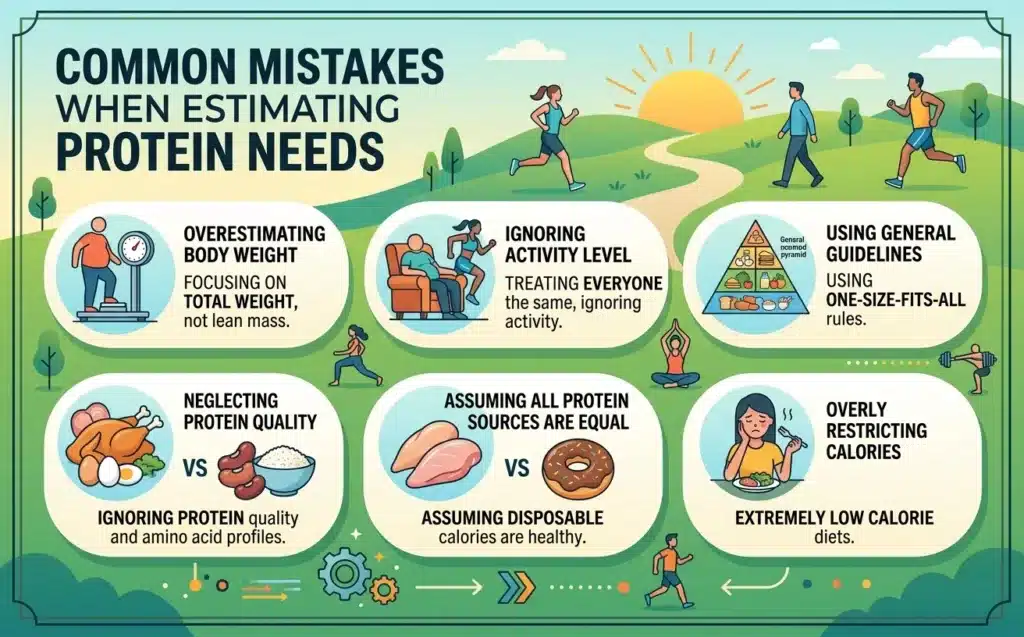
Common Mistakes When Estimating Protein Needs
A few habits quietly sabotage people who are otherwise doing everything right:
- Underestimating portion sizes: a “chicken piece” at a wedding is not the same as a measured 100g serving
- Front-loading protein at dinner only: your body uses protein more efficiently when it is spread across the day rather than eaten in one large meal
- Ignoring total calories: protein alone will not build muscle if you are not eating enough overall, and it will not help fat loss if total intake is too high
- Skipping post-workout nutrition: waiting too long after training to eat protein delays recovery
For a deeper look at how protein timing affects muscle repair, see how much leucine is needed to trigger muscle protein synthesis.
Choosing the Right Protein Supplement
Not every protein powder suits every goal. If you are building muscle on a budget, a whey concentrate works well. If you are cutting or lactose-sensitive, an isolate is a cleaner option. For a side-by-side comparison of whey, casein, and blends, check our guide to the best proteins for muscle gain, or read the full whey protein buyer’s guide for Pakistan before you order.
Every product sold on Sports One International is imported, authorized-distributor stock and Halal-certified, so you are not gambling on fake tubs relabeled as premium brands. Orders are backed by cash on delivery and fast, city-wise dispatch across Pakistan, so whether you are in Lahore, Karachi, or Islamabad, your protein does not sit in transit for a week while you wait to restock.
If You Are Not Sure Where to Start with Sports One
If the numbers still feel overwhelming, the simplest approach is this: use the calculator above to get your target, pick one reliable whey protein to cover your post-workout gap, and let your regular meals do the rest. You do not need five supplements to hit a protein target, just consistency and one good source you can rely on.
Frequently Asked Questions
How much protein per day do I need to build muscle?
Most people building muscle should aim for 1.6 to 2.2g of protein per kg of body weight daily. For a 70kg person, that is roughly 112g to 154g. Spread this across 3 to 5 meals, and pair it with consistent strength training and enough total calories to support growth.
Can I get enough protein from Pakistani food alone?
Yes, but it often takes large portions of chicken, daal, and dairy to hit higher targets. Combining whole foods with a whey protein shake makes it easier to close the gap, especially for people with busy schedules who cannot cook multiple protein-rich meals daily
Is too much protein harmful?
For healthy adults, intakes up to around 2.2g per kg per day are generally considered safe. Extremely high intakes over long periods may strain kidneys in people with existing kidney conditions, so anyone with a medical concern should check with a doctor before increasing intake significantly.
What is the best time to take protein powder?
Within 30 to 60 minutes after training is the most commonly recommended window, since your muscles absorb amino acids efficiently then. That said, total daily protein intake matters more than exact timing, so a shake at any point that fits your schedule still helps.
Does protein intake differ for women versus men?
The per-kilogram guidelines are largely the same for men and women. Since women often have lower average body weight, the total grams needed may be lower, but the 1.6 to 2.2g per kg range for muscle building applies to both, adjusted for individual body weight and goals.
Disclaimer: This article is for general informational purposes and is not a substitute for personalized medical or nutritional advice. Consult a healthcare professional before making significant changes to your diet or supplement routine, especially if you have an existing health condition.


About author

Related posts

For most healthy adults, collagen peptides are well tolerated. The side effects people actually report are mild: a feeling of fullness, bloating, an aftertaste or... Continue reading

The short answer: the best time to take collagen is whichever time you will repeat every single day. Research on hydrolysed collagen peptides has not... Continue reading

Neither is universally better. Marine collagen is often preferred for skin, hair and people who avoid beef, while bovine collagen is usually cheaper and offers... Continue reading

Collagen may help support joint comfort in some people, but the evidence is modest, results are slow, and it is not a substitute for medical... Continue reading
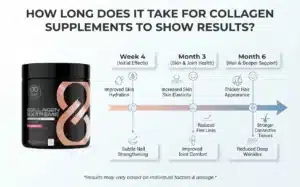
Most people notice their first change from collagen supplements after 4 to 8 weeks, with clearer skin and joint results building between 8 and 12... Continue reading
Add comment