
No products in the cart.
Return To Shop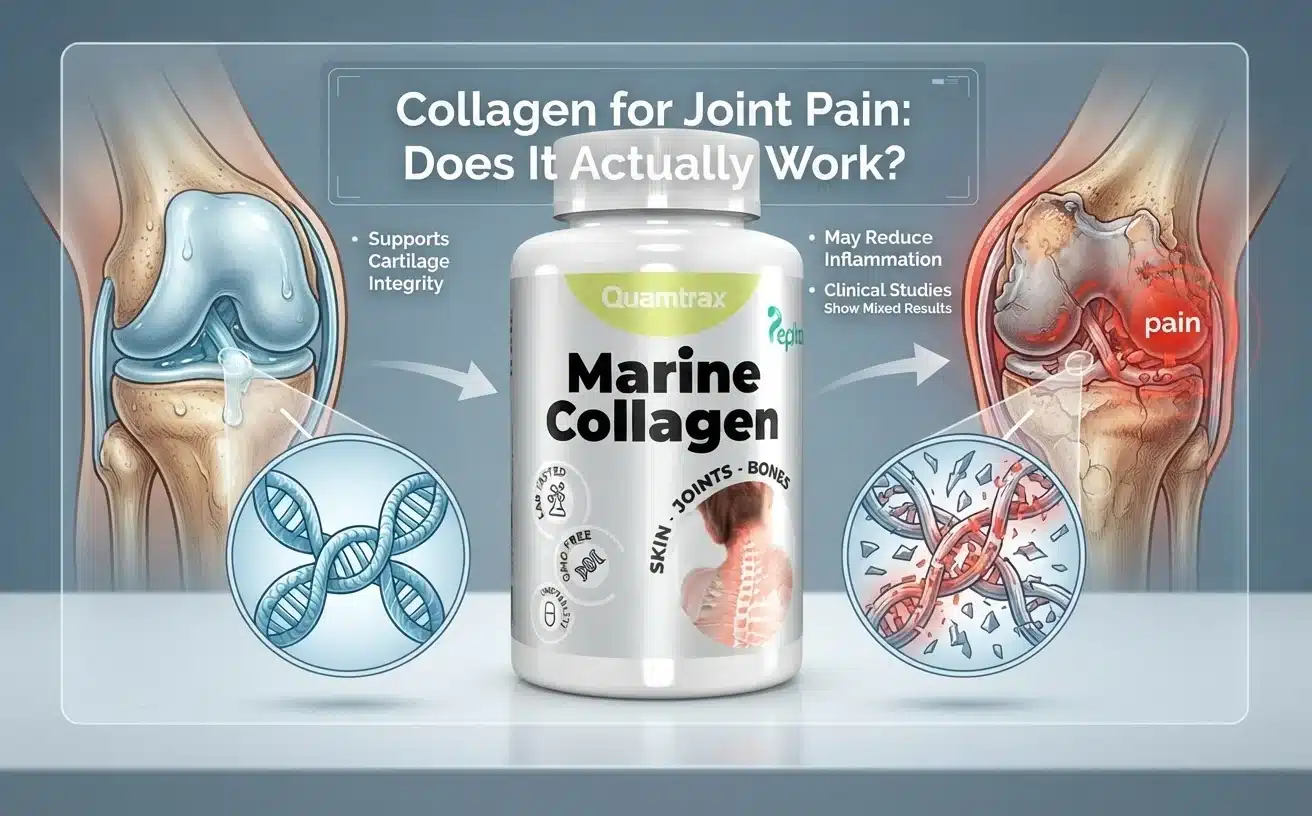
Collagen for Joint Pain: Does It Actually Work?
Collagen may help support joint comfort in some people, but the evidence is modest, results are slow, and it is not a substitute for medical care. If you are skeptical, that is a sensible starting point. Before you compare the collagen price in Pakistan, this guide explains what studies suggest, who is most likely to benefit, and what to expect after 8 to 12 weeks.
What Collagen Does in Your Joints
Collagen is the main structural protein in cartilage, the smooth cushion that lets bones glide over each other. It also makes up tendons and ligaments. From your mid-20s, natural collagen production gradually declines, and heavy training, past injuries and excess body weight place extra load on joint tissue.
The idea behind supplements is simple. Hydrolysed collagen peptides supply amino acids such as glycine and proline, which your body can use as building blocks. Some research also suggests these peptides may signal cartilage cells to support their own maintenance. This is why collagen is best described as something that supports joint tissue, not something that removes pain on its own.

Does the Research Support It?
The honest answer is: partly. Several small to mid-sized human trials have found that daily collagen peptides were associated with modest improvements in joint comfort and mobility, particularly in active people and those with mild knee discomfort. Other studies found little difference compared with placebo, and many trials were short or funded by supplement makers.
| Collagen type | Typical daily amount in studies | Time before assessing results |
| Hydrolysed collagen peptides (Type I and III) | 5 to 15 g | 12 to 24 weeks |
| Undenatured Type II (UC-II style) | About 40 mg | 8 to 12 weeks |
| Marine collagen (Type I) | 5 to 10 g | 8 to 12 weeks |
Two takeaways matter here. First, effects tend to be gradual, so judging results after two weeks is unfair. Second, people with severe arthritis or ongoing swelling should not rely on supplements alone. If you want to understand the wider options, read our guide to natural joint pain supplements in Pakistan.
Who Is Most Likely to Benefit?
- Gym-goers and athletes: Lifters and runners who load their knees, shoulders and elbows often report the most noticeable support.
- Adults over 30 with mild stiffness: Morning stiffness and post-activity aches are the usual targets.
- People with low protein intake: If your diet lacks protein, collagen may fill a gap, though complete protein still comes first.
- Those already doing the basics: Strength training, weight management and good sleep make any supplement work better.
It is less likely to help if pain comes from an acute injury, infection, gout or advanced joint damage. Those need a doctor, not a tub of powder.
Collagen Price in Pakistan: What Does a Joint Trial Cost?
Because joint results need at least 8 to 12 weeks, judge price by cost per serving. Marine collagen usually costs more than bovine, and formulas with vitamin C or hyaluronic acid sit higher. The details below are indicative, so always confirm the live PKR price on the product page.
| Product | Source | Indicative pricing |
| Applied Nutrition Collagen Peptides 300g | Hydrolysed bovine | Mid to premium bracket |
| Elev Collagen Extreme 300g | Marine | Approx. Rs. 3,800 to Rs. 7,600 per tub |
| Sanaxium Gold Collagen Peptide 150g | Collagen peptide | Entry-level bracket |
Editorial note: these are estimates drawn from indicative ranges, not live quotes. Roughly Rs. 100 to Rs. 183 per serving means a 12 week daily trial of about 84 servings may cost around Rs. 8,000 to Rs. 15,000. You can compare every option in our collagen category or read the collagen supplements in Pakistan guide.
Expert Guidance: Dosage, Timing and Safety
For hydrolysed collagen peptides, most joint-related studies use 5 to 15 grams daily, and many retail products suggest around 5 to 10 grams. Start with the serving printed on your label and stay there. Taking more does not speed things up, because extra collagen is simply digested as ordinary protein.
Timing is flexible, so pick a time you will keep. Some athletes take it 30 to 60 minutes before training with a vitamin C source, because vitamin C is involved in collagen formation. Others prefer evenings, and our article on the best time to take collagen for sleep and joint repair covers that approach. Collagen mixes into water, tea, coffee or smoothies, and cooking rarely matters, as explained in does cooking destroy collagen.
Collagen is generally well tolerated. Mild bloating, fullness or an aftertaste are the most common complaints and often ease with a smaller serving or by taking it with food. Marine collagen is fish-derived, so avoid it if you have a fish or shellfish allergy. Anyone who is pregnant, breastfeeding, on medication or living with a kidney condition should ask a doctor first. Seek medical advice promptly if joint pain comes with swelling, redness, fever, locking or pain at night.
Give it a fair test. Use it daily for at least 8 to 12 weeks, note your stiffness and how many squats or stairs feel comfortable, and reassess. If nothing changes at the correct dose, collagen may simply not suit your situation.
What to Combine With Collagen for Better Joint Support
Supplements work best inside a routine. Progressive strength training builds the muscle that protects your joints, and maintaining a healthy weight reduces knee load. Bone-supporting nutrients also matter, so review our guide to the best calcium and vitamin D supplements in Pakistan. Omega-3 is another option people pair with collagen, and you can compare choices in our best omega-3 supplement in Pakistan article.
Buying Genuine Collagen in Pakistan
Results depend on getting a real, correctly dosed product. SportsOne is an authorised distributor of Imported Supplements in Pakistan, with Halal-certified stock, cash on delivery and nationwide delivery. Learn how to verify original imported supplements in Pakistan before you order.
Frequently Asked Questions
Does collagen really help with joint pain?
Collagen may help support joint comfort in some people, especially active adults with mild discomfort. Study results are mixed and modest, and effects build slowly over 8 to 12 weeks. It supports joint tissue but is not a cure or medical treatment.
How long does collagen take to support joints?
Most people need 8 to 12 weeks of daily use before judging joint comfort, and some studies run up to 24 weeks. Collagen is not an instant painkiller, so consistency matters more than dose. Track your stiffness monthly to see real change.
Which collagen type is best for joints?
Type II collagen is naturally found in cartilage and is often used in joint formulas, while hydrolysed Type I and III peptides are widely studied at 5 to 15 grams daily. Choose by budget, source preference and label dosage.
What is the collagen price in Pakistan?
Indicative pricing is roughly Rs. 3,800 to Rs. 7,600 per tub, or about Rs. 100 to Rs. 183 per serving, depending on brand and source. Marine collagen usually costs more. Confirm the live PKR price on the product page before ordering.
Can I take collagen with other joint supplements?
Collagen is commonly combined with vitamin C, calcium, vitamin D or omega-3, and no major interactions are widely reported. Introduce products one at a time, follow label doses, and ask your doctor if you take medication or have a condition.
Disclaimer: This article is for general information only and is not medical advice. Supplements are not intended to diagnose, treat, cure or prevent any disease. Consult a qualified healthcare professional before starting any supplement, especially if you have persistent joint pain, are pregnant, breastfeeding or take medication.

About author

Related posts

For most healthy adults, collagen peptides are well tolerated. The side effects people actually report are mild: a feeling of fullness, bloating, an aftertaste or... Continue reading

The short answer: the best time to take collagen is whichever time you will repeat every single day. Research on hydrolysed collagen peptides has not... Continue reading

Neither is universally better. Marine collagen is often preferred for skin, hair and people who avoid beef, while bovine collagen is usually cheaper and offers... Continue reading
Most people notice their first change from collagen supplements after 4 to 8 weeks, with clearer skin and joint results building between 8 and 12... Continue reading

Collagen is the most abundant protein in the human body, quietly holding together your skin, joints, tendons, hair, and even your gut lining. As you... Continue reading
Add comment