
No products in the cart.
Return To Shop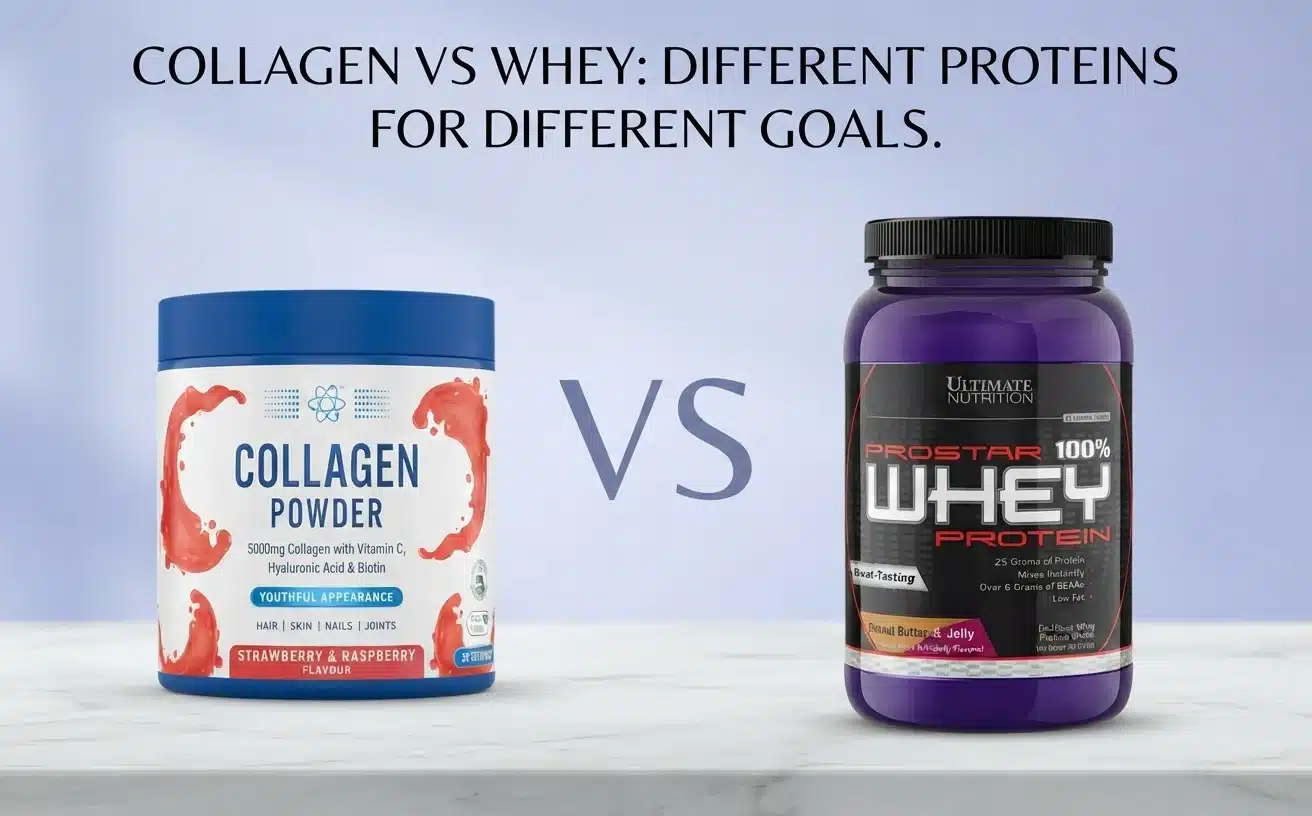
Collagen vs Whey Protein: What’s the Difference and Do You Need Both?
Anyone comparing supplement shelves in Pakistan runs into the same question sooner or later: collagen or whey protein, and is one enough? Both are protein supplements, but they build different things. Whey rebuilds muscle. Collagen rebuilds the joints, tendons, and skin that carry that muscle around. Before you check the Collagen Price in Pakistan, it helps to understand what each protein actually does, and whether your goals call for one, the other, or both together.
What Is Whey Protein?
Whey protein is a fast-digesting, complete protein extracted from milk during cheese production. It carries all nine essential amino acids in a ratio that favours muscle protein synthesis, with leucine as the key trigger for repair and growth. That is why whey protein in Pakistan remains the default post-workout choice for gym-goers, athletes, and anyone trying to hit a daily protein target through diet alone. It comes in three main forms: concentrate, isolate, and hydrolysed, each differing mainly in protein percentage, lactose content, and digestion speed. For a full breakdown of the differences, see our guide on whey concentrate vs isolate vs hydrolysed.
What Is Collagen?
Collagen is the most abundant structural protein in the human body, making up the bulk of skin, tendons, ligaments, cartilage, and bone matrix. Unlike whey, it is low in branched-chain amino acids and leucine, so it is a poor tool for building muscle. What it does well is supply glycine, proline, and hydroxyproline, the specific amino acids your body uses to repair connective tissue. Natural collagen production starts declining in your mid-20s and drops further with age and heavy training, which is why hydrolysed collagen peptides (marine or bovine) have become a staple for runners, lifters, and anyone managing joint wear. Our guide on collagen supplements in Pakistan covers sourcing and types in more depth.

Collagen vs Whey Protein: Key Differences
| Factor | Whey Protein | Collagen |
| Primary role | Muscle repair and growth | Joint, tendon, and skin repair |
| Amino acid profile | High leucine and BCAAs | High glycine, proline, hydroxyproline |
| Best taken | Post-workout or between meals | Any time, consistently, daily |
| Builds muscle? | Yes, a complete protein | No, an incomplete protein |
| Supports joints and skin? | Limited | Yes, primary benefit |
| Typical daily dose | 20 to 30g per serving | 5 to 10g per serving |
Collagen Price in Pakistan vs Whey Protein Price
Pricing on both categories varies by brand, source (marine vs bovine collagen, concentrate vs isolate whey), and pack size. The ranges below are indicative starting points pulled from currently listed products; always confirm the exact PKR price on the product page before ordering, since imported supplement pricing shifts with currency and shipment costs.
| Product type | Typical pack size | Indicative PKR price range |
| Collagen peptides | 150 to 300g | Rs. 3,500 to Rs. 4,500 (estimate, confirm on product page) |
| Marine collagen | 30 servings | Rs. 4,200 to Rs. 4,900 (estimate, confirm on product page) |
| Whey protein concentrate | 2lb | Rs. 19,900 |
| Whey protein isolate | 2 to 5lb | Rs. 15,000 to Rs. 40,000 |
Do You Need Both Collagen and Whey?
For most people training regularly, the honest answer is yes, but not for the same reason. Whey handles the muscle side: repair after training, daily protein totals, and lean mass maintenance. Collagen handles what whey is not built for: the connective tissue that lets your joints keep taking load without breaking down. If you are only lifting a few times a week with no joint discomfort, whey alone usually covers your needs. If you run, play contact sports, train heavy and often, or are over 30 and starting to notice stiffness, stacking a daily collagen dose alongside your regular whey shake is a reasonable, low-risk addition. Related reading: best time to take collagen for joint repair and glutamine or collagen for gut health.
Who Should Choose Collagen, Whey, or Both?
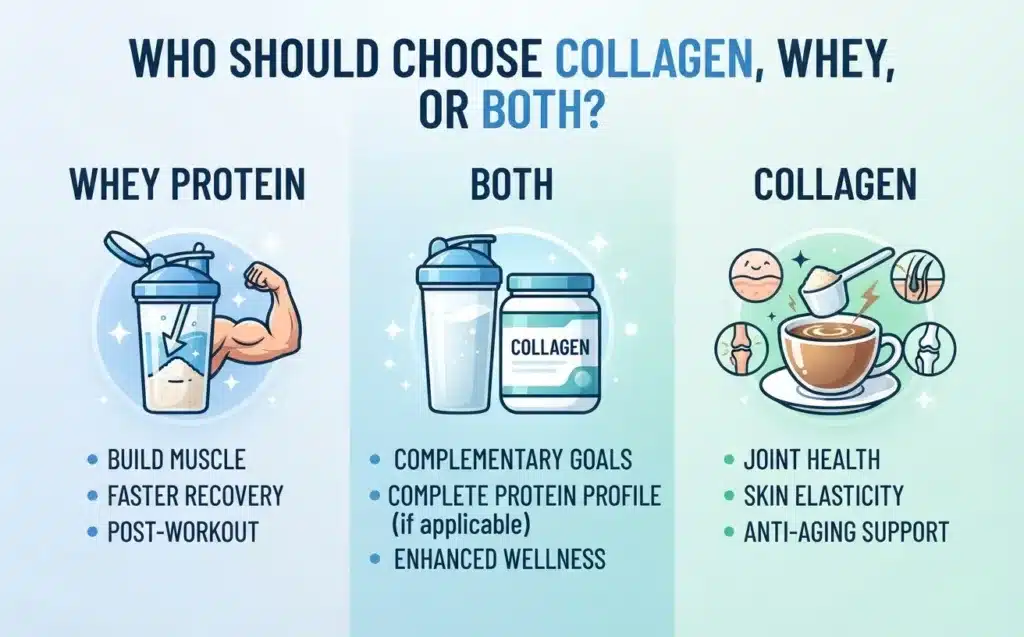
- Whey only: Beginners focused purely on muscle gain with no joint issues.
- Collagen only: People prioritising skin, hair, nails, or joint recovery who already get enough protein from food.
- Both: Regular gym-goers, runners, and athletes over 30 who need muscle repair and connective tissue support together.
Whichever path fits, buying from an authorised distributor of Halal-certified, imported supplements matters more with collagen than with whey, since collagen sourcing (marine vs bovine) and purity are harder to verify from packaging alone.
Dosage, Timing, and Safety
Whey protein is typically dosed at 20 to 30g per serving, once or twice daily, ideally within an hour of training or spread across meals to hit your total daily protein target. It digests quickly, which is why it works well immediately post-workout when muscle protein synthesis is most responsive. Collagen peptides are dosed lower, usually 5 to 10g daily, and timing matters less than consistency: most joint-focused studies use daily dosing for 8 to 24 weeks before measuring real improvement, so collagen is a slow-build supplement rather than a pre-workout one. Some people take it with vitamin C, which supports the body’s own collagen synthesis pathway.
Both are generally well tolerated. Whey can cause bloating in people with lactose sensitivity, in which case whey isolate is usually gentler. Collagen rarely causes side effects beyond mild fullness when starting out, though anyone with a fish allergy should choose bovine collagen over marine, and vice versa for beef-related sensitivities. Neither replaces a protein-adequate diet; they fill specific gaps. If you are managing an existing joint injury, on medication, pregnant, or nursing, check with a doctor first, and always verify pack, batch, and expiry before purchase, since counterfeit packaging is more common with imported collagen than with mainstream whey brands.
Frequently Asked Questions
Is collagen or whey protein better for muscle gain?
Whey protein is far better for muscle gain. It is a complete protein rich in leucine and BCAAs, which directly trigger muscle protein synthesis. Collagen lacks sufficient leucine to build muscle efficiently, so it should not replace whey if your main goal is size or strength.
What is the average Collagen Price in Pakistan?
Collagen peptide prices in Pakistan typically range from around Rs. 4,500 for smaller unflavoured packs up to Rs. 12,000 for larger marine collagen tubs, depending on brand and source. Check the collagen category page for current, exact pricing before ordering.
Can I take collagen and whey protein together?
Yes, taking both is safe and common. They target different tissues, whey for muscle, collagen for joints and connective tissue, so combining them, for example whey post-workout and collagen daily, covers both recovery needs without any known interaction.
Does collagen help with joint pain from gym training?
Research suggests daily collagen peptide supplementation, usually 5 to 10g over 8 or more weeks, can reduce activity-related joint discomfort in athletes. It works gradually rather than instantly, so consistent daily use matters more than exact timing.
Is whey protein or collagen better for skin and hair?
Collagen is the better choice for skin and hair, since it directly supplies the amino acids used in skin elasticity and hair structure. Whey protein supports overall body repair but has no specific research backing for skin or hair benefits.
Disclaimer: This article is for general informational purposes and does not replace professional medical or nutritional advice. Consult a healthcare provider before starting any new supplement, particularly if you are pregnant, nursing, or managing an existing medical condition.

About author

Related posts

Fine lines that showed up early, knees that ache on the stairs, nails that split for no reason. Many people notice these changes and immediately... Continue reading
Type I collagen supports skin, hair, and bone strength; Type II supports joint cartilage and mobility; Type III works alongside Type I to support skin... Continue reading

If you’ve scrolled through skincare ads or supplement shelves lately, you’ve probably seen the word “collagen” everywhere. But what actually is it, and why has... Continue reading

If you are searching for how to boost testosterone naturally, the honest answer is that food, lifting, sleep and body composition do most of the... Continue reading

Walk into any gym in Lahore, Karachi, or Islamabad before 6 p.m. and you’ll spot two camps: the ones sipping black coffee from a flask,... Continue reading
Add comment