
No products in the cart.
Return To Shop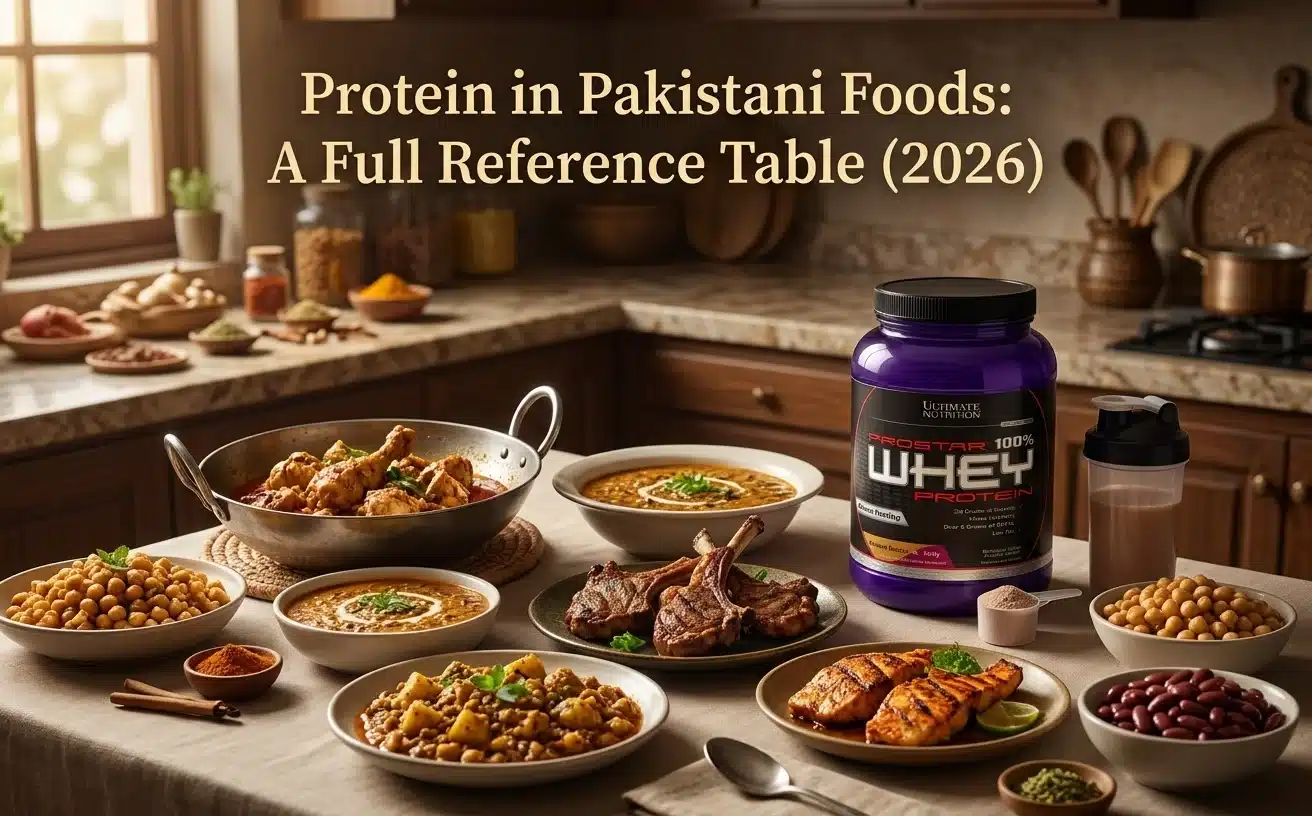
Protein in Pakistani Foods: A Full Reference Table (2026)
Most people guess their protein intake and guess wrong. This guide gives you protein in Pakistani foods per standard serving, from roti, daal and chicken karahi to dahi, eggs and nuts, so you can plan a high protein desi food day without a calculator app. Figures come from USDA FoodData Central values, rounded, and every row says whether it is a database value or an estimate.
A roti gives about 3 g, a katori of daal 11 to 13 g, 100 g of cooked chicken breast 31 g, one egg 6 g and a chicken karahi serving around 30 g.
How to use the table
Find the food, match your actual serving to the one listed, and add the grams up through the day. Raw and cooked weights differ a lot, so every meat figure here is for cooked weight. Dishes such as karahi, nihari and biryani change with the recipe, so those rows are labelled estimates and can vary by about 20 percent.
If you are building muscle, a common evidence based target is at least 1.6 g of protein per kg of body weight a day, which is about 120 g for a 75 kg person. For a broader plan on a Pakistani budget, see our guide to high protein foods in Pakistan on a 150g budget.

Grains and breads: roti, naan, rice
Protein in roti is modest. Wheat is about 10 to 12 percent protein, so a single roti adds little, but four or five a day quietly contribute 12 to 15 g. Rice is lower still. Treat bread and rice as the base of the plate and not as the protein source.
| Food | Standard serving | Protein (g) | Source |
| Roti (whole wheat chapati) | 1 medium, about 40 g | 3 | USDA FoodData Central |
| Tandoori roti | 1, about 60 g | 5 | Estimate (typical home recipe) |
| Plain naan | 1, about 90 g | 8 | USDA FoodData Central |
| Plain paratha | 1, about 80 g | 5 | Estimate (typical home recipe) |
| White rice, cooked | 1 cup, about 158 g | 4 | USDA FoodData Central |
| Brown rice, cooked | 1 cup, about 195 g | 5 | USDA FoodData Central |
| Oats, dry | 40 g | 5 | USDA FoodData Central |
Pulses and daals
Protein in daal is the backbone of a vegetarian desi diet. One katori of cooked masoor or chana gives 11 to 13 g, and eating daal with roti or rice gives a better amino acid mix than either alone. Restaurant daal is often watered down, so home cooked values run higher. Vegetarians can read more in our guide for Pakistani vegetarians.
| Food | Standard serving | Protein (g) | Source |
| Masoor daal, cooked | 1 katori, about 150 g | 13 | USDA FoodData Central |
| Moong daal, cooked | 1 katori, about 150 g | 11 | USDA FoodData Central |
| Mash daal (urad), cooked | 1 katori, about 150 g | 11 | USDA FoodData Central |
| Chana / chole (chickpeas), cooked | 1 katori, about 150 g | 13 | USDA FoodData Central |
| Rajma (kidney beans), cooked | 1 katori, about 150 g | 13 | USDA FoodData Central |
| Soya chunks, dry | 50 g | 26 | USDA FoodData Central |
Meat, chicken and fish by common cut
Cooked chicken breast is the leanest and densest option at 31 g per 100 g. Beef kaleji is an underrated budget pick. Always compare cooked weight to cooked weight, because raw meat loses roughly a quarter of its weight in the pan.
| Food | Standard serving | Protein (g) | Source |
| Chicken breast, cooked | 100 g | 31 | USDA FoodData Central |
| Chicken thigh, cooked, skinless | 100 g | 26 | USDA FoodData Central |
| Chicken drumstick meat, cooked | 100 g | 27 | USDA FoodData Central |
| Beef, lean, cooked | 100 g | 26 | USDA FoodData Central |
| Beef kaleji (liver), cooked | 100 g | 29 | USDA FoodData Central |
| Mutton, lean, cooked | 100 g | 25 | USDA FoodData Central |
| Rohu or similar river fish, cooked | 100 g | 21 | Estimate (typical home recipe) |
| Prawns (jhinga), cooked | 100 g | 24 | USDA FoodData Central |
Dairy: milk, dahi, lassi, paneer
Dairy is the easiest way to add 5 to 10 g at a time. A glass of milk or a katori of dahi fits into breakfast or a snack without extra cooking. Paneer is the densest of the group.
| Food | Standard serving | Protein (g) | Source |
| Cow milk, full cream | 1 glass, 240 ml | 8 | USDA FoodData Central |
| Buffalo milk | 1 glass, 240 ml | 10 | Estimate (typical home recipe) |
| Dahi (plain yogurt) | 1 katori, about 150 g | 5 | USDA FoodData Central |
| Salted lassi | 1 glass, 250 ml | 6 | Estimate (typical home recipe) |
| Paneer | 100 g | 18 | Estimate (typical home recipe) |
Eggs and nuts
How much protein in 1 egg? About 6 g for a large one, and the white and yolk both contribute. Eggs are cheap, quick and easy to count. Nuts add protein plus calories, which helps when you are trying to gain weight and hurts when you are cutting. See also hard boiled eggs in fitness.
| Food | Standard serving | Protein (g) | Source |
| Whole egg, boiled, large | 1 egg, about 50 g | 6 | USDA FoodData Central |
| Egg white | 1 large | 4 | USDA FoodData Central |
| Omelette | 2 eggs | 13 | USDA FoodData Central |
| Almonds (badam) | 28 g, a small handful | 6 | USDA FoodData Central |
| Peanuts (moongphali) | 28 g, a small handful | 7 | USDA FoodData Central |
| Pistachios | 28 g | 6 | USDA FoodData Central |
| Walnuts (akhrot) | 28 g | 4 | USDA FoodData Central |
| Roasted chana (bhuna chana) | 30 g | 6 | USDA FoodData Central |
| Peanut butter | 2 tbsp, 32 g | 7 | USDA FoodData Central |
Common cooked dishes per standard serving
Here is protein in chicken karahi and other everyday dishes. These are estimates built from typical home recipes, so use them for planning and not for strict tracking.
| Food | Standard serving | Protein (g) | Source |
| Chicken karahi | 1 serving, about 250 g with gravy | 30 | Estimate (typical home recipe) |
| Chicken tikka | 4 pieces, about 120 g | 28 | Estimate (typical home recipe) |
| Chicken biryani | 1 plate, about 350 g | 22 | Estimate (typical home recipe) |
| Beef nihari | 1 plate, about 300 g | 28 | Estimate (typical home recipe) |
| Mutton karahi | 1 serving, about 250 g with gravy | 28 | Estimate (typical home recipe) |
| Seekh kebab | 2 pieces, about 100 g | 18 | Estimate (typical home recipe) |
| Chapli kebab | 1 piece, about 100 g | 17 | Estimate (typical home recipe) |
| Haleem | 1 bowl, about 250 g | 20 | Estimate (typical home recipe) |
| Keema | 1 katori, about 150 g | 22 | Estimate (typical home recipe) |
| Daal chawal | 1 katori daal + 1 cup rice | 17 | Estimate (typical home recipe) |
Hitting 120g or 150g a day from desi food alone
It is possible, but it takes planning. Protein is also the macro most people undershoot with a traditional carb heavy plate. Here is a sample day built only from the table above.
| Meal | What you eat | Protein (g) |
| Breakfast | 3 egg omelette, 2 roti, 1 glass milk | 33 |
| Lunch | 1 serving chicken karahi, 2 roti, 1 katori dahi | 41 |
| Snack | Salted lassi, small handful of peanuts | 13 |
| Dinner | 150 g grilled chicken breast, 1 katori masoor daal, 1 roti | 62 |
| Total | about 149 |
For a 120 g day, skip the snack and cut dinner chicken to 100 g, which lands at about 121 g. Spreading protein across three or four meals, with roughly 25 to 40 g each, is a practical pattern for most lifters.
Two cautions. First, the real cost is calories and budget: the 150 g day above needs a lot of chicken, which is expensive. Second, this is general information and not medical advice. If you have kidney disease or another medical condition, ask your doctor before raising your protein intake. Compare the costs in high protein diet vs supplements price in Pakistan and whey protein vs desi food for muscle gain.
Where a shake fills the gap
On days when cooking, budget or appetite gets in the way, a shake closes the gap quickly. One scoop of whey typically provides about 24 g of protein, which is close to four eggs, with no cooking. Check the label for your product, since values vary by brand. Browse whey protein in Pakistan or the wider protein supplements range. For a portable option, try the Applied Nutrition Protein Crunch Bar. SportsOne has supplied authentic Imported Supplements in Pakistan since 2002, with COD delivery across the country.
Sources and method
Values are rounded from USDA FoodData Central entries for the closest matching food. Rows marked as estimates use typical home recipe weights and ingredient ratios, since Pakistani dishes vary widely by cook and region. For official local reference data, check the Food Composition Table for Pakistan.
Frequently asked questions
How much protein is in 1 egg?
One large egg (about 50 g) has roughly 6 g of protein, around 3.6 g in the white and 2.7 g in the yolk. Smaller desi eggs give closer to 5 g, so a three egg omelette delivers about 19 g.
How much protein is in one roti?
One medium whole wheat roti (about 40 g) has roughly 3 g of protein. A thicker 60 g tandoori roti gives about 5 g and a plain naan about 8 g. Pair roti with daal, eggs or meat.
Is daal a good source of protein?
Yes. One katori (about 150 g) of cooked masoor, mash or chana provides roughly 11 to 13 g of protein. Restaurant daal is usually thinner and lower. Pair it with roti or rice for a better amino acid balance.
How much protein is in chicken karahi?
A standard serving of chicken karahi (about 250 g including gravy) gives roughly 28 to 32 g of protein. The real value depends on the meat to gravy ratio, so treat it as an estimate and weigh the meat if you track closely.
What are the best high protein desi foods?
Chicken breast (31 g per 100 g cooked), beef kaleji (29 g), lean beef and mutton (25 to 26 g), eggs (6 g each), paneer (18 g), masoor daal (13 g per katori) and milk (8 g per glass).

About author

Related posts

Walk into any supplement shop in Lahore, Karachi or Islamabad and the fat burner shelf is usually the busiest one. Packs in our current range... Continue reading

Walk into almost any gym in Lahore, Karachi or Islamabad and you will see school and college students lifting beside adults. Many of them are... Continue reading

If you have stood in front of a shelf of amino acid tubs wondering whether to buy BCAAs or EAAs, you are asking the right... Continue reading

For most healthy adults, collagen peptides are well tolerated. The side effects people actually report are mild: a feeling of fullness, bloating, an aftertaste or... Continue reading

The short answer: the best time to take collagen is whichever time you will repeat every single day. Research on hydrolysed collagen peptides has not... Continue reading
Add comment