
No products in the cart.
Return To Shop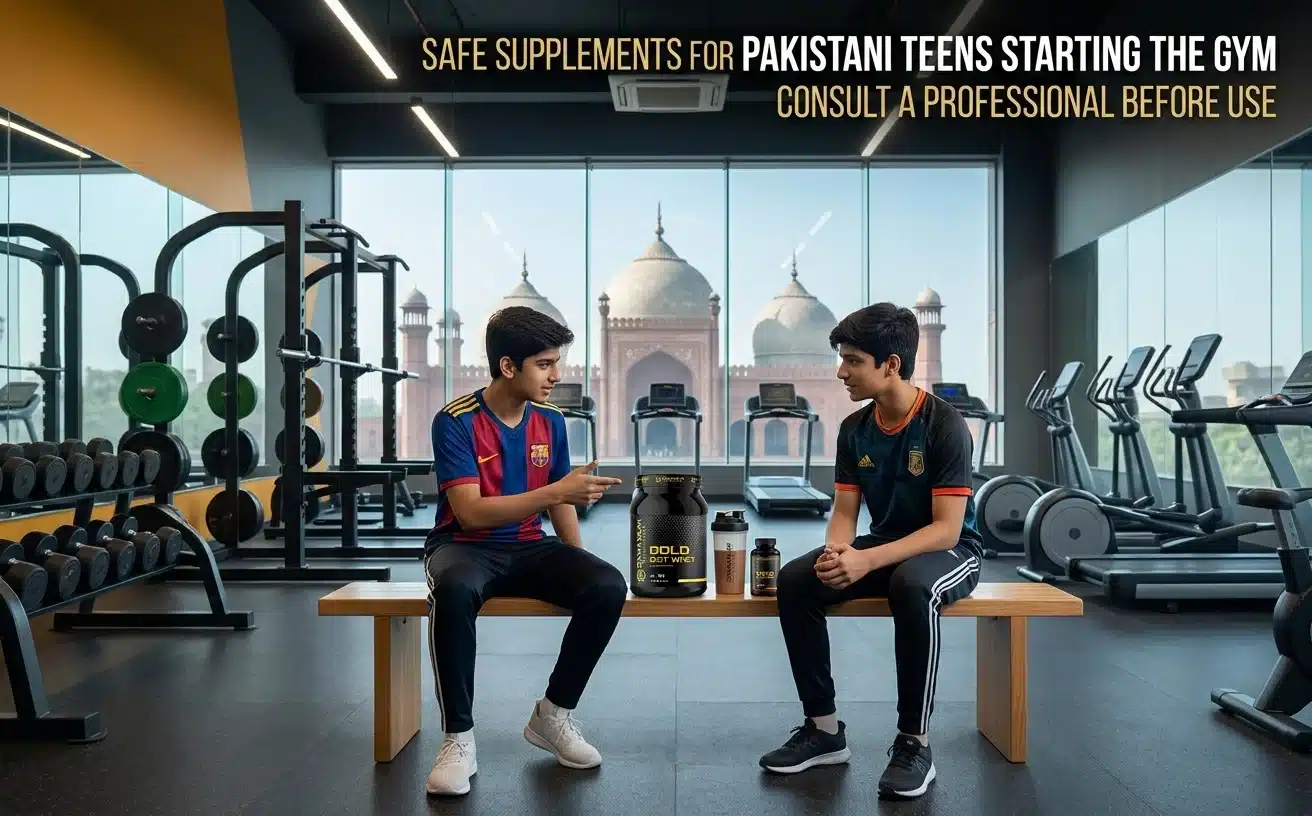
Supplements for Teenagers Starting the Gym in Pakistan
Walk into almost any gym in Lahore, Karachi or Islamabad and you will see school and college students lifting beside adults. Many of them are already being offered tubs, tablets and “stacks” they do not need. This guide to supplements for teenagers in Pakistan is written for teens and for the parents paying the bill. It puts food first, stays conservative on anything beyond protein, and tells you plainly what to skip.
Important: if you are under 18, speak to a doctor or a registered dietitian before taking any supplement. This article is general education, not medical advice.
The short answer
- Fix meals, protein from food, water and sleep before buying anything.
- Whey protein is a food made from milk and is generally considered safe in moderation for healthy 16 and 17 year olds, but it is optional.
- Creatine has limited research in under-18s, so it needs a doctor’s approval first.
- Fat burners, testosterone boosters, steroids and stimulant heavy pre-workouts are not for teenagers.
- Buy only original, authorised products. Fake tubs are a real risk in Pakistan.

Food first: what to fix before buying anything
A teenager’s body is still growing, so the foundation is a full plate, not a scoop. Before spending on powders, check these basics:
- Three proper meals a day plus one or two snacks. Skipping breakfast before school is the most common gap.
- Protein at every meal. Eggs, daal, chana, dahi, milk, chicken, fish, paneer and peanuts all count. Our guide to high protein foods in Pakistan on a budget shows how to hit your numbers with ordinary kitchen food.
- Enough overall food. Many thin teens are not short of protein, they are short of calories. Roti, rice, milk, bananas and nuts matter. See how to gain weight for boys in Pakistan for a desi approach.
- Water and sleep. Muscle is built during recovery. Eight to ten hours of sleep and regular water beat any tub. Read why water intake matters.
As a rough guide, active teenagers are often advised to aim for about 1.2 to 1.6 grams of protein per kilogram of body weight per day. For a 60 kg student that is roughly 72 to 96 grams. Two eggs give about 12 grams, a cup of cooked daal about 15 grams, a glass of milk about 8 grams and a 100 gram portion of cooked chicken about 30 grams. Most teens who eat these foods daily are already close to the target. A dietitian can set a precise figure for your child.
If you want a deeper breakdown, see how much protein per day a beginner needs and the desi diet guide to whey protein.
Is whey protein safe at 16 or 17?
Whey is a protein extracted from milk. For a healthy teenager with no milk allergy and no kidney condition, a moderate serving of whey is generally considered safe. It is a convenient way to close a protein gap, not a requirement. Plenty of teens build good strength on eggs, daal and dahi alone, as explained in do I need whey protein if I eat chicken daily.
Points to keep in mind:
- Food first, powder second. Whey should fill a gap, never replace meals.
- Stick to one scoop a day unless a doctor or dietitian says otherwise.
- Lactose. Concentrate can cause bloating in lactose sensitive teens. Isolate is lower in lactose, but check with a doctor if stomach upset continues.
- Existing conditions. Anyone with kidney, liver or allergy concerns should not start without medical advice.
- Authenticity. Counterfeit tubs may contain unlisted ingredients. Always buy original Imported Supplements in Pakistan from an authorised distributor, and learn how to identify fake imported supplements.
For a focused answer on this single question, read our dedicated page on whey protein safety for teenagers in Pakistan. If you decide it fits, browse whey protein in Pakistan and choose a plain, single purpose product.
Creatine and younger lifters: what is known
Creatine is one of the most studied sports supplements in adults, and it also occurs naturally in meat and fish. The picture for teenagers is different. Studies in under-18s are limited and mostly short term. Some paediatric organisations, including the American Academy of Pediatrics, have discouraged creatine use for people under 18, while sports nutrition bodies describe short term use in supervised settings as appearing safe but do not encourage casual use.
Our position is cautious. A teenager in his first year of lifting gains fast from simply training consistently, eating enough and sleeping well. Creatine adds very little on top of that. If a teen is a competitive athlete and a doctor approves it, that is a medical decision, not a gym shortcut. Until then, leave the creatine in Pakistan section for later. Parents can read who should not take creatine and the creatine benefits, usage and safety guide for background.
What to avoid entirely at this age
- Testosterone boosters and “natural” hormone products. They can interfere with normal hormonal development. See are testosterone boosters safe.
- Steroids, prohormones and SARMs. These are unsafe and can stunt growth and harm the heart and liver.
- Fat burners. They are stimulant based and teenagers should be eating enough to grow, not cutting.
- Stimulant heavy pre-workouts and energy drinks. A single serving often carries 150 mg of caffeine or more. Health Canada suggests teens keep caffeine to about 2.5 mg per kilogram of body weight per day, so a pre-workout can use up the whole allowance and affect sleep, heart rate and anxiety. Read what the tingling from pre-workout means.
- Anything with a proprietary blend and no clear label. If you cannot see what is inside, do not take it.
A sensible first purchase, if any
For many teenagers the honest answer is nothing. If there is a real gap after fixing meals, these are the least risky options, in this order:
- Better food. Add an extra egg, a glass of milk or a bowl of dahi.
- A basic whey protein in a small size, for example the Sanaxium Nutrition Gold Whey 1kg, so a teen is not tempted to buy a huge tub. Browse the wider protein range only after a doctor agrees.
- A multivitamin or vitamin D only if a blood test or doctor shows a need. Vitamin D deficiency is widely reported in Pakistan, so testing is better than guessing. See vitamins and minerals and our page on vitamin D supplements in Pakistan.
- A shaker bottle if powder is being used. It is cheap, practical and carries no health risk.
| Item | Under 18 status | Why |
| Meals, eggs, daal, dahi, milk | Start here | Complete nutrition, no risk of contamination |
| Basic whey protein | Optional, 16 and above | Convenient protein when food falls short; one scoop a day |
| Multivitamin or vitamin D | Only if a doctor advises | Useful for a confirmed gap, not for muscle gain |
| Creatine | Doctor approval first | Limited research in under-18s |
| Mass gainer | Usually unnecessary | Often sugar heavy; real food does the job |
| Pre-workout, energy drinks | Avoid | High caffeine affects sleep and heart rate |
| Fat burners, test boosters, steroids, SARMs | Avoid completely | Hormonal and cardiovascular risk |
Serving size, timing and safety basics
If a doctor or dietitian has agreed that your teen can use whey protein, keep the routine simple and boring. That is a good sign.
- Serving size. One level scoop, which is usually 24 to 30 grams of product, once a day. Do not stack multiple shakes.
- Timing. After training or as a school day snack is fine. Total daily protein matters more than the exact minute.
- Mixing. Water or milk both work. Milk adds calories for thin teens, water suits those who are not underweight.
- Do not replace meals. A shake is an add-on. Dinner still happens.
- Watch for reactions. Stop and see a doctor if there is a rash, swelling, persistent stomach pain or breathing difficulty.
- Hydrate. Drink water through the day, especially in Pakistani summers.
- Training comes first. Teens should lift with proper technique, light to moderate loads, and supervision from a qualified coach. Powder cannot fix poor form.
- Pause on illness. If your teen is unwell, has diarrhoea or is not eating normally, skip the shake and see a doctor.
Teen athletes who play cricket, football or kabaddi may have higher needs. Our guide to gym supplements for school athletes in Pakistan covers that group, and energy supplements for students explains why exam stress is not a reason to reach for stimulants.
For parents: what to look for and what to question
You do not need to be a nutrition expert to protect your child. Ask these questions:
- Who recommended it? A doctor or dietitian is a good source. A gym trainer who earns commission is not.
- Is the seller authorised? Look for an authorised distributor with proof of authenticity. SportsOne lists its Halal certified authorised distribution details so parents can verify brands.
- Is the label clear? You should see every ingredient and the amount per serving. Avoid proprietary blends.
- Is it halal and in date? Check the expiry, batch and certification marks on the tub.
- Is it needed? Ask what problem the product solves. If the answer is “to get big faster”, the real fix is food, sleep and training.
- Are you watching the whole picture? Mood changes, obsessive body checking, or skipping meals to “cut” are signs to talk to a doctor.
Red flags in gym advice
- “Everyone at the gym takes it.” Popularity is not safety.
- “Take two scoops, you are young and need more.” More is not better.
- A trainer who sells supplements and also decides your child’s plan.
- Promises of visible results in a few weeks.
- Advice to stop eating normal meals and rely on shakes.
- Products with no batch number, no importer label or suspiciously low prices.
- Pressure to buy a “cycle” or any product that “does not show up in tests”.
If you hear any of these, step back and ask a doctor. Choosing a trustworthy store matters too, as we explain in why buying cheap supplements can cost you your health.
Frequently asked questions
Is whey protein safe for teenagers in Pakistan?
For healthy teenagers, moderate whey protein, about one scoop daily, is generally considered quite safe because it is a natural milk protein. It is not essential, though. Food comes first, and under-18s should always check with a doctor before starting.
What is the best supplement for a 16 year old starting the gym?
For most 16 year olds, the best first step is not a supplement but regular meals, enough protein from food, water and sleep. If a gap remains, a basic whey protein or a multivitamin, approved by a doctor, is sensible.
Can teens take creatine?
Research on creatine in under-18s is limited, and some paediatric bodies advise against it. Teenagers should not start creatine without a doctor’s approval. Better training, food and sleep deliver most early gains, so there is no rush to add it.
Do school going boys need protein powder?
Most school going boys do not need protein powder if they eat eggs, daal, dahi, milk, chicken or chana daily. Powder only helps when meals fall short, such as on busy school days, and it should never replace proper food.
Which supplements should teenagers avoid completely?
Teenagers should avoid fat burners, testosterone boosters, steroids, prohormones, SARMs and stimulant heavy pre-workouts. These can affect hormones, heart rate, sleep, mood and normal growth. Anyone offering them to a teen at a gym is giving unsafe, plainly irresponsible advice.
Disclaimer: This article is for general information only and is not medical advice. Teenagers under 18 should consult a doctor or registered dietitian before using any supplement, especially if they have allergies, a medical condition or take medication.

About author

Related posts
If you have stood in front of a shelf of amino acid tubs wondering whether to buy BCAAs or EAAs, you are asking the right... Continue reading

For most healthy adults, collagen peptides are well tolerated. The side effects people actually report are mild: a feeling of fullness, bloating, an aftertaste or... Continue reading

The short answer: the best time to take collagen is whichever time you will repeat every single day. Research on hydrolysed collagen peptides has not... Continue reading
Neither is universally better. Marine collagen is often preferred for skin, hair and people who avoid beef, while bovine collagen is usually cheaper and offers... Continue reading
Collagen may help support joint comfort in some people, but the evidence is modest, results are slow, and it is not a substitute for medical... Continue reading
Add comment