
No products in the cart.
Return To Shop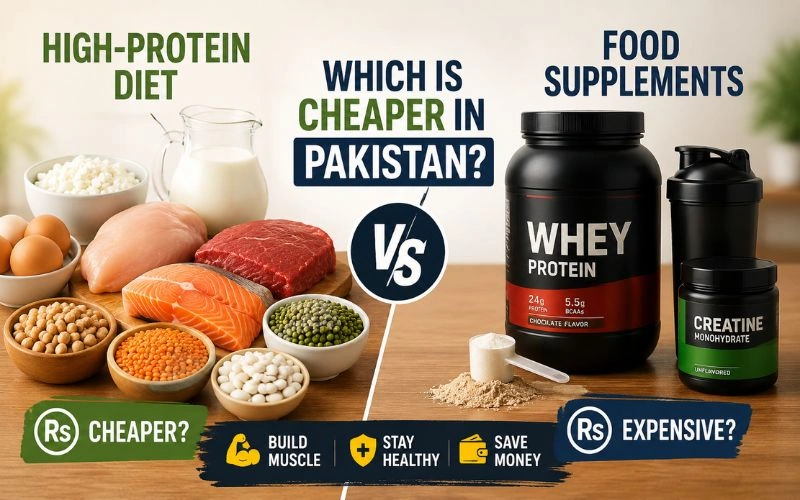
High-Protein Diet vs Food Supplements: Which Is Cheaper in Pakistan?
Last updated: October 17, 2026
Whole foods are cheaper per gram of protein. Daal costs roughly Rs. 1.2–1.7 per gram, chicken breast about Rs. 3–3.5, and eggs about Rs. 3.3–4.2, while whey protein costs about Rs. 7.5–12.5. But a hybrid plan (food as the base plus one daily scoop) is usually the best value for people with busy schedules.
| Protein source | Approx. price | Cost per gram of protein | Best for |
|---|---|---|---|
| Daal (dry lentils) | Rs. 250–400/kg | ~Rs. 1.2–1.7 | Lowest-cost protein |
| Chicken breast (raw) | Rs. 650–800/kg | ~Rs. 3–3.5 | Lean muscle building |
| Eggs | Rs. 20–25 each | ~Rs. 3.3–4.2 | Breakfast, easy cooking |
| Dahi / Greek yogurt | Rs. 150–250/kg | ~Rs. 4–7 | Snacks, digestion |
| Paneer | Rs. 800–1,200/kg | ~Rs. 4.5–7 | Vegetarian meals |
| Whey protein (1 kg tub) | Rs. 6,000–9,000 | ~Rs. 7.5–12.5 | Convenience, post-workout |
| Canned tuna | Rs. 250–350/can | ~Rs. 10–14 | Quick, portable meals |
If you are serious about fitness in Pakistan, one question eventually comes up that nobody answers honestly: should you load your plate with protein-rich desi food, or spend your money on supplements? The answer depends on your goal, your budget and how your day actually looks.
Most fitness advice jumps straight to supplement recommendations without doing the math on whole foods. Before you spend thousands of rupees on tubs and sachets, it makes sense to compare the real price per gram of protein, whether it comes from a chicken breast, a bowl of daal or a scoop of whey protein. This guide gives you a numbers-backed breakdown so you can decide for your body and your wallet.

How Much Protein Do You Actually Need?
Before comparing prices, set your target. Research on resistance training generally points to around 1.6–2.2 grams of protein per kilogram of body weight per day for building muscle. For a 70 kg person, that is roughly 112–154 g daily. Your total spend depends far more on this number than on the brand you pick, so work it out first.
Protein quality matters too. Animal proteins such as eggs, chicken, dairy and whey are complete proteins with all the essential amino acids, including leucine, the amino acid most linked to triggering muscle protein synthesis. Plant proteins like daal are cheaper but lower in some amino acids, which is why pairing daal with rice or roti is a smart desi habit.
What Does a High-Protein Diet Cost in Pakistan?
Pakistan has excellent whole-food protein sources that are already part of everyday cooking. Boneless chicken breast from a local butcher typically costs Rs. 650–800 per kilogram. Raw chicken breast is about 22–23 g protein per 100 g, so a kilogram gives you roughly 230 g of protein, or about Rs. 3–3.5 per gram. Here is how other common foods compare:
- Daal (lentils): Rs. 250–400/kg dry, about 24 g protein per 100 g → ~Rs. 1.2–1.7 per gram
- Eggs: Rs. 20–25 per egg, ~6 g protein each → ~Rs. 3.3–4.2 per gram. See our guide to hard-boiled eggs in fitness for easy ways to use them
- Chicken breast: Rs. 650–800/kg → ~Rs. 3–3.5 per gram
- Dahi / Greek yogurt: Rs. 150–250/kg → ~Rs. 4–7 per gram
- Paneer / cottage cheese: Rs. 800–1,200/kg → ~Rs. 4.5–7 per gram
- Canned tuna: Rs. 250–350 per can (about 25 g protein) → ~Rs. 10–14 per gram
For someone eating 150 g of protein a day from food alone, the cost ranges from about Rs. 450 to Rs. 900 per day depending on the sources, or roughly Rs. 13,500–27,000 per month. If you follow a vegetarian diet, our guide to weight gain for Pakistani vegetarians shows how to hit your numbers without meat.
Where Food Falls Short: The Practicality Problem
Whole-food protein is affordable and nutritious, but it comes with real-world friction. Cooking three to four high-protein meals every day takes time, planning, refrigeration and regular grocery runs. For students, office workers and people with irregular schedules, which describes most of Pakistan, that consistency is hard to maintain.
There is also the digestive load. Getting 180–200 g of protein purely from food means eating a lot of volume, which can cause bloating, slow digestion and reduced appetite over time. A balanced plan helps; our balanced diet guide covers how to spread macros across the day.
What Do Protein Supplements Cost in Pakistan?
Food supplements in Pakistan have become more accessible, especially through verified online stores selling authentic products. A standard serving of protein powder provides 20–25 g of protein. If you are comparing brands, start with the Best Whey Protein in Pakistan and check the protein per serving on the label, not just the tub size.
- Standard whey protein (1 kg tub): Rs. 6,000–9,000, roughly 30–33 servings, about 24 g protein each → Rs. 7.5–12.5 per gram
- Isolate protein: Rs. 9,000–15,000 per tub, higher cost but lower lactose and fat. See our isolate protein price in Pakistan breakdown
- Soy protein: Rs. 5,000–8,000 per tub, more affordable for plant-based users
- Vegan / plant protein: Rs. 7,000–12,000 per tub, premium but growing in demand
- Casein protein: Rs. 8,000–14,000, slow digesting and ideal at night
On pure rupees per gram, most supplements cost more than chicken or daal. The picture changes when you factor in convenience, digestibility and how precisely you can hit a protein target without extra carbs and fats. For a wider look at pricing, see our price comparison of imported supplements in Pakistan.
The Smart Middle Ground: Combining Food and Supplements
The most practical approach for most Pakistani gym-goers is not either/or. Cover roughly 60–70% of your protein with food and close the gap with a supplement. A sample day looks like this:
- Breakfast: 3 boiled eggs + dahi (~28 g protein, ~Rs. 90–100)
- Lunch: Chicken curry or daal chawal (~35 g protein, ~Rs. 150–200)
- Pre or post-workout: 1 scoop whey protein (~24 g protein, ~Rs. 200–280)
- Dinner: Fish or chicken with sabzi (~30 g protein, ~Rs. 150–200)
Total: ~117 g protein | Daily cost: Rs. 590–780 | Monthly: Rs. 17,700–23,400. It is a sustainable plan that does not drain your supplement budget. If you are trying to gain weight on a budget, our budget-friendly weight gain meal prep recipes pair well with this approach.
When Supplements Make More Sense Than Food Alone
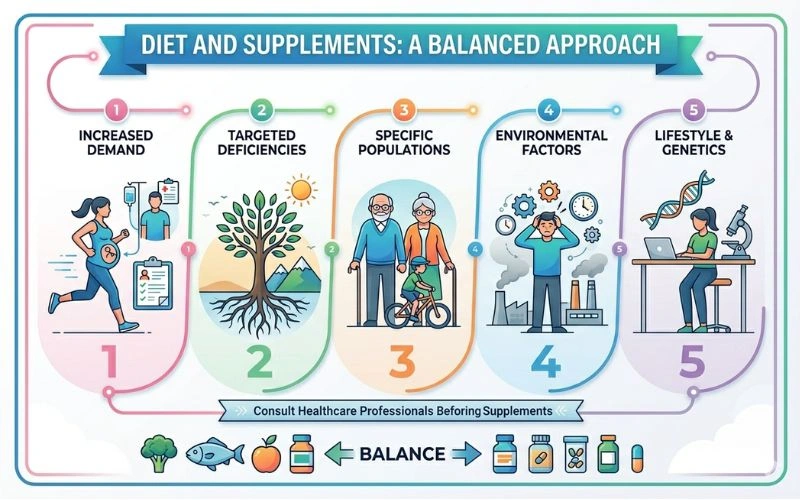
Some situations genuinely justify leaning more on supplements, and it is not just gym-bro indulgence.
- Busy professionals and students who cannot meal prep consistently
- Post-workout: a shake is faster than cooking a meal
- Cutting phases: supplements deliver protein without extra carbs or fats
- Hard gainers who struggle to eat enough (weight gainers or lean mass gainers can help)
- Recovery-focused lifters who want to support muscle repair after heavy sessions
For extra recovery support, many athletes also add amino acids and BCAA supplements to their stack.
Understanding Protein Types: Not All Supplements Are Equal
Buying the wrong type is a common and expensive mistake. Matching the protein to your goal can save you thousands of rupees a year.
- Whey protein: best all-rounder, fast absorbing and ideal post-workout
- Isolate protein: filtered for lower fat and lactose, better for sensitive stomachs and leaner macros
- Hydrolyzed protein: pre-digested for the fastest absorption, costlier
- Casein protein: slow digesting, ideal before bed
- Grass-fed protein: premium sourcing at a premium price
- Zero carb / sugar protein: useful when cutting body fat
- Soy protein / vegan protein: plant-based options
Supporting Your Fitness Beyond Protein
Protein is the foundation, but not the whole picture. Many people plateau because they ignore the rest of their nutrition. Creatine is one of the most researched supplements for strength and is relatively affordable; see our guide to cheap creatine in Pakistan for price ranges. A good pre-workout can improve training quality.
For fat loss alongside muscle gain, fat burners and L-Carnitine are commonly used, while vitamins and minerals fill micronutrient gaps that even a high-protein diet can leave. Do not overlook joint health either, since heavy training stresses connective tissue and injuries derail progress more than any budget shortfall.
The Authenticity Factor: Why Buying Right Matters
One cost nobody mentions is buying fake products. Counterfeit or under-dosed protein is a known problem in Pakistan’s supplement market, and a product that delivers far less protein than its label claims is expensive per real gram, however cheap the tub looks. Always check the batch details and buy from a verified seller.
SportsOne is an authorized distributor of halal-certified supplements and guarantees 100% original products, with free delivery on orders above Rs. 2,000. That way you are comparing genuine supplement costs against food, not counterfeit costs against food. If you follow halal requirements, read our halal supplement guide for Pakistani consumers.
Final Verdict: Which Is Actually Cheaper?
Whole foods win on pure cost per gram of protein, especially daal, eggs and chicken, which are built into Pakistani cooking. Supplements win on convenience, precision and practicality for people with demanding schedules.
- Cheapest protein overall: daal and eggs
- Best value for most people: food as the base plus one daily scoop of whey
- Best for muscle gain: quality whey or isolate post-workout, backed by high-protein meals
- Best on a tight budget: soy protein or standard whey, not premium isolate
- Best for fat loss: zero-carb protein or isolate with a calorie deficit from food
The better question is not “which is cheaper” but which combination gives you the most protein per rupee, fits your schedule and is something you can sustain for months. That is where the real answer lives.
Frequently Asked Questions
Is a high-protein diet cheaper than supplements in Pakistan?
Yes, per gram of protein, whole foods are usually cheaper. Daal costs roughly Rs. 1.2-1.7 per gram, chicken about Rs. 3-3.5 and eggs about Rs. 3.3-4.2, compared with Rs. 7.5-12.5 for whey. Supplements can still be better value for busy people because they save cooking time and cost.
Are protein supplements worth buying in Pakistan?
They are worth it if you struggle to reach your daily protein target through food, train hard, or have little time to cook. Whey offers convenience and fast absorption, but it costs more per gram than local foods, so most people do best using one scoop a day to fill gaps rather than replacing meals.
Which foods provide the cheapest protein in Pakistan?
Daal, eggs, chicken breast, chickpeas, milk and dahi are the most affordable protein sources. Daal is the cheapest per gram, while eggs and chicken give complete protein. Combining several sources keeps your diet balanced without spending heavily on imported products.
Can I build muscle without protein supplements?
Yes. Muscle growth depends on total daily protein, enough calories and resistance training, not on powders. If whole foods like chicken, eggs, dairy and legumes cover your target of roughly 1.6-2.2 g per kg of body weight, supplements are optional.
How much does it cost to eat 150 g of protein a day in Pakistan?
From food alone it costs about Rs. 450-900 per day, or Rs. 13,500-27,000 per month, depending on your sources. A hybrid plan using food plus one scoop of whey typically lands around Rs. 590-780 per day for about 117 g of protein.
What is better for long-term health: supplements or natural protein foods?
Whole foods are generally better as your main source because they also provide vitamins, minerals, fiber and healthy fats. Supplements are useful for convenience and recovery but should support, not replace, balanced meals.
Disclaimer: This article is for general information and is not medical advice. Consult a doctor or registered dietitian before changing your diet or starting supplements, especially if you have a medical condition.

About author

Related posts

For most healthy adults, collagen peptides are well tolerated. The side effects people actually report are mild: a feeling of fullness, bloating, an aftertaste or... Continue reading

The short answer: the best time to take collagen is whichever time you will repeat every single day. Research on hydrolysed collagen peptides has not... Continue reading
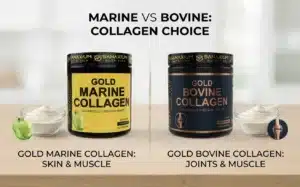
Neither is universally better. Marine collagen is often preferred for skin, hair and people who avoid beef, while bovine collagen is usually cheaper and offers... Continue reading

Collagen may help support joint comfort in some people, but the evidence is modest, results are slow, and it is not a substitute for medical... Continue reading
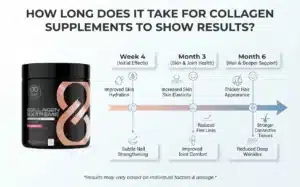
Most people notice their first change from collagen supplements after 4 to 8 weeks, with clearer skin and joint results building between 8 and 12... Continue reading
Add comment