
No products in the cart.
Return To Shop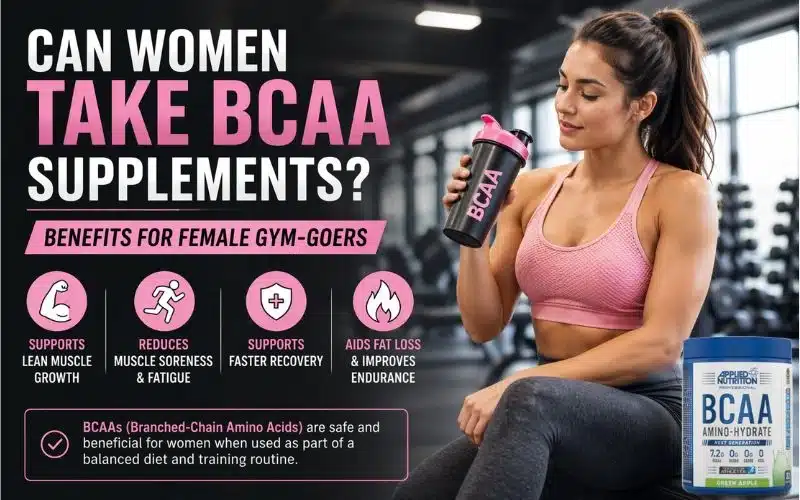
Can Women Take BCAA Supplements? Benefits for Female Gym-Goers
Yes, women can absolutely take BCAA supplements. BCAAs are not gender-specific and do not cause hormonal changes, unwanted muscle bulk, or any of the side effects that many women in Pakistan worry about. For female gym-goers, BCAAs offer targeted benefits around fat loss, muscle retention, recovery, and training performance that are just as relevant for women as they are for men.
Why Women Hesitate to Take BCAAs
The most common reason women avoid BCAAs is the fear that any supplement associated with muscle building will make them look bulky. This concern is understandable given how supplements are marketed, mostly toward men, but it is not grounded in how BCAAs actually work in the body.
BCAAs do not contain hormones. They do not increase testosterone. They do not alter the hormonal environment in a way that would cause a woman to build muscle at a rate or scale she would not want. Building significant muscle mass requires years of progressive resistance training, a substantial caloric surplus, and a hormonal profile that women naturally do not have to the same degree as men. A BCAA supplement does none of those things on its own.
What BCAAs do is help the body use the training it is already doing more efficiently, recover faster, and protect muscle tissue during fat loss. Those are benefits that are arguably more relevant for women than for men in many fitness contexts.

How BCAAs Work Differently for Women
While the biochemical mechanisms of BCAAs are the same regardless of gender, the practical benefits tend to show up differently for women based on how they typically train and what their fitness goals usually involve.
Most women training in Pakistani gyms are focused on toning, fat loss, and improving body composition rather than maximizing muscle size. BCAAs support all three of those goals directly. They protect lean muscle during caloric deficits, which is the most common scenario for women trying to lose weight. They reduce soreness between sessions, which allows more consistent training. And they provide energy during longer cardio or circuit sessions without adding significant calories.
Women who are serious about their training and want a reliable BCAA supplement in Pakistan that is clearly labeled, properly dosed, and available through a verified local distributor will find it makes a meaningful difference to recovery quality and session performance when used consistently.
BCAAs for Fat Loss in Women
One of the most relevant benefits of BCAAs for women is their role in preserving lean muscle during fat loss. When the body is in a caloric deficit, which is where most weight loss happens, it does not just burn fat. It also breaks down muscle protein for energy, particularly during and after training. This muscle loss is a problem because muscle tissue is metabolically active. The more of it the body loses, the slower the metabolism becomes, which makes further fat loss increasingly difficult.
BCAAs, particularly leucine, signal the body to protect existing muscle even when calories are restricted. This means a woman in a caloric deficit who takes BCAAs around training retains more lean muscle than she would without them, which keeps the metabolism higher and makes fat loss more sustainable over time.
This muscle-sparing effect is one of the primary reasons BCAAs are genuinely useful for women on a fat loss journey rather than just for people trying to maximize muscle size.
BCAAs and Appetite During Dieting
There is emerging evidence that leucine may also have a mild appetite-suppressing effect by influencing hormones related to hunger and satiety. While BCAAs are not a weight loss supplement in any direct sense, women who use them during a caloric deficit often report feeling more in control of hunger around training sessions, which supports adherence to a diet more than the BCAAs themselves are causing fat loss.
BCAAs for Muscle Tone in Women
Muscle tone, the firm and defined appearance that most women training in the gym are working toward, comes from two things: having enough muscle and having low enough body fat for that muscle to be visible. BCAAs contribute to both sides of that equation.
On the muscle side, leucine activates muscle protein synthesis, which helps the body build and maintain the lean muscle tissue that creates a toned appearance. On the fat side, the muscle-sparing effect during caloric restriction supports the fat loss process without sacrificing the muscle that makes the toned look possible.
Women who take amino acid supplements alongside consistent resistance training and a sensible diet tend to see better definition and body composition results than those who rely on cardio and diet alone, precisely because the BCAAs help maintain the muscle that cardio-heavy approaches often erode over time.
BCAAs for Energy and Endurance During Training
BCAAs, specifically isoleucine and valine, can be oxidized directly in muscle tissue and used as an energy source during exercise. For women doing longer sessions, circuit training, or a combination of cardio and weights, this direct energy contribution means the body is less likely to break down muscle for fuel as the session progresses.
Beyond the physical energy contribution, BCAAs reduce central fatigue by competing with tryptophan for entry into the brain. Tryptophan is converted to serotonin, which increases feelings of tiredness during exercise. When BCAA levels are high, less tryptophan crosses into the brain and fatigue builds more slowly. Sessions feel more manageable, motivation stays higher into the later stages of training, and the overall quality of the workout improves without any stimulant involved.
This anti-fatigue effect is particularly useful for women who train after work or after managing a full day of responsibilities, when mental fatigue is already present before the session even starts.

BCAAs for Recovery Between Sessions
Recovery is where many female gym-goers lose consistency. Training hard every day without adequate recovery leads to persistent soreness, reduced motivation, and eventually skipped sessions that break the habit of consistent training. BCAAs meaningfully improve recovery by reducing the degree of muscle protein breakdown during training and triggering muscle repair earlier through leucine-driven mTOR activation.
The practical result is less delayed onset muscle soreness after sessions and faster readiness to train again. For a woman training three to four times a week, this difference in recovery quality compounds significantly over months of consistent training and contributes directly to better long-term results.
Pairing BCAAs with solid post-workout nutrition accelerates the recovery process further because the body has both the fast-absorbing amino acids from BCAAs and the complete protein substrate from a post-workout meal or shake working together in the recovery window.
BCAAs During Ramadan for Female Gym-Goers
Ramadan presents specific challenges for women who want to maintain their training and body composition during the fasting month. Extended fasting periods elevate muscle protein breakdown, and training in a fasted state without any amino acid support accelerates that process further.
Taking BCAAs at Suhoor before the fast begins, or immediately before training during the fasting hours, helps protect muscle tissue throughout the day. The low calorie content of most BCAA products means they do not meaningfully impact the fast from a nutritional standpoint while still delivering muscle-protective amino acids at a critical time.
Women who train during Ramadan and use BCAAs strategically around their fasting and eating windows consistently maintain better muscle tone and recover more effectively between sessions than those who train without any amino acid support during the month.
How Much BCAA Should Women Take
The effective dose for women is the same as for men in terms of the biochemical requirements. Five to ten grams per session is sufficient to produce the muscle-sparing, synthesis-triggering, and anti-fatigue effects described above. Most standard BCAA servings fall within this range, so a single serving per session is appropriate for most women training at moderate to high intensity.
There is no benefit to taking more than one serving per session for most training levels. Consistency matters far more than quantity, and taking a single serving around every training session delivers better results than taking double servings sporadically.
When Women Should Take BCAAs
The most effective windows for female gym-goers are:
- Before training: particularly useful for women who train fasted, first thing in the morning, or before eating a proper meal
- During training: sipping a BCAA drink throughout a session maintains amino acid availability across the entire workout and is especially practical for longer sessions
- After training: less critical if whey protein is consumed post-workout, but still useful for women who do not use whey and rely on food to cover post-workout protein needs
Choosing the Right BCAA Product for Women in Pakistan
Not all BCAA products are equally suitable. Women should look for products that clearly list the amount of each amino acid per serving, use a leucine-dominant ratio of at least 2:1:1, and contain no unnecessary stimulants or testosterone-supporting compounds that are irrelevant for female users.
Flavored BCAAs mixed with water make a practical intra-workout drink that also supports hydration during training, which is particularly relevant in Pakistan where training in warm conditions is common across most of the year. Unflavored options can be mixed into water or a light smoothie at any time of day.
When it comes to value and quality together, the BCAA price in Pakistan for the Sanaxium Nutrition Gold BCAA 300g makes it one of the more practical choices for women who want a clearly labeled, properly dosed product from a credible local source without overpaying for a foreign brand name.
Frequently Asked Questions
Will BCAAs make women bulky?
No. BCAAs do not cause unwanted muscle bulk in women. Building significant muscle mass requires a hormonal profile, caloric surplus, and years of progressive overload that a BCAA supplement does not create. What BCAAs do is help women retain the lean muscle they already have while losing fat, which produces a more toned and defined appearance rather than increased bulk.
Can Pakistani women take BCAAs during Ramadan?
Yes. BCAAs are low in calories and can be taken at Suhoor or before training during fasting hours to protect muscle tissue without meaningfully affecting the fast. Women who train during Ramadan benefit significantly from the muscle-sparing effect of BCAAs because extended fasting accelerates muscle protein breakdown, particularly around training sessions.
Do women need BCAAs if they already eat enough protein from food?
It depends on when they eat relative to when they train. Whole food protein takes time to digest and may not be meaningfully available in the bloodstream during a training session that starts hours after the last meal. BCAAs absorb quickly and can be taken immediately before or during training to protect muscle in that specific window, which whole food sources cannot address as effectively regardless of overall daily protein intake.
Can teenage girls aged 16 to 18 take BCAAs?
Yes. BCAAs are safe for healthy teenage girls in this age range. They contain no hormones or stimulants and are derived from food sources. A single serving around training is appropriate. Teenage girls who play sports, train at the gym, or are physically active in any consistent way can benefit from BCAAs for the same reasons adult women do, with no known safety concerns for this age group.
Is it better for women to take BCAAs or whey protein?
They serve different purposes and work best together rather than as alternatives. Whey protein provides a complete amino acid profile and is most effective as a post-workout or meal-gap solution. BCAAs are faster-absorbing and more effective when taken during or immediately before training. Women who can only choose one should prioritize whey protein for overall protein intake and add BCAAs once training consistency is established and budget allows.
How long does it take for women to see results from BCAAs?
Recovery improvements are typically noticed within one to two weeks of consistent use. Reduced soreness, faster readiness to train again, and more sustained energy during sessions are the first signs that BCAAs are working. Changes in body composition and muscle tone take longer and depend on the quality of training and diet alongside supplementation. BCAAs accelerate and support the process but do not replace the fundamentals.
The Bottom Line
Women can and should consider taking BCAAs if they are training consistently and serious about their results. The benefits for female gym-goers, including muscle retention during fat loss, reduced soreness, better training energy, and faster recovery between sessions, are directly relevant to the goals most women are working toward.
BCAAs will not make women bulky, will not alter hormones, and will not produce any of the side effects commonly feared in Pakistani households. What they will do, used consistently around training alongside a solid diet, is help the body get more out of every session and recover better between them. That compound effect over months of training is where real, visible results come from.


About author

Related posts

For most healthy adults, collagen peptides are well tolerated. The side effects people actually report are mild: a feeling of fullness, bloating, an aftertaste or... Continue reading

The short answer: the best time to take collagen is whichever time you will repeat every single day. Research on hydrolysed collagen peptides has not... Continue reading

Neither is universally better. Marine collagen is often preferred for skin, hair and people who avoid beef, while bovine collagen is usually cheaper and offers... Continue reading

Collagen may help support joint comfort in some people, but the evidence is modest, results are slow, and it is not a substitute for medical... Continue reading
Most people notice their first change from collagen supplements after 4 to 8 weeks, with clearer skin and joint results building between 8 and 12... Continue reading
Add comment