
No products in the cart.
Return To Shop
Does Omega 3 Cause Constipation? Causes, Fixes and Safe Dosage (2026)
Updated: October 6, 2026
Does omega 3 cause constipation? Rarely. Constipation is not a typical side effect of omega-3 fish oil, but a small number of people do report it, usually within days of starting or raising the dose. In most cases the cause is something around the supplement, such as low water intake, low fiber, a sudden high dose or a poor-quality product.
Quick Answer: Why Omega-3 Can Feel Constipating and How to Fix It
| Possible Cause | How Common | Quick Fix |
|---|---|---|
| Starting with a high dose | Common | Begin low, increase over 2 to 3 weeks |
| Low water intake | Very common | Drink 7 to 10 glasses daily |
| Low-fiber diet | Very common | Add oats, fruit, vegetables, chia |
| Low-quality or oxidized fish oil | Occasional | Choose purified, tested products |
| Capsule or additive sensitivity | Uncommon | Try softgels, liquid or algal oil |
Does Omega 3 Cause Constipation? What the Evidence Says
Omega-3 fatty acids, mainly EPA and DHA from fish oil, are among the most studied supplements in the world. Their usual digestive complaints are fishy burps, nausea, heartburn, gas and loose stools. Constipation sits further down the list. Drug reference data on omega-3 products groups constipation with other common gastrointestinal effects that affect roughly 1 to 10 percent of users, alongside diarrhea, bloating and reflux.

So the honest answer is not a flat “never”. Omega-3 does not slow the gut in most people, and some actually notice softer, easier stools. But if you are one of the few who feel backed up after starting fish oil, the cause is usually fixable. The next section explains the most likely triggers.
Why Some People Feel Constipated After Starting Omega-3
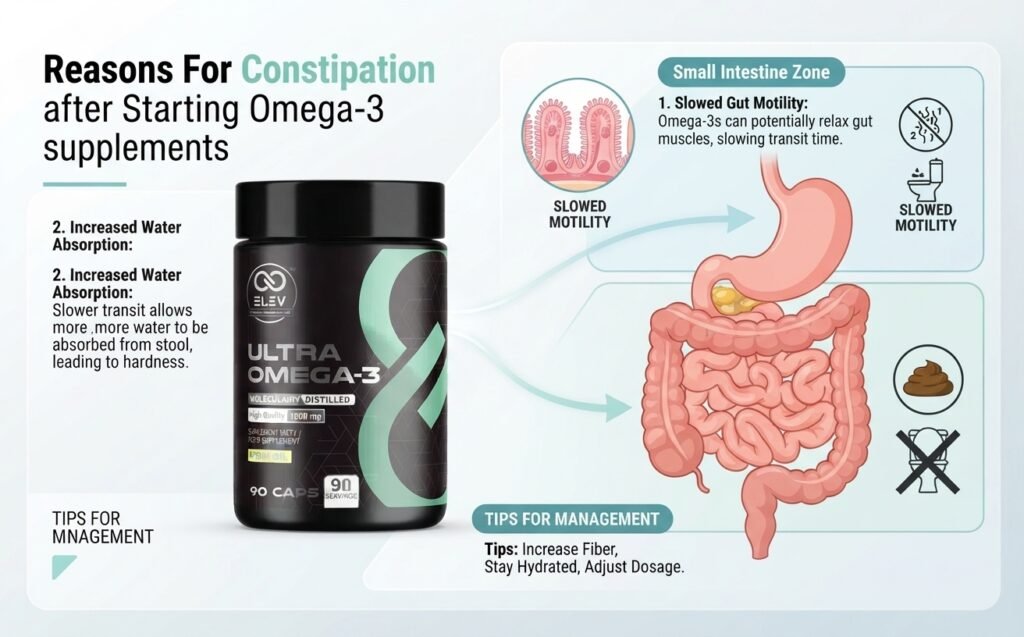
Some people may experience constipation after starting omega-3 due to digestive changes, especially when taking higher doses or certain formulations.
1. A high starting dose
Jumping straight to 2000 or 3000 mg adds a large amount of fat to your system at once. In sensitive people this can slow gastric emptying, which feels like fullness, bloating and a sluggish bowel. A gradual build-up lets your digestive system adjust.
2. Not drinking enough water
Dehydration hardens stool and slows transit time whatever supplement you take. In Pakistan’s summer heat, or after hard gym sessions, fluid loss is high, so the supplement often gets blamed for what is really a hydration gap.
3. A low-fiber diet
Fiber gives stool bulk and feeds the gut microbiome. If your meals are mostly refined flour, rice and meat, extra dietary fat can make digestion feel slower. Fiber from oats, fruit, vegetables, lentils and whole grains keeps things moving.
4. Low-quality or oxidized fish oil
Cheap, poorly stored or counterfeit fish oil can be rancid, low in EPA and DHA, and padded with fillers. Oxidized oil irritates the stomach and is a common reason for burping, nausea and irregular bowels. Our guide on how to identify original imported fish oil supplements shows what to check on the pack before you buy.
5. Capsule shell or additive sensitivity
Some people react to capsule shells, flavorings or other additives, which can bring gas, cramps or irregular bowel habits. Switching format, for example to a liquid, a different softgel or an algal oil, often settles it.
6. Other things changing at the same time
New supplements rarely arrive alone. Iron, calcium, a new protein powder, a diet change or less movement can all cause constipation, and omega-3 gets the blame because it was the newest addition. Change one thing at a time when you can.
Can Omega-3 Actually Support Digestion?
EPA and DHA have anti-inflammatory effects, and research is exploring their link to gut lining health and microbiome diversity. Some people with sensitive digestion report easier bowel movements on omega-3, but this is not guaranteed and it should not be treated as a laxative. The realistic expectation is simple: a well-chosen supplement, taken with food, should not upset your bowels at all.
How to Avoid Constipation While Taking Omega-3
- Start low: begin with about 500 mg of combined EPA and DHA daily and increase every week or two.
- Take it with a meal: fat in the meal improves absorption and reduces stomach upset.
- Hydrate: aim for 7 to 10 glasses of water a day, more in hot weather or after training.
- Add fiber: oats, fruit, vegetables, chia seeds and whole grains. Our guide on how to add omega-3 to your daily routine has simple meal ideas.
- Move daily: a 20 to 30 minute walk helps bowel regularity.
- Choose purified, tested oil: look for stated EPA and DHA per serving, third-party testing and Halal certification.
- Switch format if needed: try a liquid, a different softgel or algal oil if one product keeps bothering you.
Expert Guidance: Omega-3 Dosage, Timing and Safety
Dosage. Check the label for the actual EPA plus DHA content, not just the total fish oil. A capsule marked “1000 mg fish oil” may contain only 300 mg of EPA and DHA combined. Many healthy adults use roughly 250 to 1000 mg of combined EPA and DHA daily. Higher amounts are sometimes used for specific goals such as high triglycerides, but that should be guided by a doctor. More is not automatically better, and large doses raise the chance of digestive upset.
Timing. The clock matters less than the meal. Taking omega-3 with your largest, fat-containing meal gives better absorption and fewer side effects. If you get reflux, an evening dose can feel worse, so try breakfast or lunch instead. Our article on the best time to take omega-3 supplements covers this in detail. Consistency over weeks matters more than the exact hour.
Safety. Omega-3 can have a mild blood-thinning effect at higher doses, so speak to your doctor first if you take blood thinners, have a bleeding disorder, are scheduled for surgery, are pregnant or are managing a heart condition. Fish allergy is a reason to avoid fish oil, and algal oil is the usual alternative. Store capsules in a cool, dark place and discard any that smell strongly rancid.
Practical tip. Keep a short note for two weeks: dose, time, water intake and bowel changes. It shows quickly whether omega-3 is the trigger or something else in your routine.
Should You Stop Omega-3 If You Feel Constipated?
Not straight away. First lower the dose, take it with food, drink more water and add fiber for a week or two. If the problem continues, try another format or brand. Stop and see a doctor if constipation is severe or lasts more than a few weeks, or if you notice blood in the stool, strong abdominal pain, vomiting or unexplained weight loss.
Choosing Authentic Omega-3 in Pakistan
Product quality is the most controllable part of this problem. Counterfeit and old stock circulate widely, so buy from an authorised distributor with clear batch details. SportsOne International stocks Imported Supplements in Pakistan with Halal certification, PKR pricing and cash on delivery. You can browse our full range of omega-3 supplements in Pakistan, or look at a purified EPA and DHA option such as Zoomad Labs Omega-3, best taken with food.
Conclusion: Does Omega 3 Cause Constipation?
Rarely, and usually for reasons you can fix. Start with a low dose, take omega-3 with meals, drink enough water, eat more fiber and choose a purified, authentic product. If symptoms persist or feel severe, speak to a doctor rather than guessing.
FAQs: Does Omega 3 Cause Constipation?
Can omega-3 supplements cause constipation?
Rarely. Constipation is listed among less common digestive effects of omega-3, far behind burping, nausea and loose stools. When it happens, low water intake, low fiber, a sudden high dose or poor-quality fish oil are usually involved.
Does fish oil cause constipation or diarrhea?
Diarrhea and loose stools are reported more often than constipation, especially at higher doses or on an empty stomach. Both can occur in sensitive people. Taking fish oil with meals and raising the dose slowly reduces either problem.
How long does constipation from omega-3 last?
Digestive effects usually appear within days of starting or increasing the dose and often ease within one to two weeks as the body adjusts. If it lasts longer than a few weeks or becomes severe, stop and consult a doctor.
How can I avoid constipation while taking omega-3?
Start with a low dose, take it with a meal, drink 7 to 10 glasses of water daily and eat fiber-rich foods like oats, fruit and vegetables. Choose a purified, third-party tested product from an authorised seller.
Is algal or liquid omega-3 better for a sensitive stomach?
Some people tolerate liquid or algal oil better than standard fish oil capsules, but evidence is limited. If one product upsets you, trying another format or a cleaner brand is a reasonable step before stopping omega-3.
Disclaimer: This article is for general education and is not medical advice. Consult a qualified doctor before starting omega-3 if you are pregnant, take medication, have a medical condition or have a fish allergy.


About author

Related posts

For most healthy adults, collagen peptides are well tolerated. The side effects people actually report are mild: a feeling of fullness, bloating, an aftertaste or... Continue reading

The short answer: the best time to take collagen is whichever time you will repeat every single day. Research on hydrolysed collagen peptides has not... Continue reading

Neither is universally better. Marine collagen is often preferred for skin, hair and people who avoid beef, while bovine collagen is usually cheaper and offers... Continue reading

Collagen may help support joint comfort in some people, but the evidence is modest, results are slow, and it is not a substitute for medical... Continue reading
Most people notice their first change from collagen supplements after 4 to 8 weeks, with clearer skin and joint results building between 8 and 12... Continue reading
Add comment