
No products in the cart.
Return To Shop
How to Identify Original Imported Fish Oil Supplements
Buying fish oil supplements has become confusing especially when almost every product claims to be “originally imported”. Knowing how to identify original imported fish oil supplements is essential to avoid fake, expired, or low-quality omega-3 products that provide little to no health benefit.
This guide breaks down practical, real-world checks you can use before and after purchase so you invest in a supplement that actually works.
Why Counterfeit Fish Oil Is a Real Problem in Pakistan
Fish oil is among the most counterfeited supplements in Pakistan. Many products are falsely labeled as imported, while in reality they are locally repackaged, expired, or diluted. Common issues include:
Many so-called imported fish oil supplements use fake “imported” branding, relabeled expiry dates, very low EPA and DHA content, and suffer from poor storage that leads to oxidation and rancidity. Understanding how to identify original imported fish oil supplements protects both your health and money, helps avoid ineffective products, reduces inflammation risks, and ensures you receive real omega-3 benefits backed by proper testing, freshness, and verified sourcing.
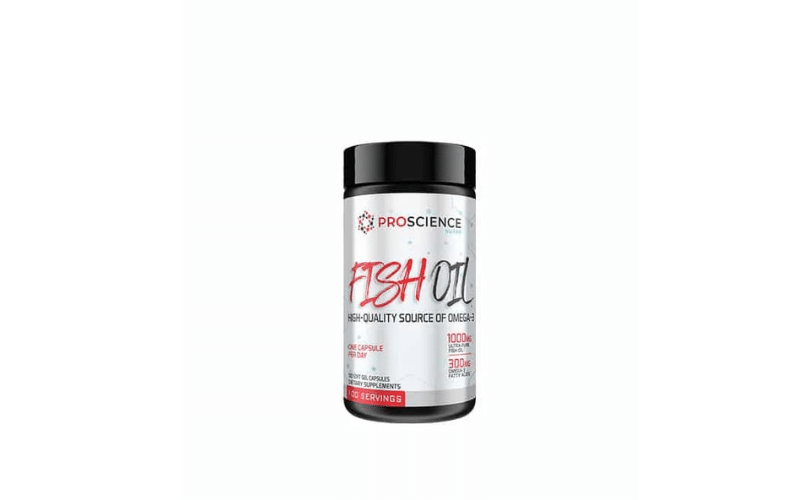
What Makes Fish Oil “Fake”?
Before learning verification steps, it’s important to know what fake actually means.
Fake or poor-quality fish oil may include:
- Oxidized or rancid oil
- Misleading labels (1000 mg fish oil but very low EPA/DHA)
- No third-party testing
- Refilled or tampered packaging
- No traceable importer or batch record
Such products can increase inflammation rather than reduce it.
Why Quality Matters
Omega-3 works only when it is fresh, pure, and correctly dosed. Low-quality fish oil may:
- Cause fishy burps or nausea
- Fail to support heart, brain, or joint health
- Expose you to oxidized fats
- Provide zero therapeutic EPA/DHA benefit
That’s why learning how to identify original imported fish oil supplements is critical for long-term use.
Quick Authenticity Checklist (2-Minute Test)
Before purchase, quickly check:
- Tamper seal intact
- Clear manufacturing & expiry dates
- Batch or lot number present
- Importer sticker with address
- Barcode or QR code
- Clear EPA & DHA values listed
If two or more are missing, reconsider the product.
Step-by-Step: How to Identify Original Imported Fish Oil Supplements
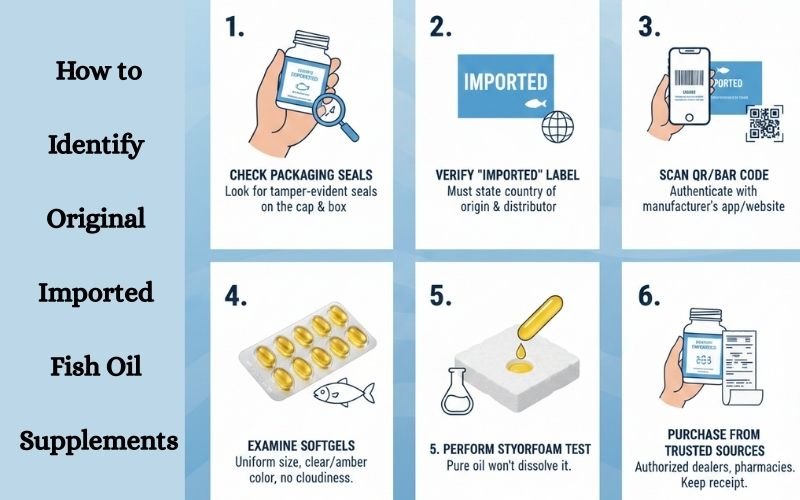
Below are expert-approved verification steps you should always follow.
Check the Brand’s Official Website & Packaging
Original imported supplements match exact product images shown on the brand’s official website. Fonts, label layout, and color tone should be identical.
Verify Batch/Lot Number & Expiry Dates
Authentic fish oil always has:
- Printed (not stickered) batch numbers
- Manufacturing & expiry dates
- Traceable records via brand or importer
Look for Third-Party Testing (IFOS, NSF, USP)
Original imported fish oil supplements are third-party tested. Look for:
- IFOS certification
- NSF or USP marks
- COA (Certificate of Analysis) availability
Confirm EPA + DHA Per Serving
Ignore “1000 mg fish oil” claims. Instead, check:
- EPA amount
- DHA amount
- Combined EPA + DHA (ideally 500–1000 mg per serving)
Identify the Form: Triglyceride vs Ethyl Ester
Triglyceride (TG) form is:
- Better absorbed
- More stable
- Preferred in premium imported fish oils
Ethyl Ester (EE) is cheaper and more prone to oxidation.
Inspect Packaging Quality
Original imported fish oil supplements use:
- Tight tamper seals
- Thick bottles or premium blisters
- High-quality caps with ring locks
Loose caps or weak seals are red flags.
Barcode or QR Scan (With Caution)
Barcode scans confirm product registration, not authenticity. Always combine barcode checks with:
- Importer verification
- Batch numbers
- Official seller confirmation
Verify Importer & Distributor
Check:
- Importer name
- NTN or registration
- Physical address
- Warranty or replacement policy
Evaluate the Seller
Trusted sellers provide:
- Proper invoices
- Clear return policy
- Cold-chain handling
- Real customer reviews
Signs Your Fish Oil Is Rancid or Oxidized
Even original fish oil can go bad if stored incorrectly, especially when exposed to heat, light, or air for long periods. Warning signs include a strong fishy or paint-like smell, burning sensation in the throat, nausea, headache, or cloudy and leaking capsules. If these signs appear, stop using immediately, as oxidized fish oil may increase inflammation, reduce effectiveness, and potentially cause digestive discomfort or long-term health risks.
How to Choose the Right Fish Oil
To choose safely:
- Prefer triglyceride (TG) form
- Choose cold-water fish sources (anchovy, sardine)
- Look for IFOS/NSF testing
- Ensure high EPA + DHA
- Buy from authorized sellers only
This simplifies how to identify original imported fish oil supplements during purchase.
Imported vs Local Fish Oil: What “Imported” Really Means
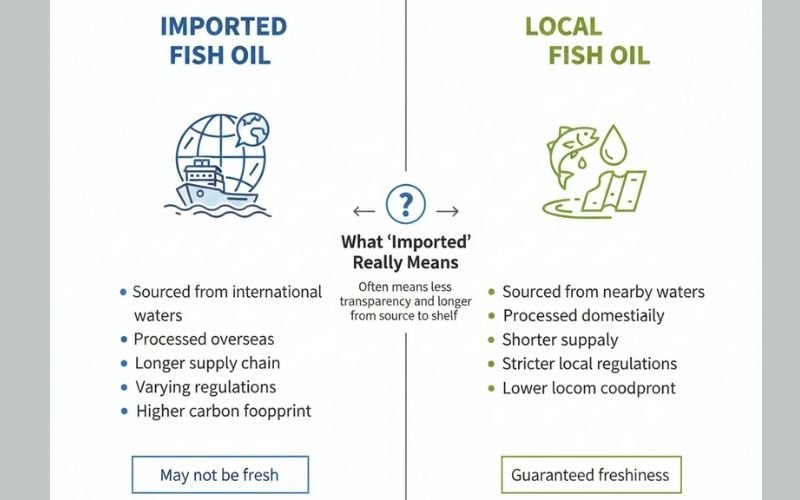
Not all “imported” fish oil is fully imported.
There are three types:
- Fully imported finished product (best)
- Imported raw oil, locally encapsulated
- Locally produced with foreign branding
Always ask which category the product falls into.
Label Reading Guide (Simple Explanation)
Correct label:
- “EPA 360 mg / DHA 240 mg”
- Clear serving size
- No vague wording
Misleading label:
- “1000 mg fish oil”
- No EPA/DHA breakdown
What We Recommend
Instead of brand chasing, choose products that:
- Focus on quality indicators instead of chasing popular brand names or marketing claims.
- Choose fish oil supplements that are IFOS or NSF tested for purity, safety, and freshness.
- Ensure the label clearly discloses EPA and DHA amounts per serving, not just total fish oil.
- Verify importer and distributor details, including address, registration, and traceability.
- Check that the product matches official brand packaging with no font, color, or label inconsistencies.
- Look for batch numbers and clear expiry dates printed on the bottle, not added later.
- Confirm the supplement is stored properly under controlled conditions to prevent oxidation.
- Following these points ensures freshness, safety, real omega-3 benefits, and long-term value instead of falling for marketing hype.
Want to Know If Your Fish Oil Is Working?
The Omega-3 Index blood test measures EPA & DHA levels in your cells. It’s the most accurate way to confirm effectiveness, especially for long-term users.
FAQs: How to Identify Original Imported Fish Oil Supplements
Is expensive fish oil always original?
No. Price alone doesn’t confirm authenticity. Always verify batch numbers, third-party testing certifications, and official importer details to accurately identify original imported fish oil supplements and avoid overpriced counterfeits.
Can local fish oil be good quality?
Yes, local fish oil can be good quality if it is properly purified, third-party tested, and transparently labeled with clear EPA/DHA values and safety certifications. However, consistency varies widely.
Do fishy burps mean fake fish oil?
Not always, but frequent fishy burps usually indicate oxidation, poor formulation, or improper storage. High-quality, fresh fish oil should cause minimal aftertaste or digestive discomfort.
Is IFOS certification mandatory?
IFOS certification is not mandatory, but it is highly recommended. It strongly indicates purity, freshness, low oxidation levels, and compliance with international omega-3 quality standards.
Can I trust online marketplaces?
Only if the seller is verified, provides proper invoices, importer information, and a return policy. Marketplace listings without traceable seller credentials carry a higher counterfeit risk.
How long does original fish oil stay fresh?
Original fish oil typically stays fresh for 24–36 months when unopened and stored correctly. Exposure to heat, light, or air significantly accelerates oxidation and quality loss.
Final Thought
Knowing how to identify original imported fish oil supplements is no longer optional; it’s essential. With counterfeits flooding the market, informed checks protect your health, money, and results.Always verify labels, testing, packaging, and sellers before buying. Quality omega-3 is an investment to make sure it’s genuine.


Related posts

Most fitness goals fit neatly into one of two camps: bulking or cutting. But a growing number of athletes, natural lifters, and everyday gym-goers want... Continue reading

Most people walk into the gym, train hard, and then reach for a single scoop of whey right after. That routine works , but it... Continue reading

If you have been searching for a protein supplement that actually supports fat loss while keeping your hard-earned muscle intact, clear whey isolate might be... Continue reading

For Pakistani women struggling with being underweight, the journey to healthy weight gain can feel overwhelming. Between cultural expectations, busy schedules, and conflicting nutrition advice,... Continue reading

Joint pain has become increasingly common among Pakistanis, affecting people across all age groups, from young athletes recovering from injuries to elderly individuals dealing with... Continue reading
Add comment