
No products in the cart.
Return To Shop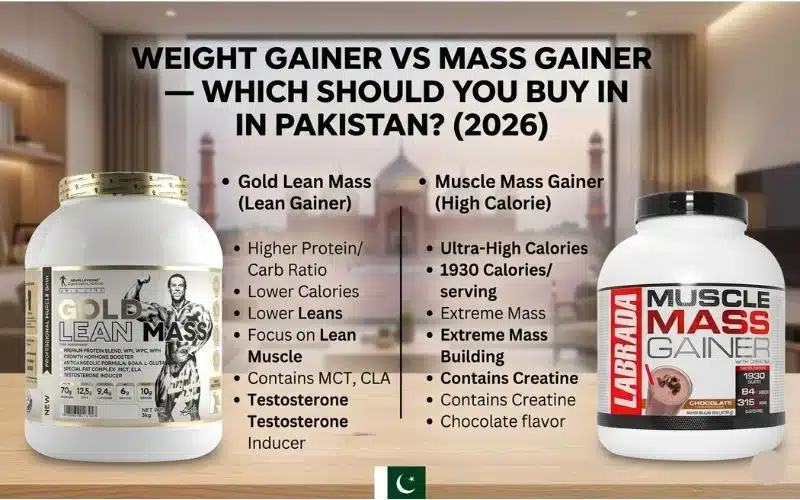
Weight Gainer vs Mass Gainer: What’s the Difference?
Walk into any supplement store and you will see big tubs labelled “weight gainer” next to equally big tubs labelled “mass gainer.” They look almost the same, and they both promise size. So what is the actual difference, and which one should you choose?
This guide explains the difference between a weight gainer and a mass gainer in plain terms: calories, protein, carbohydrates and who each type suits. It also shows you why the name on the tub matters less than the numbers on the label.
Weight Gainer vs Mass Gainer: The Short Answer
Both are calorie-dense shakes made mainly of carbohydrates and protein. The usual distinction is this:
- Weight gainer: built to add as many calories as possible, with a high share of carbohydrates. Aimed at people who struggle to eat enough.
- Mass gainer: fewer calories per serving but a larger share of protein. Aimed at people who train regularly and want muscle with less fat gain.
One important caveat: brands do not use these names consistently. Some of the highest-calorie products on the market have “mass” in their name, and some “weight gainers” are fairly protein-rich. Treat the two terms as a rough guide, and judge any tub by its label.

Nutritional Differences at a Glance
| Typical weight gainer | Typical mass gainer | |
| Calories per serving | High, often 700 to 1,250 | Moderate, often 400 to 700 |
| Protein per serving | Around 30 to 50g | Around 40 to 60g |
| Carbs to protein | Roughly 4:1 or higher | Roughly 2:1 to 3:1 |
| Share of calories from protein | Lower, often under 20% | Higher, often 25 to 35% |
| Serving size | Large, sometimes 300g or more | Smaller |
| Extras | Varies by product | Some add creatine or amino acids |
| Main goal | Overall weight gain | Muscle gain with less fat |
| Digestion | Can feel heavy | Usually easier to drink |
Typical ranges only. Individual products vary, so always check the label.
Calorie Differences
Calories are the most obvious difference. A high-calorie weight gainer can deliver more energy in one shake than a full plate of rice and chicken, which is exactly what someone with a small appetite or very fast metabolism needs. The trade-off is volume: large servings can feel heavy and cause bloating, especially at first.
A mass gainer adds a more moderate top-up. It suits someone already eating reasonably well who needs an extra few hundred calories a day, not a thousand. For many people this is easier to fit around meals without killing their appetite for proper food.
More calories is not automatically better. The right amount depends on the gap between what you eat now and what you need to gain weight steadily. If a 500-calorie shake closes that gap, a 1,200-calorie shake mostly adds fat.
Protein-to-Carbohydrate Ratio
This is the number that really separates the two types. Divide the grams of carbohydrate per serving by the grams of protein:
- 4:1 or higher: a carbohydrate-led, high-calorie formula. Typical of weight gainers.
- 2:1 to 3:1: a more balanced, protein-focused formula. Typical of mass gainers and “lean” gainers.
Another quick check is the share of calories from protein: multiply grams of protein by 4, then divide by total calories. For example:
| Calories per serving | Protein per serving | Share of calories from protein | What it behaves like |
| 1,250 | 50g | 16% | High-calorie weight gainer |
| 800 | 50g | 25% | In between |
| 600 | 50g | 33% | Protein-focused mass gainer |
Example figures to show the calculation.
Why it matters: training builds muscle and protein supports that process, while extra carbohydrates mainly supply energy. If you already hit your protein needs from food, a high-carb gainer is a sensible way to add calories. If your diet is low in protein, a more protein-focused gainer does more of the work for you.
Why the Label Matters More Than the Name
Because brands use “weight gainer” and “mass gainer” loosely, the name on the front of the tub is not a reliable guide. High-calorie products such as Optimum Nutrition Serious Mass carry “mass” in their name, for example. Before buying, turn the tub around and check:
- Calories per serving, and the serving size in grams
- Protein and carbohydrate grams, to work out the ratio
- Sugar within the carbohydrates; a very sugary formula is harder to justify
- Protein sources, such as whey concentrate, isolate or casein
- Any extras, such as creatine, so you do not double up with a separate supplement
Who Might Choose Each Type?
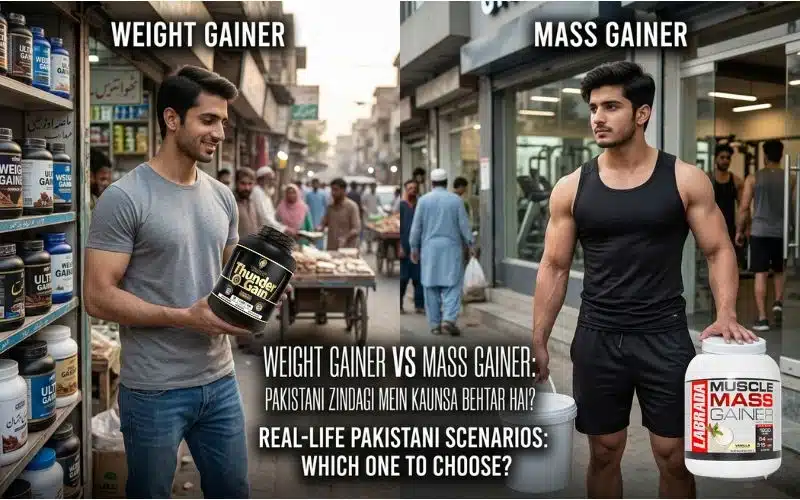
The underweight student with a small appetite: weight gainer
You miss meals because of classes or work, you struggle to finish a full plate, and the scale barely moves. Your main problem is total calories, not protein. A high-calorie weight gainer closes that gap in one shake. Start with half a serving to see how your stomach handles it.
The consistent gym-goer: mass gainer
You train four or five times a week, eat three proper meals and want to add muscle without much extra fat. You need a moderate calorie top-up with plenty of protein, which is exactly what a mass gainer is designed to provide.
The cricket, football or hockey player: usually a mass gainer
Long training sessions burn a lot of energy, and recovery matters. A mass gainer gives you carbohydrates to refuel plus protein for recovery. Players who still struggle to hold their weight during a heavy season may need the higher calories of a weight gainer.
Skinny-fat, or already carrying extra fat: mass gainer or none
If you have little muscle but some belly fat, piling on calories is rarely the answer. A lower-calorie, protein-focused gainer, or simply more protein from food and a protein shake, usually serves you better. Our guide to mass gainer vs lean gainer for skinny-fat builds covers this in detail.
Regaining weight after illness: talk to your doctor first
After illness or surgery, the priority is restoring a healthy weight, and an easy-to-drink, calorie-dense shake can help when appetite is low. Because medical conditions and medicines affect what is safe, check with your doctor or a dietitian before starting any gainer. See our guide on weight gain after recovering from illness.
How to Choose Based on Your Goal
- Name your goal. Gaining overall weight points towards a weight gainer. Building muscle while limiting fat points towards a mass gainer.
- Check your current diet. If you struggle to eat enough of anything, prioritise calories. If you eat enough but little protein, prioritise protein.
- Be honest about your body fat. The leaner you are, the more a high-calorie gainer makes sense. The more fat you carry, the more you should lean towards protein.
- Read the ratio, not the name. Use the carbs-to-protein ratio and the share of calories from protein to confirm what type the tub really is.
- Test before committing. Start with half servings and, if you are new to gainers, a smaller pack. Our 1kg vs 5kg weight gainer guide helps you pick the pack size.
Mistakes to Avoid With Either Type
- Replacing meals with shakes. A gainer fills gaps in your diet; rice, daal, eggs, chicken and milk remain the foundation. Our desi diet for weight gain shows how.
- Skipping training. Without resistance training, extra calories are more likely to end up as fat than muscle. See does a mass gainer work without exercise?
- Starting with a full or double serving. Build up from half a serving over the first week.
- Buying from unverified sellers. Popular gainers are often counterfeited. Buy from an authorised seller and check the seal and batch details.
For serving sizes and timing, read our guide on how to use a mass gainer. Decided on a type and want to compare specific products? See our best mass gainers in Pakistan comparison. If you’re ready to compare products and current prices, browse our weight gainer collection.
The Final Verdict
So Weight Gainer or Mass Gainer?
If you’re underweight, struggling to eat enough calories, and your main goal is simply getting bigger and heavier go with a weight gainer. It’s the blunt instrument that gets the caloric job done.
If you’re already at a healthy weight, training consistently, and want to build lean muscle with minimal fat gain, a mass gainer is the smarter, more targeted investment.
Not sure yet? Browse Pakistan’s top-rated options and compare products side by side. The best weight gainer in Pakistan for your goal is one click away and our team at Sportsone curates only 100% authentic products.
Ready to Bulk Up the Right Way?
Browse Pakistan’s largest selection of verified weight gainers all original, all tested, delivered to your door.
Frequently Asked Questions
Is a weight gainer the same as a mass gainer?
Not exactly, though brands often use the names interchangeably. Weight gainers usually have more calories and a higher share of carbohydrates, while mass gainers usually have fewer calories and a higher share of protein. Check the label to see which type a product really is.
What is the main difference between a weight gainer and a mass gainer?
The protein-to-carbohydrate balance. Weight gainers often have roughly 4 grams or more of carbohydrate for every gram of protein, while mass gainers are closer to 2 to 3 grams of carbohydrate per gram of protein.
Which is better for building muscle without much fat?
A mass gainer, because it provides a larger share of protein and a more moderate calorie top-up. Combine it with regular resistance training and enough total protein in your diet.
Does a weight gainer cause more fat gain than a mass gainer?
It can, if the extra calories are more than you need. Any gainer adds fat when your total calorie surplus is too large or you are not training. Choose a serving that closes your calorie gap, not the biggest one available.
How do I tell whether a product is a weight gainer or a mass gainer?
Ignore the name and read the label. Divide carbohydrate grams by protein grams, or work out the share of calories from protein (protein grams x 4 divided by total calories). A low protein share points to a weight gainer; a higher share points to a mass gainer.
Can I use a gainer without working out?
You can, but without resistance training the extra calories are more likely to be stored as fat than built into muscle. Any gainer works best alongside a regular training programme.

About author

Related posts

For most healthy adults, collagen peptides are well tolerated. The side effects people actually report are mild: a feeling of fullness, bloating, an aftertaste or... Continue reading

The short answer: the best time to take collagen is whichever time you will repeat every single day. Research on hydrolysed collagen peptides has not... Continue reading
Neither is universally better. Marine collagen is often preferred for skin, hair and people who avoid beef, while bovine collagen is usually cheaper and offers... Continue reading
Collagen may help support joint comfort in some people, but the evidence is modest, results are slow, and it is not a substitute for medical... Continue reading
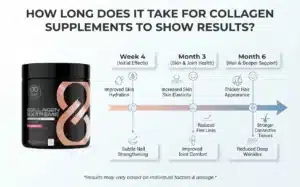
Most people notice their first change from collagen supplements after 4 to 8 weeks, with clearer skin and joint results building between 8 and 12... Continue reading
Add comment