
No products in the cart.
Return To Shop
How to Gain 5 kg in a Month Safely (2026 Guide)
Updated: September 2026
As a fitness coach, I hear this question constantly: “How can I gain 5 kg in a month without wrecking my health?” Whether you’re underweight, recovering from illness, or working toward building muscle mass, gaining weight safely is just as technical as losing it. Over 10+ years of coaching clients through this exact goal, I’ve seen a structured, science-backed plan consistently beat “just eat more.”
This guide gives you the real numbers, calories, macros, training split, and a sample meal day so you can gain close to 5 kg in a month without piling on fat, wrecking digestion, or burning out.
Quick summary: what it actually takes
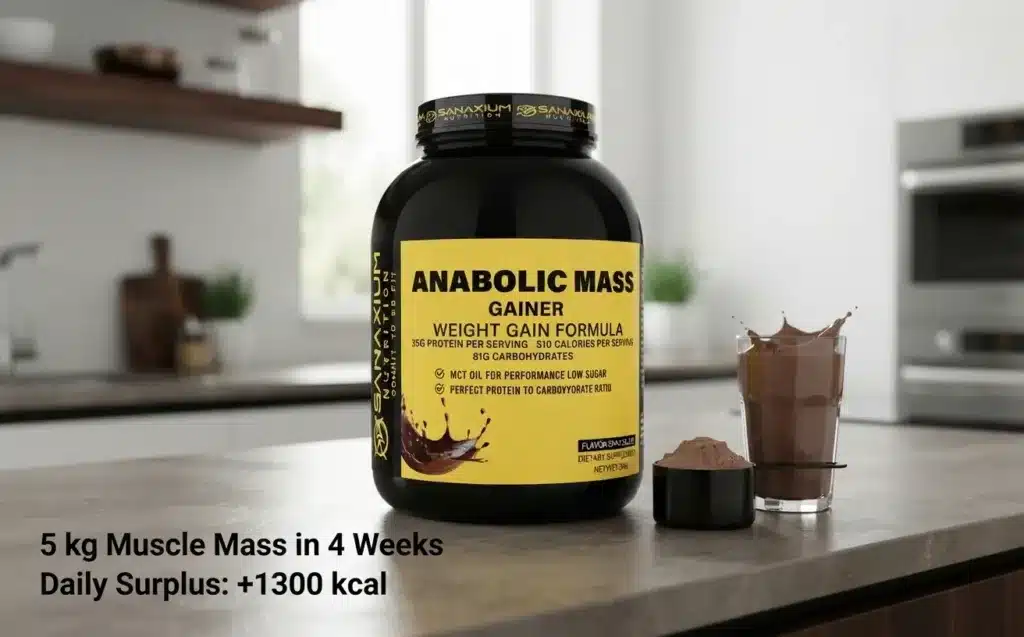
- Calorie surplus needed: ~1,200–1,300 extra kcal/day (≈38,500 kcal over the month)
- Protein target: 150–180g/day (varies by body weight)
- Training: 4 resistance sessions/week, 6–12 reps, progressive overload
- Realistic split: ~60–70% lean mass, the rest water/some fat
- Sleep: 7–9 hours/night non-negotiable for muscle growth

Why Gaining Weight Safely Matters
It’s tempting to just eat more fast food or dessert, but that route causes unhealthy fat gain, metabolic strain, and nutrient gaps. The goal is gradual, lean mass gain the right calories, protein, strength training, and recovery, working together.
How Many Calories Do You Need to Gain 5 kg in a Month?
Gaining 1 kg of body weight requires roughly a 7,700 kcal surplus. For 5 kg, that’s about 38,500 kcal over the month, around 1,280 extra calories a day on top of maintenance.
Step 1: Find Your Maintenance Calories
Use a TDEE calculator to get your baseline. For example:
- Sedentary male, 65 kg, 25 yrs: ~2,200 kcal/day
- Active female, 50 kg, 25 yrs: ~1,800 kcal/day
Step 2: Add a 1,200–1,300 kcal/day Surplus
Your new daily target becomes roughly:
- Male: ~3,400–3,500 kcal/day
- Female: ~3,000 kcal/day
Macronutrient Balance: The Key to Safe Weight Gain
| Macronutrient | Target % | Example grams (3,500 kcal/day) |
| Protein | 20–25% | 150–180g |
| Carbohydrates | 50–55% | 450–500g |
| Fats | 25–30% | 100–120g |
Focus on:
- High-quality protein: chicken, eggs, fish, whey protein, Greek yogurt
- Complex carbs: rice, oats, whole wheat bread, potatoes
- Healthy fats: olive oil, nuts, seeds, avocado
Sample 1-Day Meal Plan (~3,400 kcal)
- Breakfast: 4 whole eggs + 2 slices whole wheat toast + peanut butter
- Mid-morning: Whey protein shake + banana + oats
- Lunch: Grilled chicken breast + 1.5 cups rice + vegetables + olive oil
- Snack: Greek yogurt + almond-oatmeal mix + honey
- Dinner: Fish or beef + potatoes + salad
- Before bed: Casein or whey shake + a handful of nuts
Adjust portions up or down based on your own TDEE from Step 1 above.
Workout Strategy: Build Lean Mass, Not Just Weight
Hypertrophy-focused resistance training is what turns a calorie surplus into muscle instead of fat.
Weekly split:
- Day 1: Upper body push (chest, shoulders, triceps)
- Day 2: Lower body (squats, deadlifts, lunges)
- Day 3: Upper body pull (back, biceps)
- Day 4: Full-body compound lifts + accessories
Key rules: 6–12 reps, 3–5 sets per exercise; progressive overload week to week; 48 hours rest per muscle group.
Hydration, Rest, and Sleep
- 7–9 hours of sleep per night
- 2.5–3 liters of water daily
- Manage stress it directly affects testosterone and growth hormone, both needed for lean gains
Safe Strategies by Demographic
Men: high-protein, high-carb meals; prioritize compound lifts.
Women: balanced macros; resistance bands and lighter weights with progressive overload.
Underweight individuals: 5–6 meals/day; calorie-dense snacks like trail mix, smoothies, nut butters.
Fitness enthusiasts: whey protein isolate post-workout; creatine monohydrate at 5g/day.
If you’re new to structured bulking, our guides on high-protein foods for weight gain and the best supplements for hardgainers are good next reads.
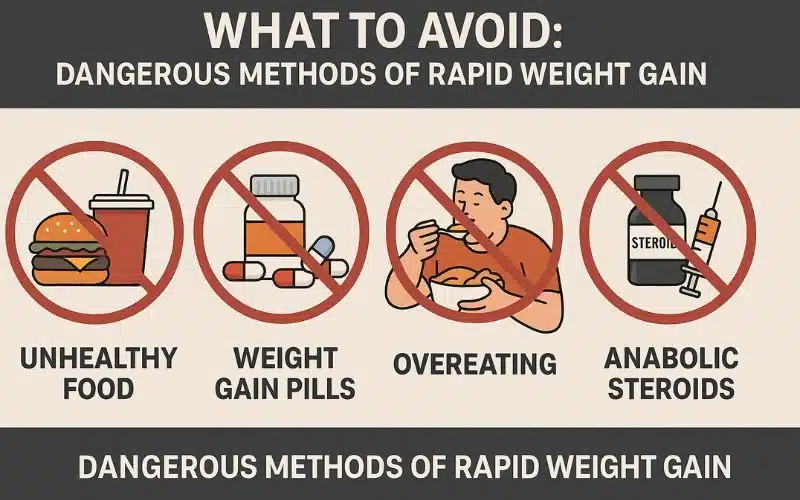
What to Avoid: Dangerous Rapid Weight-Gain Methods
- Relying on junk food drives visceral fat and poor metabolic health
- Skipping workouts the surplus becomes fat, not muscle
- Extreme bulking supplements without guidance
- Ignoring fiber and micronutrients invites digestive issues
Monitoring Your Progress Safely
- Weigh in twice weekly, same conditions
- Track waist, arm, and thigh measurements
- Watch strength gains in the gym, not just the scale
- Bloating, fatigue, or excess fat gain? Dial the surplus back
Common Mistakes to Avoid
- Too small a surplus no gain happens
- Under-eating protein
- Skipping resistance training
- Overtraining without rest
- Ignoring hydration and sleep
FAQs on Gaining 5 kg in a Month Safely
Q1: Is it realistic to gain 5 kg in one month?
Yes, with a proper calorie surplus and consistent strength training, most people can gain 4–5 kg in a month. Expect part lean mass, part water, and a small amount of fat.
Q2: How much of the 5 kg will be muscle vs. fat?
With solid nutrition and training, 60–70% can be lean mass. Some fat gain is normal but can be minimized with the macro split above.
Q3: Can women safely gain 5 kg in a month?
Yes through a gradual calorie increase, adequate protein, and resistance training. The focus should be lean muscle, not just the number on the scale.
Q4: Are weight gainer shakes necessary?
Not required, but they help hit your calorie target if whole food alone is hard to eat in volume. Choose low-sugar, high-quality formulas.
Q5: Is gaining 5 kg in a month too fast to be healthy?
For most healthy adults without underlying conditions, it’s an aggressive but achievable pace when the surplus and training are managed correctly. It’s not sustainable indefinitely; it’s meant as a focused, one-month push, not a long-term rate of gain.
Conclusion: Your Path to Safe Weight Gain
Gaining 5 kg in a month can be done safely with a thoughtful, science-backed approach: eat calorie-dense, well-balanced meals, train with progressive overload, stay hydrated, and prioritize rest. Listen to your body and adjust the surplus as your results and energy levels tell you to.
For genuine, imported supplements in Pakistan to support your calorie and protein targets, SportsOne stocks verified whey protein, mass gainers, and creatine sourced and checked for authenticity.
When to Consult a Healthcare Professional
If you have thyroid issues, digestive disorders, a history of eating disorders, or you’re simply unsure where to start, talk to a doctor or certified dietitian first. Safe weight gain should support your overall health, not put it at risk.


About author

Related posts

For most healthy adults, collagen peptides are well tolerated. The side effects people actually report are mild: a feeling of fullness, bloating, an aftertaste or... Continue reading

The short answer: the best time to take collagen is whichever time you will repeat every single day. Research on hydrolysed collagen peptides has not... Continue reading

Neither is universally better. Marine collagen is often preferred for skin, hair and people who avoid beef, while bovine collagen is usually cheaper and offers... Continue reading

Collagen may help support joint comfort in some people, but the evidence is modest, results are slow, and it is not a substitute for medical... Continue reading
Most people notice their first change from collagen supplements after 4 to 8 weeks, with clearer skin and joint results building between 8 and 12... Continue reading
Add comment