
No products in the cart.
Return To Shop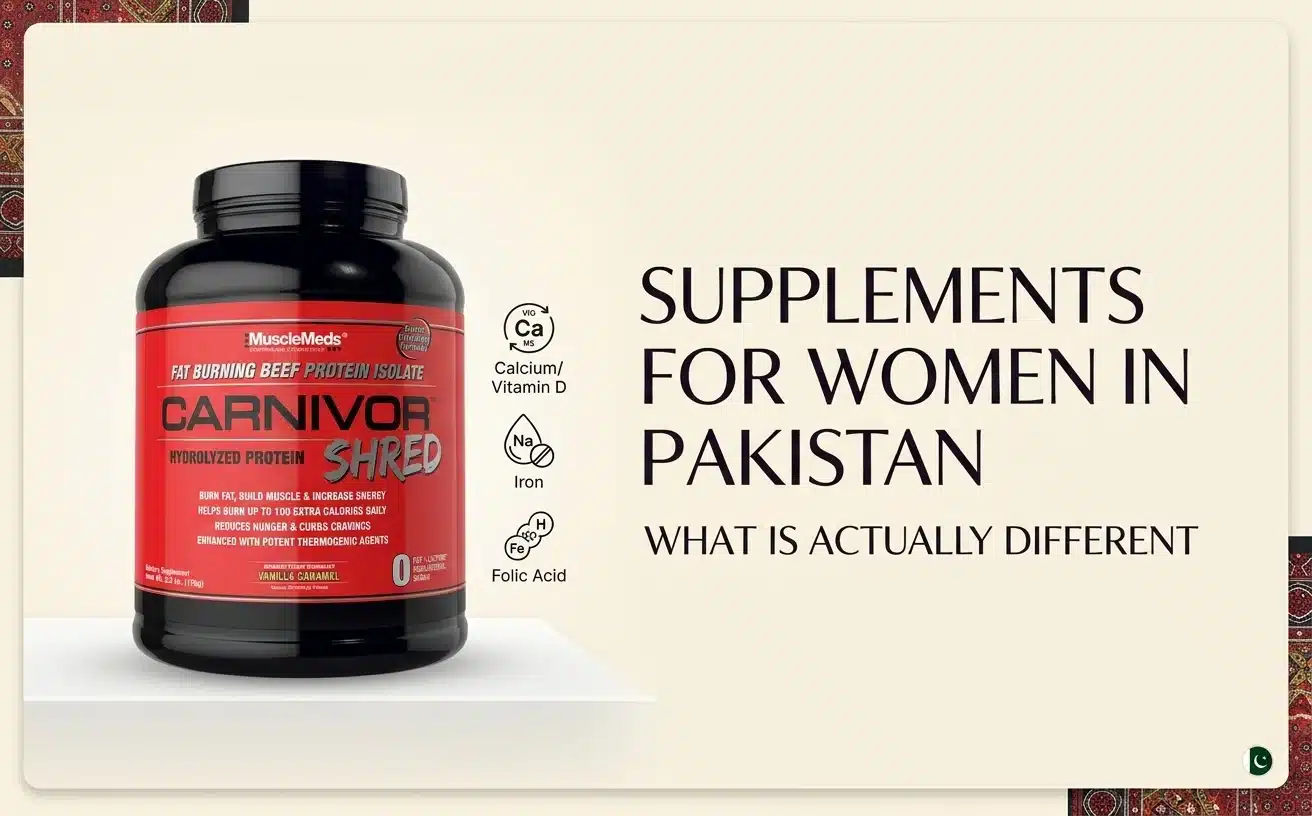
Supplements for Women in Pakistan: What Is Actually Different
Women do not need a separate “pink” version of every supplement. Protein, creatine and most vitamins work the same way in both sexes. What genuinely differs is iron, calcium and vitamin D needs, plus a few goal-specific choices. This guide separates real differences from marketing, so you can spend on what helps.
If you shop for Imported Supplements in Pakistan, you will see a lot of products labelled “for her”. Some are sensible. Many are the same formula with softer packaging. Below we cover what changes for women, what does not, and how to choose by goal.
What Is Genuinely Different and What Is Marketing
Muscle, bone and skin respond to the same inputs in everyone: enough protein, enough total calories, resistance training and adequate micronutrients. The differences sit at the edges.
- Genuinely different: iron needs (higher before menopause because of menstrual blood loss), calcium needs (rising after 50), vitamin D status (often low in Pakistani women), and extra care during pregnancy and breastfeeding.
- Mostly marketing: “female-specific” whey, “toning” protein and pink-labelled pre-workouts. A scoop of quality whey is the same protein whoever drinks it.
- Depends on you: calorie targets, training volume, lactose tolerance and any medical condition, not your gender alone.
For a deeper look at protein formats, see our protein powder guide for women in Pakistan.

The Bulky Myth, Settled Properly
Will protein make women bulky? No. Protein powder is simply a convenient food. It contains roughly 100 to 130 calories per scoop and does not add muscle by itself.
Visible muscle size depends on three things: heavy progressive training, a sustained calorie surplus and time. Women also have far less testosterone than men, on average roughly 10 to 20 times less, which is why most women build muscle slowly and in a lean, defined way rather than “bulking up” by accident. Even dedicated beginners usually gain well under a kilogram of muscle a month.
If a scale number rises after you start a shake, the cause is usually extra total calories, water from a new training routine, or both. Our guide on whether you can gain weight with whey protein explains how to tell the difference. For safety questions, read is whey protein safe for women.
Protein Targets by Bodyweight, Not by Gender
Protein needs scale with bodyweight and activity, not with sex. The general adult recommendation is 0.8 g per kg of bodyweight. Research-based guidance for people who train regularly, including the International Society of Sports Nutrition position stand, points to roughly 1.2 to 2.0 g per kg.
| Bodyweight | Minimum (0.8 g/kg) | Active (1.2 to 1.6 g/kg) | Strength training (1.6 to 2.0 g/kg) |
| 50 kg | 40 g | 60 to 80 g | 80 to 100 g |
| 55 kg | 44 g | 66 to 88 g | 88 to 110 g |
| 60 kg | 48 g | 72 to 96 g | 96 to 120 g |
| 65 kg | 52 g | 78 to 104 g | 104 to 130 g |
| 70 kg | 56 g | 84 to 112 g | 112 to 140 g |
| 80 kg | 64 g | 96 to 128 g | 128 to 160 g |
Start with food. Eggs (about 6 g each), chicken, daal, dahi, milk and paneer all count. Then use whey to fill the gap, not to replace meals. If you eat mostly vegetarian, see whey vs plant protein for Pakistani women. Beginners can also check how much protein per day a beginner needs.
Iron, Calcium and Vitamin D: Where Needs Do Differ
This is the section where “for women” is not just marketing. Each nutrient below has a different target or risk profile for women, so dosage, timing and safety all matter.
Iron. The recommended intake for women aged 19 to 50 is 18 mg a day, against 8 mg for men, and 27 mg in pregnancy (US National Institutes of Health, Office of Dietary Supplements). Menstrual blood loss explains the gap, and national nutrition surveys in Pakistan have reported anaemia in a large share of women of reproductive age. Do not self-prescribe iron. Get a blood test (CBC and ferritin) first, because excess iron is harmful and the tolerable upper limit is 45 mg a day. If your doctor prescribes it, take it away from tea, coffee and calcium, ideally with a vitamin C food or drink.
Calcium. Women aged 19 to 50 need about 1,000 mg a day from food and supplements combined, rising to 1,200 mg after 50. Dairy, sesame and leafy greens cover much of it. If you supplement, keep single doses around 500 mg or less and space them from iron by about two hours.
Vitamin D. The recommended intake is 600 IU (15 mcg) a day, and 800 IU after 70, with an upper limit of 4,000 IU. Despite plentiful sunshine, low levels are commonly reported among women who cover up, work indoors or have darker skin. A 25(OH)D blood test tells you whether you need more, and how much. Our calcium and vitamin D guide and iron and calcium guide for women go deeper.
Safety first. Speak to a doctor before supplementing if you are pregnant, breastfeeding, planning pregnancy, or taking thyroid medication, since calcium and iron can reduce its absorption and usually need to be taken hours apart. A quality multivitamin such as Mega Vitamins for Women can cover everyday gaps; always check the label for its iron, calcium and vitamin D amounts so you do not double up.
Collagen, Hair and Nails: What Is Reasonable to Expect
Collagen peptides have the best evidence among beauty supplements, but expectations should stay modest. Small trials using roughly 2.5 to 10 g a day for 8 to 12 weeks have reported improvements in skin hydration and elasticity, although many studies are small or industry-funded. Collagen is not a complete protein, so it does not replace your daily protein target.
For hair and nails, biotin only clearly helps when you are deficient, which is uncommon. High-dose biotin can also interfere with some lab tests, including thyroid and cardiac markers, so tell your lab if you take it.
If you want to try it, give any product at least 8 to 12 weeks and judge by skin texture and nail strength, not overnight changes. Browse collagen supplements in Pakistan, or the Sanaxium Gold Hair Skin Nails capsules. Related reading: how long hydrolyzed collagen takes to show results.
Picking a Protein When You Do Not Want a Mass Gainer
Most women who want a leaner, firmer look need a regular whey protein in Pakistan, not a high-calorie mass gainer. Choose by tolerance and goal:
- Whey concentrate or blend: good value and taste if dairy suits you.
- Whey isolate: more filtered, usually lower in lactose, a good fit for sensitive stomachs. See whey isolate for women.
- Plant protein: for dairy-free or vegan diets.
If your goal is fat loss
No supplement burns fat on its own. Fat loss needs a modest calorie deficit, and protein helps you feel full and keep muscle while you diet. Use a lean whey, keep strength training, and treat stimulant fat burners with caution, especially if you are sensitive to caffeine, pregnant or have blood pressure concerns. See how to use protein supplements for weight loss.
If your goal is weight gain
Underweight women need a steady calorie surplus, commonly 300 to 500 extra calories a day, plus strength training so the gain is not only fat. A gainer can help, but check the label for sugar and total calories. Start with weight gain supplements for females in Pakistan, then female weight gainer safety and protein powder for weight gain in women.
Curious about performance products? Read about creatine for females and whether women can take BCAA supplements.
What We Stock for Each Goal
SportsOne International is an authorised distributor of Halal-certified imported supplements. Match the goal to the category, then check the label for serving size, protein per scoop and ingredients.
| Your goal | Where to look | What to check on the label |
| Daily protein and lean muscle | Whey protein | Protein per scoop, lactose, sweeteners |
| Fat loss support | Sanaxium Gold Diet Whey | Calories and sugar per serving |
| Weight gain | Premium Gold Mass Gainer | Calories, sugar, serving size |
| Everyday vitamins and minerals | Mega Vitamins for Women and vitamins and minerals | Iron, calcium and vitamin D amounts |
| Skin and joints | Collagen | Grams of collagen per serving, added vitamin C |
| Hair and nails | Hair Skin Nails capsules | Biotin dose, other ingredients |
Authenticity matters as much as the product. Order from an authorised source, check seals and batch details, and ask for guidance on our store page or WhatsApp before buying anything new.
Frequently Asked Questions
Is whey protein good for women?
Yes. Whey protein is a food-based protein that works the same way in women and men. It helps you reach your daily protein target, supports muscle repair and fullness, and suits most women unless they are lactose intolerant or advised otherwise.
Will protein make women bulky?
No. Protein powder adds roughly 100 to 130 calories per scoop and does not build muscle alone. Bulky muscle needs heavy training, a large calorie surplus and years of effort. Women have far less testosterone, so most gain lean, firm muscle.
What is the best protein powder for females in Pakistan?
The best choice is a genuine, imported whey that suits your digestion and budget. Blends and concentrates suit most women, isolate suits sensitive stomachs, and plant protein suits dairy-free diets. Check protein per scoop, sugar and authenticity before buying.
Which weight gain supplement is best for a female?
A moderate-calorie weight gainer or whey plus extra meals works for most women. Aim for a gradual surplus of about 300 to 500 calories daily and strength training. Check sugar content, and see a doctor first if weight loss was unexplained.
Which supplements work for women’s weight loss?
No supplement burns fat by itself. Lean whey protein helps fullness and muscle retention during a calorie deficit, and a multivitamin can cover gaps. Be cautious with stimulant fat burners, especially if pregnant, breastfeeding or sensitive to caffeine.
Disclaimer: This article is for general education and is not medical advice. Speak to a qualified doctor or dietitian before starting supplements, especially if you are pregnant, breastfeeding, have a medical condition or take regular medication.

About author

Related posts

You do not need a gym membership to get stronger. This home workout plan for Pakistan uses only your bodyweight, a chair, a wall and... Continue reading
Clear whey looks like juice, drinks like juice and still delivers whey isolate protein. Regular whey looks and tastes like a milkshake. If you are... Continue reading
Search for drap registered supplements pakistan and you will find a lot of confident claims and very little explanation. Sellers say “DRAP approved” on banners,... Continue reading

Ramadan does not stop your training, but it squeezes everything into two short windows. Most gym members guess their way through the month: protein at... Continue reading
Yes, you can take whey protein in Ramadan, but only in your eating window. Whey protein in Ramadan works best when it is taken between... Continue reading
Add comment