
No products in the cart.
Return To Shop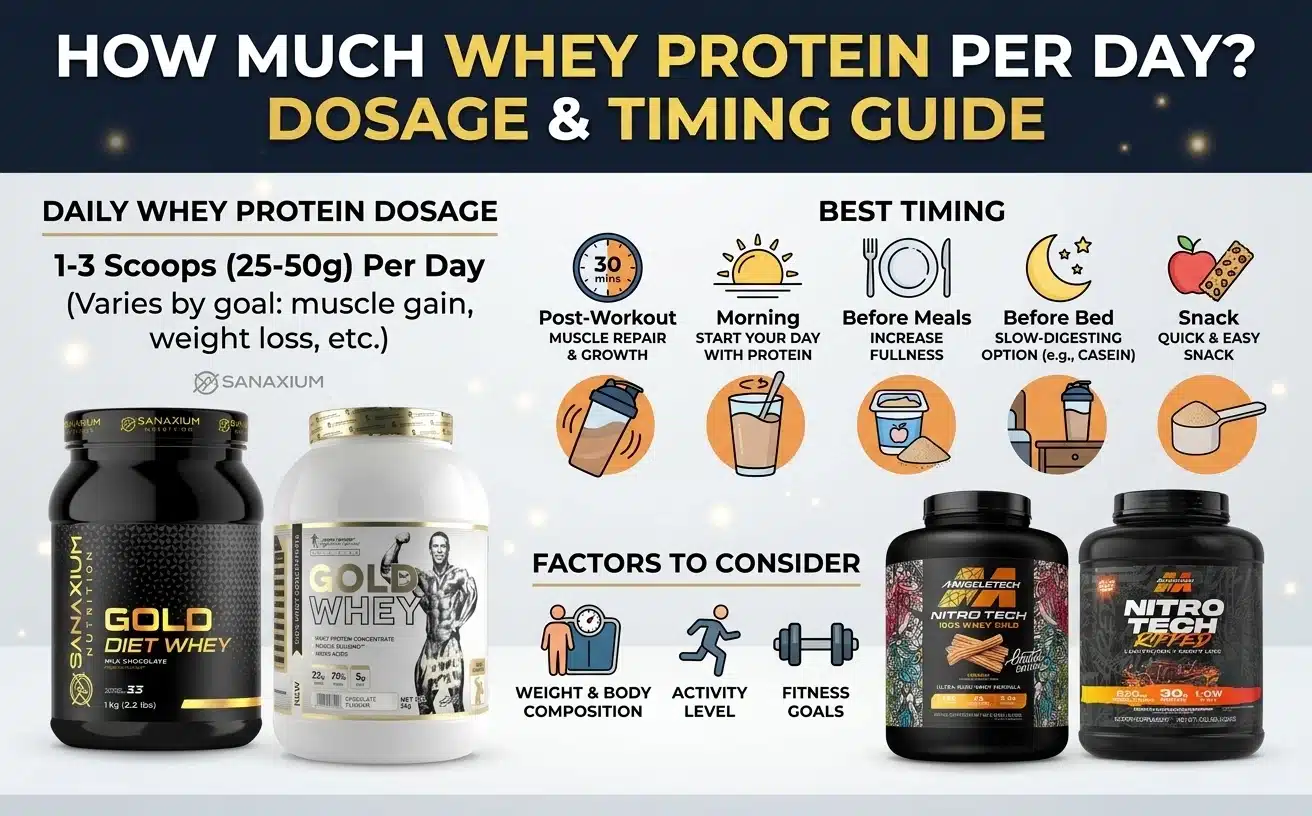
How Much Whey Protein Per Day? Dosage & Timing Guide
If you’ve just bought your first tub of protein powder, you’ve probably already searched “how to take whey protein” and found a dozen conflicting answers. Some say two scoops a day, others say one is enough. Some swear by pre-workout shakes, others by post-workout only. The truth is simpler than the internet makes it look — but getting the dosage, timing, and mixing right does make a real difference in how well your body uses the protein you’re paying for.
This guide breaks down exactly how much whey protein per day a beginner needs, when to drink your protein shake for the best results, and how to mix it so it actually tastes good instead of turning into a lumpy mess. Whether you picked up a tub of whey protein for muscle gain, weight management, or simply to hit your daily protein target, the fundamentals below apply to almost every beginner.
How Much Whey Protein Should a Beginner Take?
Most whey protein tubs come with a standard scoop that delivers roughly 24–30 grams of protein per serving. For a beginner, one to two scoops a day is generally enough to close the gap between what you eat and what your training demands. The right number depends on three things: your body weight, how much protein you’re already getting from food, and your training intensity.

- Sedentary to lightly active beginners: aim for 0.8–1g of protein per kg of body weight per day from all sources combined.
- Beginners strength training 3–4x per week: aim for 1.2–1.6g per kg of body weight, using whey protein to fill any shortfall from meals.
- Beginners trying to build muscle or in a calorie deficit: aim for 1.6–2.2g per kg, with one or two protein shakes helping you hit that number consistently.
In practical terms, a 70kg beginner training a few times a week is usually well covered with one scoop of whey protein after training, alongside regular meals containing chicken, eggs, lentils, or dairy. There’s no need to double up unless your diet is genuinely falling short — more protein than your body can use in a day doesn’t translate into extra muscle, it’s simply wasted.
Best Time to Take Whey Protein
Timing matters less than total daily protein intake, but it’s still worth optimising. Here’s when a protein shake for beginners actually makes the most sense:
Post-Workout (Most Common)
Taking whey protein within 30–60 minutes after training is the most popular approach, and for good reason — your muscles are primed to absorb amino acids for repair, and a fast-digesting protein like whey fits that window well.
Morning or Breakfast
If your breakfast is usually light on protein (just tea and paratha, for example), a shake in the morning is an easy way to start the day with 20–30 grams of protein already in the bank.
Between Meals
On busy days when a proper meal isn’t possible, a whey shake works as a convenient stopgap to keep your protein intake steady rather than dropping for several hours.
How to Mix Whey Protein Properly
Clumpy, chalky shakes are almost always a mixing problem, not a product problem. Follow these steps for a smooth shake every time:
- Add liquid to your shaker first, then add the protein powder — adding powder first causes clumping at the bottom.
- Use 200–300ml of cold water or milk per scoop, depending on how thick you like your shake.
- Shake for 15–20 seconds, or blend for a few seconds if using a blender bottle without a mixing ball.
- Drink within 30 minutes for the best texture — whey shakes thicken slightly the longer they sit.
Water or Milk: Which Should Beginners Use?
| Mixing Base | Calories | Taste & Texture | Best For |
| Water | Low | Thinner, lighter taste | Weight loss, cutting phases |
| Milk | Higher | Creamier, richer taste | Muscle gain, hard-gainers |
| Half water, half milk | Moderate | Balanced taste and thickness | Most beginners |
If you’re new to whey protein and unsure which type suits your goals, our whey protein isolate range is a good option for anyone who’s lactose-sensitive or prefers a leaner macro profile, since isolate is filtered further to strip out most of the fat and lactose found in regular whey concentrate.
Common Beginner Mistakes to Avoid
- Overdosing on scoops: more protein doesn’t mean faster results — your body can only use so much at once.
- Skipping whole food protein: whey protein is a supplement, not a meal replacement. Keep eating protein-rich meals.
- Using hot water: heat can affect texture and taste. Stick to cold or room-temperature liquid.
- Ignoring expiry and storage: keep your tub sealed, dry, and away from direct sunlight to protect the protein quality.
Why Buy Whey Protein From SportsOne
SportsOne has been an authorised distributor of imported sports nutrition brands in Pakistan since 2002, which means every tub of whey protein we sell is sourced through verified, legitimate channels — not grey-market imports. We also make ordering simple for first-time buyers: pay with Cash on Delivery across Pakistan, or place your order directly through WhatsApp if you’d rather skip the checkout page entirely and just ask us questions about dosage or which product fits your goals.
Frequently Asked Questions
How much whey protein should a beginner take per day?
Most beginners do well with one to two scoops (24–50g) per day, depending on body weight, training frequency, and how much protein they already get from meals. Start with one scoop and adjust based on your daily protein target.
When is the best time to take whey protein?
Within 30–60 minutes after training is the most common and effective window, since your muscles absorb amino acids well post-workout. A morning shake or between-meal shake also works if your diet needs a protein boost.
Can I mix whey protein with water instead of milk?
Yes. Water gives a lighter, thinner shake with fewer calories, making it ideal for cutting phases. Milk adds calories and a creamier texture, better suited to those focused on muscle or weight gain.
Is whey protein safe to take every day?
Yes, daily use is safe for most healthy adults when taken within recommended serving sizes. Whey protein is simply a concentrated food source, not a drug, so daily intake alongside a balanced diet is completely normal.
Should beginners choose whey concentrate or isolate?
Whey concentrate is a solid, budget-friendly starting point for most beginners. Isolate is worth the extra cost if you’re lactose-sensitive, prefer a leaner macro profile, or want maximum protein per scoop with minimal fat and carbs.


About author

Related posts

For most healthy adults, collagen peptides are well tolerated. The side effects people actually report are mild: a feeling of fullness, bloating, an aftertaste or... Continue reading

The short answer: the best time to take collagen is whichever time you will repeat every single day. Research on hydrolysed collagen peptides has not... Continue reading

Neither is universally better. Marine collagen is often preferred for skin, hair and people who avoid beef, while bovine collagen is usually cheaper and offers... Continue reading

Collagen may help support joint comfort in some people, but the evidence is modest, results are slow, and it is not a substitute for medical... Continue reading

Most people notice their first change from collagen supplements after 4 to 8 weeks, with clearer skin and joint results building between 8 and 12... Continue reading
Add comment