
No products in the cart.
Return To Shop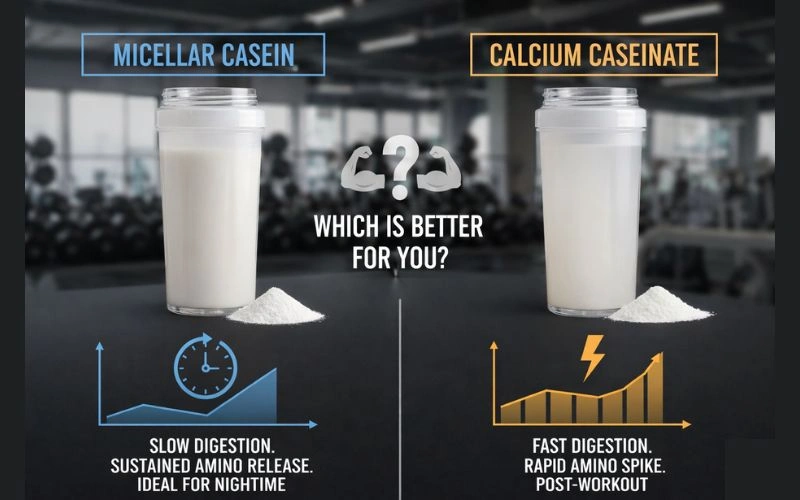
Micellar Casein vs Calcium Caseinate for Muscle Recovery: Which Is Better?
When you’re investing in protein supplements for muscle recovery, the type of casein you choose matters more than most people realize. While both micellar casein and calcium caseinate come from milk and provide slow-digesting protein, they’re processed differently and deliver distinct benefits for muscle repair and growth. Understanding these differences helps you make an informed choice that aligns with your recovery goals and budget.
The casein protein market offers these two primary forms, and each has earned its place in the supplement industry. Micellar casein represents the more natural, undenatured form that maintains its original structure, while calcium caseinate undergoes chemical processing that alters its properties. Both support muscle recovery, but the way they do it,and how your body responds,varies significantly.
What Makes Micellar Casein Different from Calcium Caseinate?
Micellar casein is extracted through a gentle filtration process called microfiltration that preserves the protein’s natural structure. Think of it as the “whole food” version of casein protein. The protein molecules remain in their original micellar form,clusters of casein molecules held together by calcium phosphate. This natural structure is what gives micellar casein its unique slow-digestion properties.
Calcium caseinate, on the other hand, goes through chemical processing using acid and alkali treatments. Manufacturers separate casein from milk using acid, then neutralize it with calcium hydroxide. This process denatures the protein, breaking apart those natural micelles into individual protein molecules. The result is a protein that dissolves more easily in liquids but loses some of the unique properties that make casein special for muscle recovery.

The Science Behind Digestion Rates
The structural difference between these two forms creates a dramatic impact on digestion speed and amino acid release patterns. Research published in the American Journal of Physiology shows that micellar casein forms a gel-like substance in your stomach that takes 6-8 hours to fully digest. This creates a sustained release of amino acids into your bloodstream, providing muscles with a steady supply of building blocks throughout the night or between meals.
Calcium caseinate digests faster,typically within 3-5 hours. While still considered a slow protein compared to whey isolate, it doesn’t provide the same extended amino acid delivery. For muscle recovery, this difference matters significantly during periods when you’re not eating, like overnight sleep or long gaps between meals.
The gel formation with micellar casein also creates a feeling of fullness that lasts longer. This satiety benefit makes it particularly valuable for those using protein supplements for weight management alongside muscle recovery goals.
Muscle Recovery Benefits: How Each Type Performs
When evaluating protein supplements for recovery, the key metric is muscle protein synthesis versus muscle protein breakdown. Your muscles are constantly breaking down and rebuilding, and the net balance determines whether you gain, maintain, or lose muscle mass.
Studies comparing these two casein forms show that both effectively support muscle recovery, but through slightly different mechanisms. Micellar casein excels at preventing muscle breakdown (anti-catabolic effect) due to its prolonged amino acid release. A 2025 study in the National institutes of health science found that athletes consuming micellar casein before bed experienced reduced overnight muscle protein breakdown compared to those using faster-digesting proteins.
Calcium caseinate provides a more moderate amino acid delivery pattern that sits between whey and micellar casein. It still supports muscle recovery effectively, particularly when consumed as part of a balanced protein strategy that includes both fast and slow proteins throughout the day.
Amino Acid Profile and Bioavailability
Both forms provide the same essential amino acids since they’re derived from the same milk protein.
- You get all nine essential amino acids, including branched-chain amino acids (BCAAs) crucial for muscle recovery. The leucine content,the primary trigger for muscle protein synthesis,remains consistent at approximately 8-9% of total protein content.
- However, bioavailability differs slightly between the two. Micellar casein’s natural structure may enhance the absorption of certain minerals, particularly calcium, which supports not just muscle function but also bone health.
- The protein’s gradual digestion also means amino acids enter the bloodstream at a steady rate, potentially reducing the amount that gets oxidized for energy instead of used for muscle repair.
- Calcium caseinate, being pre-digested to some degree through its processing, may actually absorb slightly faster in the initial stages. This isn’t necessarily better or worse,it simply creates a different amino acid delivery profile that you can leverage depending on your specific recovery needs.
Practical Applications for Different Recovery Scenarios
The choice between micellar casein and calcium caseinate often comes down to when and how you’re using the protein, rather than one being universally superior to the other.

For overnight muscle recovery, micellar casein stands out as the preferred choice for most athletes. Taking 30-40 grams of micellar casein 30-60 minutes before bed provides your muscles with amino acids throughout the 7-8 hour overnight fast. This prevents the muscle breakdown that naturally occurs during sleep and supports the recovery processes your body performs during rest. Research shows this can lead to better muscle gains over time compared to not consuming pre-bed protein.
Calcium caseinate works better for daytime use when you have long gaps between meals but not quite the 8-hour fasting window of sleep. If you need protein to bridge a 4-5 hour gap,say, between lunch and dinner when you’re working or studying,calcium caseinate provides adequate slow-release nutrition without the full commitment of micellar casein’s extended digestion.
Combining with Other Proteins
Many successful muscle building programs use both types strategically alongside whey protein.
- A common approach involves whey immediately post-workout for rapid amino acid delivery, calcium caseinate during the day for meal replacement or between-meal nutrition, and micellar casein before bed for overnight recovery.
- This layered approach ensures your muscles receive optimal amino acid support throughout the entire 24-hour cycle. Post-workout nutrition demands quick absorption that whey provides, while recovery during fasting periods requires the sustained release that casein offers.
- Some athletes simplify this by using protein blends that combine multiple protein types in one product. These typically mix whey with one or both forms of casein, creating a time-released amino acid profile from a single shake.
Taste, Mixability, and Practical Considerations
Beyond the science of muscle recovery, practical factors influence which casein type works better for your daily routine. Taste and texture can make or break supplement adherence, regardless of how effective the product is on paper.
Micellar casein has earned a reputation for poor mixability. The natural protein structure that makes it so effective for muscle recovery also makes it thick and somewhat clumpy when mixed with water or milk. Many users describe the texture as “pudding-like,” which some appreciate for making satisfying protein-rich desserts, while others find it off-putting for a regular shake. Using a blender or high-quality shaker bottle helps, but micellar casein will never mix as smoothly as whey isolate.
Calcium caseinate mixes significantly better due to its denatured structure. The broken-down protein molecules dissolve more easily, creating a smoother shake with less clumping. This makes it more versatile for protein shake recipes and easier to consume as a quick, drinkable supplement.
Flavor and Digestive Comfort
Taste varies by brand, but generally, calcium caseinate has a slightly more processed flavor compared to micellar casein’s more neutral, milky taste. Both can taste chalky if poorly flavored, which is why choosing quality products from reputable brands matters.
Digestive tolerance represents another practical consideration. Some people experience more bloating with micellar casein due to its slower digestion and gel formation in the stomach. If you’re prone to protein-related bloating, calcium caseinate’s faster digestion might cause fewer issues. However, both contain lactose (unless specifically processed as isolates), so individuals with lactose sensitivity should look for casein isolate products or consider alternative proteins.
Cost Comparison and Value for Recovery Goals
Price often plays a significant role in supplement selection, especially when using protein powder daily over months or years. The manufacturing differences between micellar casein and calcium caseinate translate directly to cost differences.

Micellar casein typically costs 20-40% more than calcium caseinate due to the more complex, gentler extraction process. The microfiltration equipment and slower production cycle increase manufacturing costs, which get passed to consumers. For reference, a quality micellar casein in Pakistan might cost Rs. 12,000-15,000 for a 2kg tub, while comparable calcium caseinate products run Rs. 8,000-11,000 for the same amount.
Is the extra cost worth it for recovery?
The answer depends on your specific situation and goals. Serious athletes and bodybuilders in intense training phases often find the investment worthwhile for superior overnight muscle protection. The enhanced anti-catabolic effect during sleep can translate to better muscle retention during cutting phases and improved gains during bulking cycles.
Budget-Friendly Recovery Strategies
If budget is a primary concern, calcium caseinate delivers solid muscle recovery support at a lower price point. You’re still getting slow-digesting casein protein with a complete amino acid profile. The slightly faster digestion compared to micellar casein doesn’t necessarily mean worse results,it just means you might not extract quite as much benefit from those longest fasting periods.
Another cost-effective approach involves using calcium caseinate as your daily driver and reserving micellar casein for the most critical recovery window,overnight. This hybrid strategy optimizes your budget while still capturing the unique overnight benefits of micellar casein.
Some athletes skip casein supplements entirely and focus on food-based protein sources like cottage cheese or Greek yogurt before bed. These whole food sources contain micellar casein naturally and often cost less per serving than supplements. A cup of cottage cheese provides approximately 25 grams of slow-digesting casein protein along with other nutrients.
Frequently Asked Questions About Casein Types
Can you mix micellar casein and calcium caseinate together?
Absolutely. Many commercial casein protein products actually blend both types to balance cost and performance. Combining them creates an intermediate digestion rate that some athletes prefer.
Which casein type is better for women?
Both work equally well for female muscle recovery. The choice depends more on goals and preferences than gender. Women using protein for weight loss might appreciate micellar casein’s superior satiety, while those prioritizing digestive comfort might prefer calcium caseinate.
Do both casein types work for lactose-intolerant individuals?
Standard forms of both contain lactose and may cause digestive issues. However, casein isolate versions of both types exist with minimal lactose, making them suitable for most lactose-sensitive individuals. Check product labels for lactose content and consider lactose-free alternatives if needed.
How much casein should you take for muscle recovery?
Research suggests 25-40 grams before bed for overnight muscle protection, regardless of which casein type you choose. This amount provides sufficient amino acids for 6-8 hours of muscle protein synthesis support without overwhelming digestion.
Can you take casein immediately after workouts?
While you can, it’s not optimal. Post-workout recovery benefits from fast-absorbing protein like whey isolate that delivers amino acids to muscles within 20-30 minutes. Casein’s slow digestion delays this amino acid delivery, potentially reducing the anabolic response to training. Save casein for pre-bed or between-meal situations where sustained release provides more benefit.
Final Recommendations for Different Athletes
Competitive bodybuilders and physique athletes should invest in quality micellar casein for overnight use. The enhanced muscle-sparing effects during sleep and cutting phases justify the higher cost. Combine it with whey protein post-workout and potentially calcium caseinate during the day for comprehensive recovery support.
Strength athletes and powerlifters benefit from micellar casein’s sustained amino acid delivery during recovery from heavy training sessions. The anti-catabolic effect helps preserve muscle mass while allowing adequate recovery between intense workouts.
Recreational gym-goers and general fitness enthusiasts can achieve excellent results with calcium caseinate as their primary slow-release protein. The cost savings make it sustainable for daily use, and the slightly faster digestion actually works fine when you’re eating regular meals throughout the day.


About author

Related posts

If you’ve ever stood in front of a supplement shelf and wondered, “Is whey protein halal?” you’re not alone. This question concerns many Pakistani gym-goers... Continue reading

Walking into a supplement store or browsing one online for the first time can feel overwhelming. Rows of tubs promise faster muscle growth, better recovery,... Continue reading

If you’ve spent years hearing “you’re so thin, eat more” at every family gathering despite cleaning your plate at every meal, you already know the... Continue reading

If you have stood in front of a supplement shelf wondering whether to pick up a tub of whey protein or a bag of mass... Continue reading

If you have ever opened a tub of creatine monohydrate, you have probably seen the instructions telling you to “load” for the first week. It... Continue reading
Add comment