
No products in the cart.
Return To Shop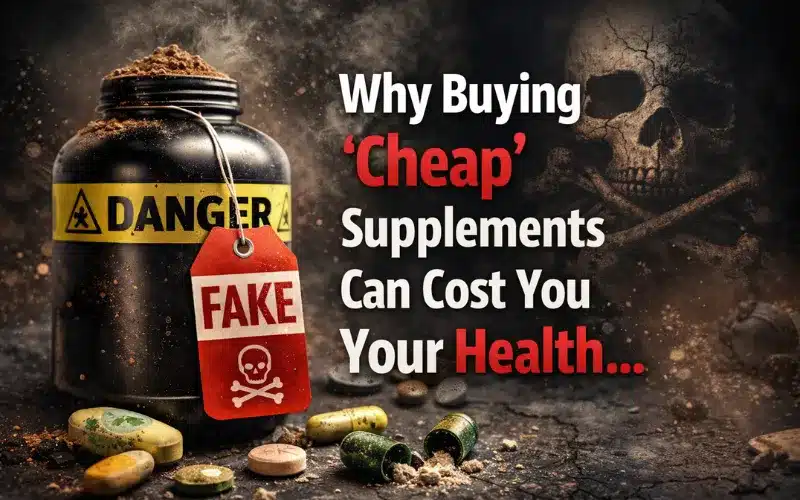
Why Buying “Cheap” Supplements Can Cost You Your Health
Updated: 24 September 2026
Buying cheap supplements can cost you your health because the low price usually comes from skipped lab testing, cheaper filler ingredients, poor storage and, in the worst cases, counterfeit packaging. A tub that saves you a few thousand rupees can deliver less protein than the label claims, or carry contaminants your kidneys and liver have to deal with. This guide explains the real risks, how genuine Imported Supplements in Pakistan differ from fakes, and how to shop safely.
Cheap vs Genuine Supplements at a Glance
| Factor | Suspiciously Cheap Supplement | Genuine Imported Supplement |
|---|---|---|
| Protein and ingredient accuracy | Often below label claims, padded with fillers | Matches the label, batch tested |
| Contaminant risk | Heavy metals, bacteria, undeclared stimulants | Made in GMP-certified facilities |
| Verification | No traceable batch code or fake QR code | Batch code and seal you can check with the brand |
| Halal status | Unverifiable | Halal-certified from an authorised distributor |
| Storage in Pakistan’s heat | Hot shops and warehouses | Temperature-controlled storage |
| Real cost per effective serving | Often higher than it looks | Predictable and fair |
Why Are Some Supplements So Cheap in the First Place?
Genuine manufacturers pay for quality raw materials, third-party lab testing, GMP-certified production, halal certification, import duties and safe shipping. When a price sits far below the market rate, one or more of those costs has been removed. Common shortcuts include:
- Amino spiking: adding cheap amino acids or nitrogen sources so the protein number looks higher than the real whey content.
- Filler ingredients: maltodextrin, starch or flour replacing part of the powder.
- Grey market stock: products with no manufacturer warranty, no traceability and unknown storage history.
- Counterfeit packaging: copied labels and seals wrapped around unknown powder.

Hidden Health Costs of Counterfeit and Low-Quality Supplements
The most serious cost is not the wasted money. It is what unverified powder can do to your body. Independent lab checks around the world have repeatedly found tainted or mislabelled supplements, and Pakistan’s warm, loosely policed retail market makes careful buying even more important. Here are the main risks:
- Heavy metal contamination that can accumulate in the kidneys and liver over time.
- Bacterial contamination from poor manufacturing or storage, causing stomach and digestive problems.
- Undeclared stimulants that can trigger palpitations, anxiety and sleep problems, especially in a fake pre-workout.
- Unlisted allergens such as milk, soy or nuts that are not shown on the label.
- Hormone-active compounds that may be added illegally to make a product feel stronger.
- Nutrient shortfall, meaning you train hard but do not get the amino acids your muscles need to recover.
Fake creatine is a good example. Creatine is one of the most researched supplements, but only pure creatine monohydrate gives the benefits. A diluted or contaminated tub gives you the risk without the results. The same applies to BCAA supplements, where the leucine, isoleucine and valine ratio on the label is what you are paying for.
The Real Cost per Effective Serving
The shelf price is not the true price. What matters is the cost of each serving that actually delivers protein or active ingredients. As an illustration only, suppose a tub costs half as much as a genuine one but delivers far less usable protein per scoop. You would need more scoops for the same result, and you carry the health risk on top. That is why genuine supplements from an authorised source often work out better value than they first appear.
Time is also part of the cost. Months of gym fees, training effort and discipline are wasted when the supplement does not do what the label says.
Does Storage in Pakistan’s Heat Really Matter?
Yes. Summer temperatures above 40°C are common in many Pakistani cities, and protein powders, vitamins and pre-workout formulas can lose potency or spoil when kept in hot shops, warehouses or vehicles. Heat and humidity also encourage clumping and bacterial growth. An authorised distributor stores stock in temperature-controlled conditions, which protects the product before it reaches you. Unauthorised sellers rarely do.
How to Spot Authentic Imported Supplements in Pakistan
You do not need a lab to protect yourself. Check these points before you pay:
- An intact tamper-evident seal and clean, sharp printing with no spelling errors.
- A batch code and expiry date that are printed on the tub, not stuck on afterwards.
- A QR or verification code that can be confirmed on the brand’s own website.
- A complete nutrition panel with a full ingredient list, not only basic macros.
- A recognised halal certification mark and proper import documentation.
- A seller that is an authorised distributor and can show where the stock comes from.
For a step-by-step walkthrough, read our guide on how to identify fake imported supplements in Pakistan, or use this checklist to verify original imported supplements before you order.

Trusted Brands Worth the Price
Quality brands invest in research, testing and consistent manufacturing, which is what you pay for. A few examples available from SportsOne International:
- Optimum Nutrition: Gold Standard 100% Whey, a long-established whey blend known for consistent mixability and taste.
- MuscleTech: Nitro-Tech for whey with added creatine, and Mass Tech Extreme for hard gainers.
- Applied Nutrition: Critical Whey and ISO-XP, a low-lactose isolate option.
- Elev: Whey Gold and ISO Gold, positioned for value with proper certification.
Browse the full whey protein range to compare options, and see our price comparison of imported supplements in Pakistan to understand what a fair price looks like.
Halal Certification: A Requirement, Not a Bonus
For Muslim consumers, halal status is a religious requirement. Counterfeit products cannot prove the source of their ingredients, even if the tub says halal. SportsOne stocks halal-certified imported supplements from authorised channels, so you know what you are consuming.
Final Thoughts
The cheapest tub is rarely the cheapest choice. Once you count lower effectiveness, possible medical costs and wasted training time, genuine supplements protect both your health and your budget. Buy from an authorised distributor, check the batch code and seal, and be cautious of any price that looks too good to be true. Speak to a doctor before starting any supplement if you have a medical condition or take regular medication.
Frequently Asked Questions
Why are cheap supplements dangerous?
Cheap supplements may skip lab testing, use fillers or contain contaminants such as heavy metals, bacteria or undeclared stimulants. Because their source is untraceable, you cannot confirm what is inside. That creates health risks and often delivers little of the protein or active ingredient promised.
How can I tell if a supplement is fake in Pakistan?
Check for an intact tamper-evident seal, sharp printing, a printed batch code and expiry, and a verification code that works on the brand’s official website. Also buy only from an authorised distributor that can show its supply source.
Are imported supplements really better than local ones?
Not automatically, but reputable imported brands usually offer stricter testing, GMP manufacturing, clear labelling and manufacturer support. The key is authenticity. A verified genuine product from an authorised seller is safer than any unverifiable product, imported or local.
Why is the food supplement price in Pakistan higher for imported brands?
The price reflects import duties, third-party testing, halal certification, temperature-controlled storage and authorised distribution costs. Compared per effective serving instead of per tub, genuine products often cost less than cheap versions that contain fillers.
What are the side effects of fake protein powder?
Possible effects include stomach upset, allergic reactions, palpitations from hidden stimulants and long-term strain on the kidneys and liver from contaminants. If you feel unwell after using a supplement, stop taking it and consult a doctor.
About author

Related posts

For most healthy adults, collagen peptides are well tolerated. The side effects people actually report are mild: a feeling of fullness, bloating, an aftertaste or... Continue reading
The short answer: the best time to take collagen is whichever time you will repeat every single day. Research on hydrolysed collagen peptides has not... Continue reading
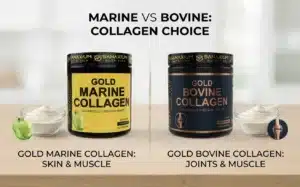
Neither is universally better. Marine collagen is often preferred for skin, hair and people who avoid beef, while bovine collagen is usually cheaper and offers... Continue reading
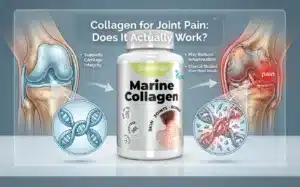
Collagen may help support joint comfort in some people, but the evidence is modest, results are slow, and it is not a substitute for medical... Continue reading
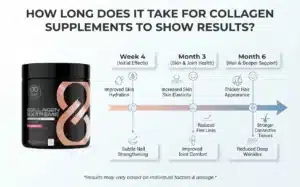
Most people notice their first change from collagen supplements after 4 to 8 weeks, with clearer skin and joint results building between 8 and 12... Continue reading
Add comment