
No products in the cart.
Return To Shop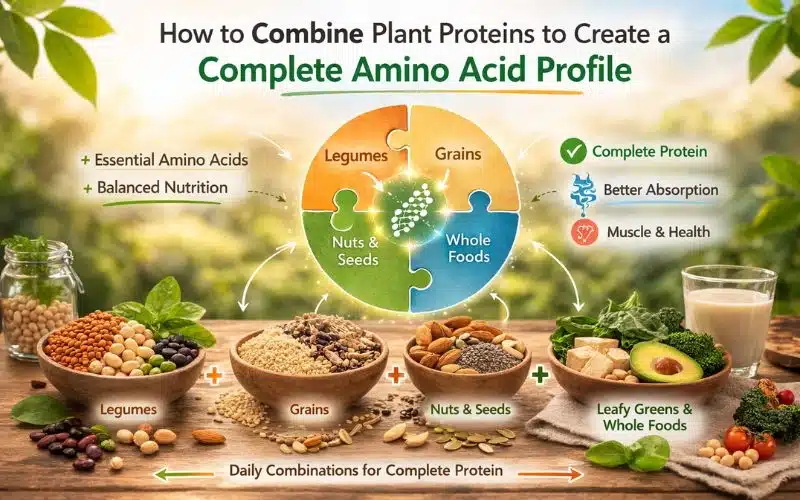
How to Combine Plant Proteins to Create a Complete Amino Acid Profile
If you have ever been told that plant-based eating cannot support serious muscle growth or athletic performance, the science tells a different story. The real issue is not that plant proteins are inferior , it is that most of them are incomplete on their own.
What Makes a Protein Complete or Incomplete
Your body requires nine essential amino acids that it cannot produce on its own. These are histidine, isoleucine, leucine, lysine, methionine, phenylalanine, threonine, tryptophan, and valine. A complete protein contains all nine in meaningful quantities. Most animal proteins , whey, eggs, meat, dairy , are naturally complete. Most plant proteins, however, are low or missing in at least one of these amino acids, which is why the strategy of combining sources becomes so important.

The Logic Behind Complementary Plant Proteins
The beauty of plant proteins is that their amino acid weaknesses and strengths tend to mirror each other almost perfectly across food categories.
- Legumes , beans, lentils, chickpeas, and peas are typically rich in lysine but low in methionine.
- Grains , rice, oats, wheat, and corn flip that equation entirely, running high in methionine but low in lysine.
When you pair these two categories together, you get a protein combination that covers all nine essential amino acids. This is the foundational principle behind complementary proteins, and it has been practiced intuitively in traditional cuisines across the world for centuries. Rice and lentils in South Asia, beans and corn tortillas in Latin America, and hummus with pita bread in the Middle East , these are not coincidences. They are centuries of dietary wisdom backed by modern nutritional science.
- Legumes are high in lysine and low in methionine
- Grains are high in methionine and low in lysine
- Seeds and nuts add methionine and healthy fats to legume-based meals
- Soy is a rare exception that is complete as a standalone plant protein
The Most Effective Plant Protein Pairings
The legume and grain combination remains the most practical and accessible pairing for most people. A bowl of brown rice with black beans, a lentil dahl served over whole grain bread, or a chickpea stir-fry with quinoa all hit complete amino acid profiles without requiring supplements or specialty products. For anyone exploring the benefits of plant-based proteins for weight loss, these everyday pairings provide high protein with low fat , an ideal combination for body recomposition goals.
Legumes paired with seeds are another underrated combination. Sesame seeds and tahini are particularly high in methionine and cysteine, which makes lentil-based meals with tahini dressing a nutritionally complete option. Pumpkin seeds over a chickpea salad, or sunflower seeds mixed into a bean-based soup, follow the same logic and add texture, flavor, and nutritional density at the same time.
- Brown rice with lentils or black beans
- Hummus with whole grain pita or crackers
- Tofu or tempeh with brown rice and edamame
- Lentil soup with tahini and whole grain bread
- Chickpea salad with pumpkin seeds and quinoa
The Standalone Complete Plant Proteins
Soy is the most widely studied complete plant protein available. Tofu, tempeh, edamame, and soy milk all deliver all nine essential amino acids with a bioavailability that comes closer to animal protein than any other plant source. Leucine content in soy is particularly notable, which matters greatly for muscle protein synthesis. Tempeh is especially impressive because the fermentation process increases nutrient absorption and adds gut health benefits on top of the protein content. For women specifically, the whey isolate for women benefits and best picks article contrasts animal and plant-based isolates in a way that helps with informed decision-making.
Quinoa is the other naturally complete plant protein worth highlighting. Often mistaken for a grain because of how it is cooked, quinoa is technically a seed and contains a full essential amino acid profile including strong lysine levels , the very amino acid most grains lack. It works as a base for bowls, salads, and side dishes and brings far more nutritional value than white rice in a comparable serving.
Why Leucine Matters More Than People Realize
Among all the essential amino acids, leucine holds a special place for anyone using plant proteins to support muscle building or maintenance.
Leucine is the primary trigger for muscle protein synthesis , the process through which your body repairs and builds muscle tissue. Most plant proteins contain significantly less leucine per gram than whey or other animal proteins. This means that to get the same muscle-building signal from plant protein, you typically need to consume a higher total volume of protein per meal.
Research suggests aiming for at least 2.5 to 3 grams of leucine per meal to adequately stimulate muscle protein synthesis. Soy, pea protein, and hemp all offer relatively stronger leucine content compared to other plant sources, which is why they are the backbone of most plant-based protein supplements. If you are relying on whole food plant proteins for athletic goals, the muscle building guide outlines how to structure your intake to account for this gap.

Do You Have to Combine Proteins in the Same Meal
This is one of the most common questions people ask when they first start approaching plant-based protein strategically, and the answer is reassuring.
No , you do not need to combine complementary proteins in the exact same meal. Your body maintains an amino acid pool throughout the day that it draws from to assemble complete proteins as needed. As long as you are eating a variety of plant protein sources across your daily meals, your body has what it needs to meet its requirements. That said, for athletes or anyone training intensely, getting a reasonably complete amino acid hit in the post-workout window remains a smart practice. Timing still matters for muscle recovery, even if perfect same-meal pairing is not mandatory.
Plant Protein Powders That Deliver Complete Profiles
The most effective plant-based protein powders use a blend of pea protein and brown rice protein. This combination mirrors the legume-and-grain pairing principle and delivers a complete amino acid profile in a convenient scoop. Pea protein is high in lysine and branched-chain amino acids, while rice protein contributes the methionine that pea protein lacks.
Together, they rival whey in amino acid completeness, though the leucine content is still lower per gram which is why serving sizes on plant-based products tend to be larger. For anyone curious about comparing options, the vegan protein shake recipes article offers practical ways to use plant-based powders in everyday meals, and vegan weight loss shakes gives specific examples optimized for fat loss goals.
- Pea protein: high in lysine and BCAAs but low in methionine
- Brown rice protein: complements pea protein by covering methionine
- Hemp protein: naturally complete with added omega-3 fatty acids
- Soy protein isolate: highest bioavailability among plant protein powders
If you are looking for a trusted range of vegan and plant protein supplements to explore, having access to verified options makes the transition to plant-based supplementation much smoother.
A Practical Daily Meal Template for Complete Plant Protein
Start your morning with oats cooked in soy milk and topped with hemp seeds and almond butter. This covers a broad amino acid base while also delivering fiber and healthy fats to sustain energy. Lunch can be a lentil and vegetable soup with whole grain bread or a quinoa bowl loaded with chickpeas, roasted vegetables, and a tahini dressing. The afternoon snack might be hummus with whole wheat crackers or a small handful of mixed seeds.
For dinner, a tofu or tempeh stir-fry with brown rice and edamame rounds out your day with one of the most complete plant-based amino acid combinations possible. Anyone following this kind of structure while also incorporating resistance training for lean muscle will find that plant proteins absolutely support meaningful body composition changes.
How Much Plant Protein Do You Actually Need Daily
Getting the combinations right is only part of the equation. Total daily protein intake matters enormously, and plant-based eaters often need to eat slightly more total protein than people relying on animal sources because of lower bioavailability and leucine content per gram.
For active individuals focused on muscle preservation or building, a target of 1.6 to 2.2 grams of protein per kilogram of bodyweight per day is well-supported by research. For those new to calculating this, the how much protein per day for a beginner guide is a straightforward starting point.

The Bigger Picture on Plant Protein and Long-Term Health
Plant-rich diets consistently show associations with reduced inflammation, better cardiovascular markers, and improved digestive health. The fiber that comes bundled with whole food plant proteins feeds beneficial gut bacteria in ways that animal proteins simply cannot. When you build your protein intake around a diverse range of legumes, grains, seeds, and soy foods, you are not just hitting amino acid targets , you are also building the kind of dietary foundation that supports stamina stress and recovery over the long term. The supplement and nutrition world tends to focus narrowly on short-term performance, but a complete plant protein strategy is one of those rare approaches that serves both immediate and lifelong health simultaneously.
About author

Related posts

If you’ve been searching for the Xtend BCAA price in Pakistan for the 30 servings tub, you’ve probably noticed a lot of outdated listings and... Continue reading

If you have been searching for the Testrol Gold ES price in Pakistan, you have likely already come across it as one of the more... Continue reading
If you’ve been researching how to cut stubborn body fat without losing hard-earned muscle, chances are you’ve come across the CLA + L-Carnitine combo. It’s... Continue reading

Typing “gym supplement shop near me” into Google usually means one thing: you need whey protein, creatine, or a pre-workout today, not next week, and... Continue reading
If you’re a hard gainer struggling to add size no matter how much desi food you eat, Labrada Muscle Mass Gainer 6lb is one of... Continue reading
Add comment