
No products in the cart.
Return To Shop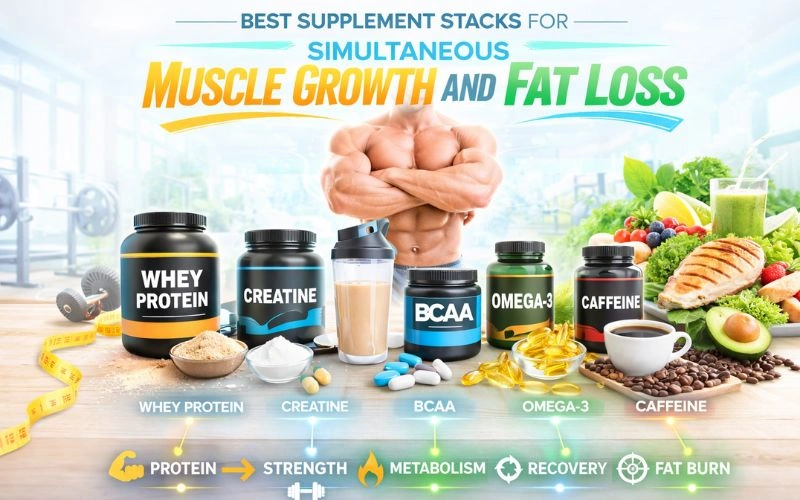
Best Supplement Stacks for Simultaneous Muscle Growth and Fat Loss
Most fitness goals fit neatly into one of two camps: bulking or cutting. But a growing number of athletes, natural lifters, and everyday gym-goers want both at once , more muscle and less fat, happening in parallel. This is called body recomposition, and while it is genuinely challenging, it is far from impossible. The right supplement stack can tip the metabolic balance in your favour, supporting muscle protein synthesis while pushing the body to use stored fat as fuel.
Why Body Recomposition Demands a Smarter Stack
Building muscle and burning fat simultaneously pulls the body in two metabolically opposite directions. Muscle growth requires a caloric surplus at the tissue level and elevated anabolic hormones, while fat loss depends on a caloric deficit and sustained fat oxidation. The only way to pursue both together is to create a targeted nutritional environment , one where protein intake stays high, training stimulus is consistent, and supplements plug the gaps that diet and exercise alone cannot fully cover.
The Core Foundation: High-Quality Protein
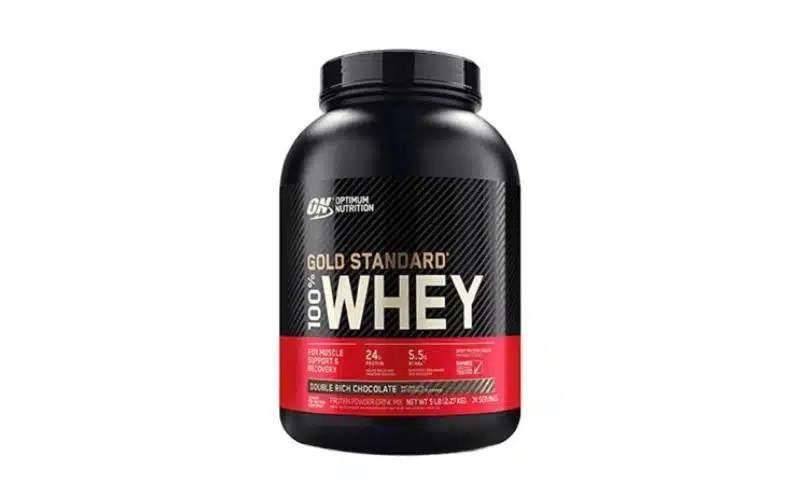
Nothing in a body recomposition stack matters more than protein. Muscle tissue is built from amino acids, and without a constant supply, no training or supplementation strategy can produce lean mass. Simultaneously, protein has the highest thermic effect of any macronutrient , meaning the body burns more calories digesting it than it does digesting carbohydrates or fat. High protein intake actively supports both sides of the recomposition equation.
For most people pursuing recomposition, a daily target of 1.6 to 2.2 grams of protein per kilogram of body weight hits the sweet spot. A fast-digesting whey protein post-workout spikes muscle protein synthesis right when muscles are most receptive. Pairing this with a casein protein before bed sustains amino acid availability through the overnight fast, preventing the muscle catabolism that can stall recomposition progress. For those sensitive to lactose, a high-quality isolate protein delivers the same anabolic benefit with minimal digestive load.
- Whey protein post-workout , triggers rapid MPS via leucine spike
- Casein before bed , prevents overnight muscle breakdown
- Isolate during cutting phases , keeps calories lean without sacrificing protein quality; explore the best zero-carb protein options for this purpose
- Total daily protein , non-negotiable foundation; see how much protein per day for a beginner for a practical starting point
Creatine Monohydrate: The Most Proven Muscle Builder
If there is one supplement that belongs in every serious recomposition stack, it is creatine monohydrate. Decades of research confirm that creatine increases phosphocreatine stores in muscle, allowing harder training sessions, greater training volume, and faster recovery between sets. More training stimulus directly translates to greater muscle retention and growth, even while calories are reduced. Equally important for body recomposition: creatine does not cause fat gain , it causes muscle cells to hold more water and energy, making muscles fuller and denser.
The creatine category at Sports One includes options from verified international brands suited to every budget and preference. A standard dose of 3 to 5 grams daily is all that is needed , no loading phase required for most users..
L-Carnitine: Bridging Muscle Retention and Fat Oxidation
- L-Carnitine plays a central role in transporting fatty acids into the mitochondria , the cellular machinery that burns fat for energy. During a recomposition phase, where total calories are often close to maintenance, L-Carnitine helps ensure that the body preferentially uses stored fat as fuel rather than breaking down muscle tissue for energy. This makes it one of the most synergistic supplements for the specific goal of gaining muscle while losing fat.
- Best taken 30 to 60 minutes before training to maximise fat oxidation during exercise
- Works synergistically with caffeine and green tea extract for enhanced thermogenesis
- L-Carnitine vs CLA , both target fat loss through different pathways; combining them produces a broader effect
- Liquid forms tend to absorb faster; capsule forms offer more convenience , browse the L-Carnitine range for available options
CLA: Targeting Body Composition at the Cellular Level
Conjugated Linoleic Acid (CLA) is a naturally occurring fatty acid found in dairy and meat, but in quantities too small to have a meaningful effect through diet alone. In supplement form, CLA has been shown in multiple studies to reduce body fat mass while simultaneously supporting lean muscle mass , precisely the dual effect that body recomposition demands. It works through a different pathway than L-Carnitine, modulating fat cell enzyme activity and influencing how the body partitions calories between fat storage and muscle synthesis. The CLA category offers a selection of CLA supplements from trusted brands for those wanting to add this to their stack.
CLA is not a fast-acting supplement , meaningful body composition changes become visible over 8 to 12 weeks of consistent use. This makes it a long-term recomposition tool rather than a quick-cut aid, which suits the patient, structured approach that real body recomposition requires.
A Thermogenic Fat Burner: Accelerating the Fat Loss Side
A quality thermogenic fat burner raises resting metabolic rate, suppresses appetite, and increases the rate of fat oxidation without directly interfering with muscle protein synthesis. For a recomposition stack, this creates a more pronounced caloric deficit on the fat loss side while protein and creatine protect and build lean mass on the other side. The key is choosing a thermogenic that does not cause excessive muscle breakdown , meaning stimulant-heavy products should be used at sensible doses.
Timing matters too. The article on fat burners before or after workout explains when thermogenics produce the greatest effect relative to training. For the full range of options, the fat burners section at Sports One includes verified products from internationally recognised brands across multiple stimulant levels.
BCAAs and Glutamine: Protecting Muscle During a Deficit
When calories are reduced to support fat loss, the risk of muscle catabolism rises. Branched-chain amino acids , leucine, isoleucine, and valine , provide a direct anti-catabolic signal to muscle tissue, particularly during fasted training or long periods between meals. Glutamine complements this by supporting recovery, immune function, and gut integrity, all of which come under stress during hard training in a caloric deficit. Together, these two supplements form an important muscle-preservation layer in the recomposition stack. The detailed guide on what BCAAs are and why they matter covers the specific role of each amino acid in this process.
- BCAAs intra-workout or during fasted training to block muscle breakdown and sustain energy
- Glutamine post-workout to accelerate recovery and reduce soreness between sessions
- The comparison between glutamine vs BCAAs for post-workout helps decide when to prioritise each based on training type and intensity
- Browse the full BCAA range and glutamine supplements to find the right format , powder or capsule , for each role in the stack
For natural athletes who train in a moderate caloric deficit, this muscle-protection layer is what separates a successful recomposition phase from a frustrating one where both muscle and fat are lost simultaneously.
Pre-Workout: Maintaining Training Intensity While in a Deficit
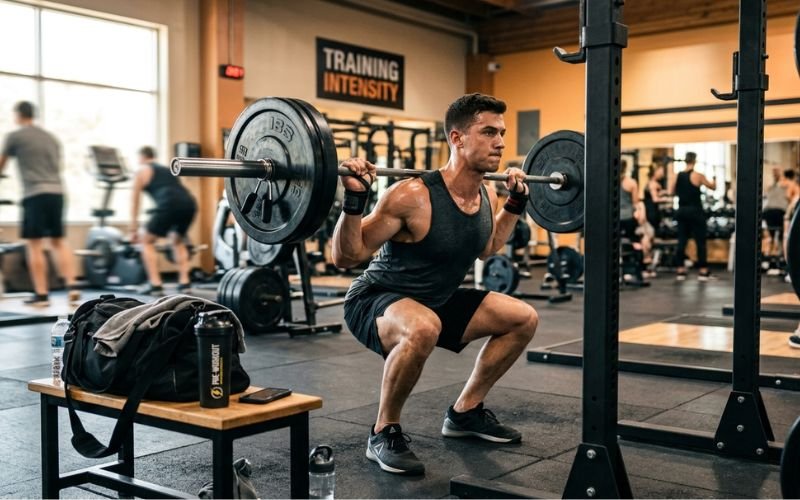
One of the most common ways a recomposition phase fails is through declining training performance. When calories are at or below maintenance, energy availability drops, motivation dips, and workout intensity falls , which means the training stimulus that drives muscle growth weakens exactly when it needs to stay strong. A well-formulated pre-workout keeps intensity high, prolongs focus, and enhances blood flow to working muscles. The pre-workout category includes a range of options from stimulant-heavy to stimulant-free, suited to different training windows and caffeine tolerances.
- Choose a pre-workout with citrulline or arginine for pump and blood flow, and caffeine for sustained energy
- If training later in the day, opt for a lower-stimulant formula to avoid interfering with sleep , which is when muscle protein synthesis peaks
- Stacking a pre-workout with nitric oxide support amplifies nutrient delivery to muscle cells during training
Omega-3 Fatty Acids: The Overlooked Recomposition Ally
Most recomposition stacks focus on the obvious muscle-building and fat-burning supplements, but omega-3 fatty acids deserve a place in every serious stack. EPA and DHA , the active forms found in fish oil , have been shown to enhance muscle protein synthesis, reduce exercise-induced inflammation, and improve insulin sensitivity. Better insulin sensitivity means the body is more efficient at shuttling nutrients into muscle cells rather than storing them as fat, which directly supports the dual goal of gaining muscle while cutting fat.
Putting the Full Stack Together: A Practical Framework
A body recomposition supplement stack does not have to be complicated or expensive. The most effective approach layers a small number of well-researched compounds, each targeting a specific mechanism, into a coherent daily protocol.
- Morning: Omega-3 with breakfast , 2 to 3g EPA+DHA daily
- Pre-workout: Pre-workout formula 20 to 30 minutes before training, with L-Carnitine for fat mobilisation
- Intra-workout: BCAAs during the session if training fasted or at high intensity
- Post-workout: Whey protein within 30 to 60 minutes , the anabolic window is real, even if wider than once believed
- With meals: Creatine monohydrates 3 to 5g daily , timing is flexible; consistency is what matters. Fat burner with breakfast or pre-workout for maximum thermogenic effect
- Before bed: Casein protein to sustain overnight muscle protein synthesis. CLA capsules with the final meal of the day
- Daily: Glutamine 5g post-workout or before bed, depending on recovery demands
This stack is built around proven mechanisms, not marketing claims. Each element earns its place because it targets a specific physiological lever in the recomposition process. For those who want to explore the full range of supplements that complement this strategy, the lean muscle and fat burn category at Sports One International is a useful starting point , and for assurance on product authenticity, the authorized distribution page confirms verified sourcing for all imported supplements.
Adjusting the Stack for Different Body Types and Goals
Body recomposition is not a one-size-fits-all process. The stack above is a strong general framework, but individual circumstances change how each element is weighted.
- Beginners and natural athletes: Even without the full stack, protein plus creatine alone produces measurable recomposition results. Add other elements progressively once the dietary foundation is established
- Experienced lifters in a plateau: The full stack , including L-Carnitine, CLA, and omega-3 , becomes more meaningful as the easy gains dry up and marginal gains require more precise nutritional support
- Women: The same core stack applies, though dosing can be scaled to body weight. The guide on protein powder for women in Pakistan provides context on how female physiology interacts with protein supplementation
- Over 35s: Muscle protein synthesis efficiency decreases with age, making protein quantity, creatine, and omega-3 even more important as the baseline , not optional add-ons. See resistance training and lean muscle for training strategies that compound the supplement stack’s effect
The gym meal prep guide on muscle building and fat loss nutrition ties the supplementation strategy directly to practical daily eating , which is where recomposition ultimately gets won or lost. Supplements accelerate the process; they do not replace the fundamentals.
Related posts
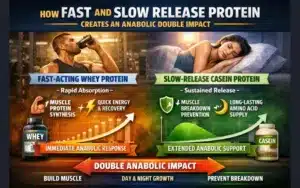
Most people walk into the gym, train hard, and then reach for a single scoop of whey right after. That routine works , but it... Continue reading

If you have been searching for a protein supplement that actually supports fat loss while keeping your hard-earned muscle intact, clear whey isolate might be... Continue reading

For Pakistani women struggling with being underweight, the journey to healthy weight gain can feel overwhelming. Between cultural expectations, busy schedules, and conflicting nutrition advice,... Continue reading

Joint pain has become increasingly common among Pakistanis, affecting people across all age groups, from young athletes recovering from injuries to elderly individuals dealing with... Continue reading
Many Pakistani women struggle with being underweight due to various factors including fast metabolism, genetics, stress, or inadequate nutrition. While society often focuses on weight... Continue reading
Add comment