
No products in the cart.
Return To Shop
Do I Need Whey Protein If I Eat Chicken Daily? (2026 Guide)
Last Updated 21 September 2026
Chicken breast is a complete protein, and whey adds nothing that chicken cannot supply. Whey simply becomes useful when busy days, low appetite, or early and late training make it hard to eat enough chicken. This guide compares chicken and whey protein side by side, shows how much protein you actually need, and explains how to buy genuine whey in Pakistan if you decide it fits your routine.
Chicken vs Whey Protein at a Glance
| Factor | Chicken Breast (100g cooked) | Whey Protein (1 scoop, about 30g) |
| Protein | About 31g | 24 to 27g |
| Calories | About 165 kcal | About 110 to 130 kcal |
| Leucine (approx.) | About 2.3 to 2.5g | About 2.5 to 3g |
| Digestion speed | Slow to moderate | Fast |
| Fullness (satiety) | High | Moderate |
| Preparation | Cooking and storage | Mix and drink in under a minute |
| Extra nutrients | B vitamins, niacin, selenium, phosphorus | Small amounts of calcium |
| Best used for | Main meals | Post-workout and filling gaps |
Protein values are approximate and based on USDA FoodData Central figures for skinless roasted chicken breast and typical whey labels. Individual products vary, so check the label on your tub.
How Much Protein Do You Actually Need Daily?
Your daily protein target decides whether whey is useful, not the protein source. The general recommendation for a sedentary adult is around 0.8g per kg of body weight. Gym-goers and people building muscle usually aim for roughly 1.4 to 2.0g per kg, in line with sports nutrition guidance such as the ISSN position stand on protein and exercise.
Here is a simple example. A 70kg lifter aiming for 1.6g per kg needs about 112g of protein a day. That is roughly 360g of cooked chicken breast, which is a lot to eat every day alongside other meals. If you want to work out your own number, read our guide on how much protein you need per day.
Protein in Chicken Breast: Raw vs Cooked
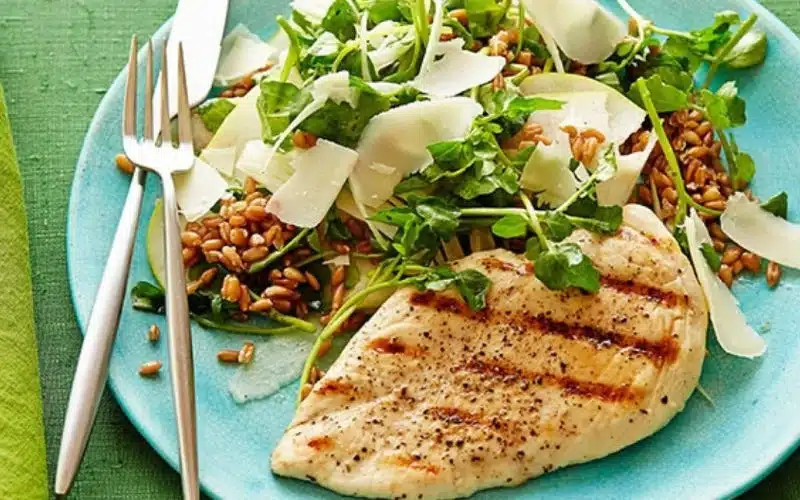
Chicken breast is one of the most efficient whole-food proteins available in Pakistan, which is why it appears in almost every fitness meal plan.
- 100g of cooked chicken breast provides roughly 30 to 31g of protein, while 100g of raw breast provides about 22 to 23g.
- It contains all essential amino acids, so it is a complete protein on its own.
- It is low in fat and calories relative to its protein content.
- It keeps you full for longer, which helps with fat loss and appetite control.
The raw versus cooked gap exists because cooking removes water, so the same protein sits in less weight. Protein is not created during cooking. Always weigh chicken the same way every time, either raw or cooked, so your tracking stays consistent.
What Whey Protein Is and What It Adds
Whey protein is a dairy protein separated from milk during cheese making. It contains all nine essential amino acids and is rich in leucine, the amino acid that switches on muscle protein synthesis, the process your body uses to repair and build muscle after training. Because it digests quickly and needs no cooking, it is convenient after a workout or when a meal is missed.
There are three main forms sold in Pakistan:
- Whey Protein Concentrate (WPC): about 70% to 80% protein with some lactose and fat. The most common and most affordable type.
- Whey Protein Isolate (WPI): 90%+ protein with minimal lactose and fat, suited to lactose-sensitive users and cutting phases. Browse the isolate protein range.
- Whey Protein Hydrolysate (WPH): pre-digested whey with the fastest absorption, often used for rapid recovery between sessions.
Not sure which suits you? Our comparison of whey concentrate vs isolate vs hydrolyzed breaks down the differences. Casein (a slow-digesting dairy protein) and plant protein are the other options if you avoid fast-digesting whey or dairy.
Does Whey Build More Muscle Than Chicken?
No. When total daily protein, calories, and training are equal, chicken and whey support muscle growth about equally. Whey has a small edge in speed and leucine per gram, but chicken delivers similar leucine per serving and adds fullness and micronutrients. If you want the science behind this, see how much leucine triggers muscle protein synthesis in our leucine and muscle protein synthesis guide.

Chicken vs Eggs vs Fish vs Whey: Key Differences
| Factor | Chicken Breast | Eggs | Fish | Whey Protein |
| Protein per serving | About 30g / 100g cooked | About 6g per egg | About 22g / 100g | 24 to 27g / scoop |
| Digestion speed | Slow to moderate | Moderate | Moderate | Fast |
| Convenience | Requires cooking | Requires cooking | Requires cooking | Instant, mix and drink |
| Satiety | High | High | Moderate to high | Moderate |
| Amino acid profile | Complete | Complete | Complete | Complete |
| Best used for | Main meals | Breakfast, snacks | Main meals, omega-3s | Post-workout, filling gaps |
Chicken, eggs, and fish excel at meals, giving fullness and a wide range of micronutrients. Whey excels at filling gaps quickly. On a desi diet, daal, dahi, milk, and eggs also add protein through the day, so your real gap may be smaller than you think. Our comparison of whey protein vs desi food for muscle gain covers this in more detail, and our list of high protein foods in Pakistan on a budget helps you plan meals.
When Chicken Alone Is Enough
You likely do not need whey protein if:
- You consistently hit your protein target through chicken, eggs, fish, and dairy.
- You have the time and routine to cook and store meals every day.
- Whole-food protein digests comfortably for you and you do not get bored of it.
- Your budget is better spent on food than on a supplement.
When Whey Protein Becomes Genuinely Helpful
Whey is worth adding when you:
- Struggle to eat enough protein through meals alone.
- Have an unpredictable work or study schedule and often skip meals.
- Train very early or very late, when cooking is not realistic.
- Have low appetite right after a hard workout.
- Need a higher target than chicken can comfortably supply, for example during a lean bulk.
In these cases whey is not replacing chicken. It supports the consistency that actually drives results.
Chicken vs Whey: Which Costs Less per 30g of Protein?
Cost matters in Pakistan, and chicken and whey prices both move. To compare fairly, work out the cost of 30g of protein for each option using this method: for chicken, divide the price per kg by the grams of protein in that kg (about 310g cooked, or 220g raw), then multiply by 30. For whey, divide the tub price by the total grams of protein in the tub (servings multiplied by protein per scoop), then multiply by 30. Many people find whey competitive on convenience and chicken competitive on price per gram, but run the numbers with today’s prices. Check current tub prices in our whey protein price in Pakistan 2026 guide.
Dosage, Timing, and Safety: What Experts Recommend
Getting the basics right matters more than choosing the perfect source. These guidelines apply whether you rely on chicken, whey, or both.
The 25 to 40 Gram Rule
Most muscle protein synthesis benefit from a single meal occurs in the 25 to 40g range. One cooked chicken breast serving or one scoop of whey each covers one protein window. Spreading protein across three to five feedings usually works better than one huge meal.
How Much Whey and When
Most people need only one scoop a day, or two if their target is high and food falls short. The best times are within a couple of hours after training, between meals, or at breakfast when you would otherwise skip protein. Total daily protein and consistency matter more than an exact post-workout minute. Use whey to fill the gap between your food intake and your target, not to exceed it by a wide margin.
Safety Tips for Daily Chicken Eaters
- Cook chicken to an internal temperature of 74°C (165°F).
- Use separate cutting boards for raw meat and avoid cross-contamination.
- Refrigerate cooked chicken promptly and thaw frozen chicken in the fridge, never at room temperature.
- Count fried, breaded, or heavily processed chicken (nuggets, deli slices) differently from plain breast, since oil and fillers change the calories.
Safety Tips for Whey Users
Whey is a filtered dairy protein and is safe for most healthy adults at normal doses when used alongside a balanced diet. If you are lactose sensitive, isolate or hydrolysed whey is usually easier on the stomach than concentrate. Anyone with a milk allergy should avoid whey. People with kidney disease, liver conditions, or other medical concerns, and pregnant or breastfeeding women, should speak to a doctor or dietitian before raising protein intake or starting supplements.
A Practical Day: Combining Chicken and Whey
Many people in Pakistan settle into a simple pattern: chicken, eggs, and other whole foods for main meals, and whey between meals or right after training. Here is an example for a 70kg lifter aiming for about 125g of protein:
- Breakfast: three eggs, about 18g protein.
- Lunch: 150g cooked chicken breast with rice or roti, about 46g protein.
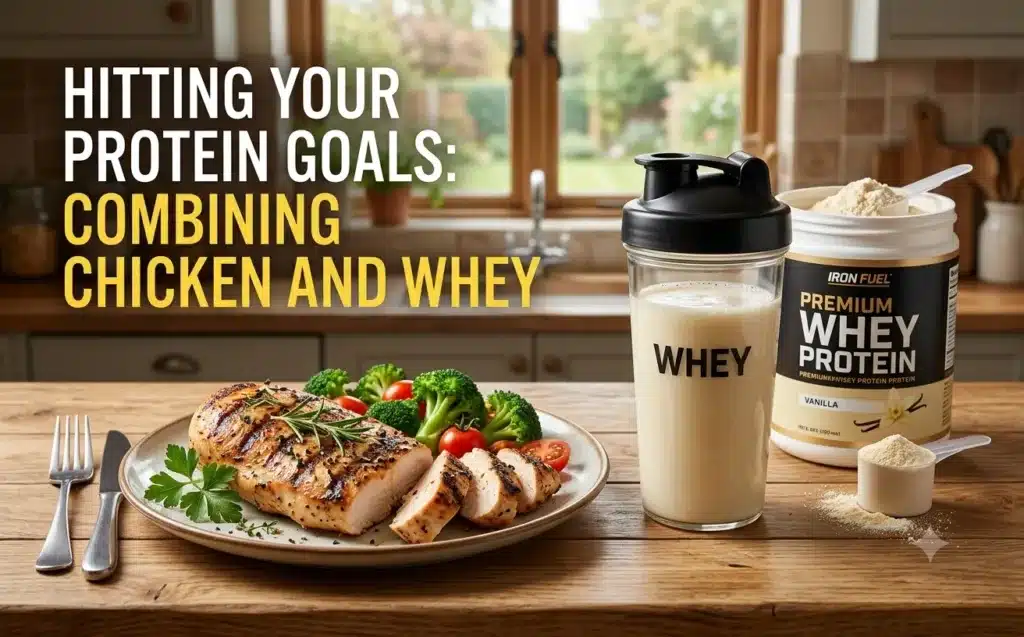
- Post-workout: one scoop of whey, about 24g protein.
- Dinner: 120g cooked chicken breast with vegetables, about 37g protein.
Without the whey scoop, this day would fall about 24g short of the target, which is exactly the gap whey is designed to fill. Once your protein and meal timing are consistent, some lifters add creatine or BCAAs, though neither is necessary before the basics are solid.
Best Whey Protein Brands in Pakistan
If you decide whey fits your routine, these are the most searched imported brands. For a full ranking, see our whey protein buyer guide for Pakistan, or browse the Best Whey Protein in Pakistan collection.
- Optimum Nutrition Gold Standard 100% Whey: the world’s best-selling protein powder and the benchmark for most brands, built on a whey isolate primary blend with 24g of protein per serving.
- MuscleTech NitroTech Whey Gold: a performance-oriented isolate blend with strong value per gram of protein.
- Dymatize ISO-100: a hydrolyzed whey isolate designed for fast absorption, well suited to lactose-sensitive users and cutting phases.
- Applied Nutrition Critical Whey: a UK-formulated blend of concentrate, isolate, and hydrolysed whey, a strong budget to mid-tier option for beginners.
- Kevin Levrone Gold Whey: a European import valued for taste and mixability at a mid-range price.
- Rule 1 Whey Blend: combines isolate, concentrate, and hydrolysate in one formula without premium isolate pricing.
- Sanaxium Nutrition Gold Whey: a halal-certified, locally distributed option with a low cost per serving, a good starting point for first-time buyers.
If you are only testing whether a daily whey habit will stick, start with a smaller, lower-cost tub such as Sanaxium Gold Whey or the 445g Applied Nutrition Critical Whey before committing to a 5lb premium isolate. If you already train consistently and want the highest protein per scoop, Dymatize ISO-100 or Optimum Nutrition Gold Standard are worth the higher price per serving.
How to Identify Original Whey Protein in Pakistan
Counterfeit and re-packed supplements are a real risk in the imported supplement market. Before buying, check the following:
- Importer sticker: a genuine tub carries a clearly printed importer sticker with a name and address.
- Intact inner seal: the foil seal should be flush with the rim. A torn or re-applied seal signals tampering.
- Batch number and expiry date: embossed or clearly printed, never stickered over or smudged.
- QR code or holographic seal: brands like Optimum Nutrition and MuscleTech include scan-to-verify codes on genuine stock. If a code fails, do not use the product.
- Authorised distributor: buying from a verified, halal-certified distributor removes the guesswork compared with a grey-market reseller.
Common Mistakes to Avoid
- Relying only on chicken while ignoring total daily calories.
- Overcooking chicken until it becomes dry and harder to eat in the amounts you need.
- Estimating portions instead of weighing chicken, especially early on.
- Treating whey as a replacement for meals instead of a supplement to them.
- Buying whey from an unverified seller only because it is cheaper, without checking authenticity markers.
These mistakes, not the presence or absence of whey protein, are usually what limits results.
Frequently Asked Questions
Is chicken enough protein without whey?
Yes, if you reliably reach your daily target. Chicken breast is a complete protein with about 31g per 100g cooked. Whey is optional and mainly helps when your schedule, appetite, or high protein goal makes eating enough chicken difficult.
How much chicken equals one scoop of whey?
Roughly 80 to 90g of cooked chicken breast matches the 24 to 27g of protein in one scoop of whey. Chicken adds about 40 to 50 more calories and takes longer to prepare and digest.
Is whey protein better than chicken for muscle gain?
Not inherently. Muscle growth depends on total protein, calories, training, and recovery. Whey digests faster and is convenient after workouts, while chicken keeps you fuller and provides extra nutrients. Both work well together.
Can I take whey protein and eat chicken on the same day?
Yes. Many people eat chicken at main meals and add a scoop of whey after training or between meals. This spreads protein evenly across the day without replacing whole foods.
Is it safe to take whey protein daily on a high-protein diet?
For most healthy adults, one to two scoops a day alongside whole foods is considered safe. People with kidney or liver conditions, a milk allergy, or lactose sensitivity should consult a doctor or choose isolate first.
Final Verdict: Chicken, Whey, or Both?
If you eat chicken daily and consistently meet your protein needs, you do not need whey protein. If convenience, timing, appetite, or an unpredictable schedule makes that consistency hard, whey becomes a genuinely useful tool. Chicken is the foundation. Whey is the backup. The smartest choice is whichever combination you can sustain long term.
Ready to add whey to your routine? Explore authentic, halal-certified Best Whey Protein in Pakistan from authorised brands at Sports One International, one of the most trusted sources of Imported Supplements in Pakistan since 2002, with cash on delivery available across the country.
About author

Related posts

For most healthy adults, collagen peptides are well tolerated. The side effects people actually report are mild: a feeling of fullness, bloating, an aftertaste or... Continue reading

The short answer: the best time to take collagen is whichever time you will repeat every single day. Research on hydrolysed collagen peptides has not... Continue reading
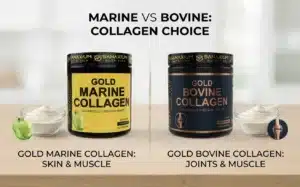
Neither is universally better. Marine collagen is often preferred for skin, hair and people who avoid beef, while bovine collagen is usually cheaper and offers... Continue reading

Collagen may help support joint comfort in some people, but the evidence is modest, results are slow, and it is not a substitute for medical... Continue reading
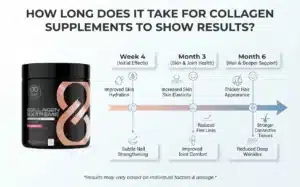
Most people notice their first change from collagen supplements after 4 to 8 weeks, with clearer skin and joint results building between 8 and 12... Continue reading
Add comment