
No products in the cart.
Return To Shop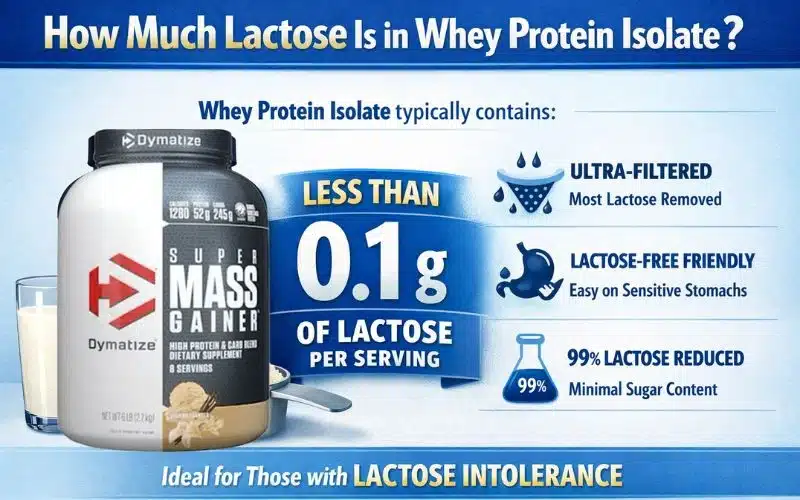
How Much Lactose Is in Whey Protein Isolate? (2026 Guide)
Last updated: October 7, 2026
If your protein shake leaves you bloated, gassy or running to the washroom, lactose is the first suspect. Many gym-goers in Pakistan drink whey every day, so knowing exactly how much lactose is in whey protein isolate can decide whether you stay consistent or quit.
The short answer: whey protein isolate contains under 1 gram of lactose per serving, and many brands sit between 0.1 g and 0.5 g. Whey concentrate can carry several times more. That is why isolate is the usual first switch for lactose sensitive lifters.

Lactose in Whey Protein at a Glance
| Protein Type | Protein by Weight | Typical Lactose per 30 g Scoop | Good for Lactose Sensitivity? |
|---|---|---|---|
| Whey protein concentrate | 70 to 80% | About 1 to 4 g | Only mild sensitivity |
| Whey protein isolate | 90% or more | Under 1 g (often 0.1 to 0.5 g) | Yes, for most people |
| Hydrolyzed whey isolate | 90% or more | Under 1 g | Yes, and gentler to digest |
| Plant protein (pea, rice, blends) | 70 to 85% | 0 g | Yes, also safe for milk allergy |
| One glass of milk (250 ml), for comparison | Not applicable | About 12 g | Often triggers symptoms |
Notice the last row. One glass of milk holds roughly ten times more lactose than a scoop of isolate. For many people, the milk they add to the shaker is a bigger problem than the powder itself.
What Is Whey Protein Isolate and How Is Lactose Removed?
Whey is the watery liquid left behind when milk is turned into cheese. Milk contains two main proteins, casein and whey, and the whey fraction travels with most of the milk sugar, which is lactose. Raw whey is then dried and refined into three forms: concentrate, isolate and hydrolysate. Our guide to whey protein concentrate vs isolate vs hydrolyzed compares all three in detail.
To make isolate, manufacturers push whey through extra filtration, most commonly cross flow microfiltration or ion exchange. These steps strip out most of the fat, carbohydrate and lactose and keep the protein fractions such as beta lactoglobulin and alpha lactalbumin. The result is a powder that is 90% or more protein by weight with only trace lactose left.
Is Whey Isolate Lactose Free?
Not automatically. Isolate is low lactose, which is different from lactose free. A trace amount usually survives filtration, and a product can only be called lactose free if its label or manufacturer says so. Hydrolyzed isolates such as Dymatize ISO 100 are processed further and are also very low in lactose, but the same rule applies: read the panel.
Also remember that every whey product legally carries a “contains milk” warning. Lactose intolerance and milk protein allergy are two separate conditions, and isolate only helps with the first.

Can Lactose Intolerant People Use Whey Protein Isolate?
Most can. Lactose intolerance means your body makes too little lactase, the enzyme that breaks lactose into glucose and galactose. Clinical reviews suggest many lactose intolerant adults tolerate around 12 g of lactose in one sitting with few or no symptoms. A scoop of isolate delivers a small fraction of that.
Tolerance still sits on a spectrum. People with severe intolerance may react to trace amounts. If that sounds like you, read our dedicated piece on isolate protein for lactose intolerant individuals and our guide to hydrolyzed whey for sensitive stomachs.
Symptoms That Suggest Lactose Is Still an Issue
- Bloating or gas within 30 to 90 minutes of your shake
- Stomach cramps or rumbling
- Loose stools, especially after several servings in a day
- Nausea when the shake is mixed with milk instead of water
Expert Guide: Dosage, Timing and Safety for Lactose Sensitive Lifters
Dosage. Start with a single scoop of 25 to 30 g mixed with water. Stay on that for a week before adding a second serving. Most active adults aim for 1.6 to 2.2 g of protein per kilogram of bodyweight per day, and a shake should only fill the gap that food leaves. Our breakdown of how much protein per day for a beginner shows how to work out your number.
Timing. Isolate digests quickly, so it fits within a couple of hours after training. Our guide to post workout nutrition and whey protein explains the window. If you are testing tolerance, take it on a normal day rather than before a long drive or an important meeting, and take it with or after a meal instead of on a completely empty stomach.
Mixing. Use water first. Milk adds about 12 g of lactose per glass, which can cancel the benefit of choosing isolate. If you want a creamier shake, try lactose free milk or a plant milk.
Check the whole label. Sometimes the culprit is not lactose at all. Sugar alcohols, gums, artificial sweeteners and large servings can cause bloating in sensitive people. An unflavoured or lightly sweetened isolate is a useful test product. Some people also keep lactase tablets on hand, but speak to your doctor before relying on them.
Safety. Anyone with a diagnosed milk protein allergy should avoid whey in every form, because isolate still contains milk proteins. People with kidney disease, liver conditions or other medical issues should ask a doctor before raising protein intake. Keep total daily servings reasonable and spread protein across meals rather than loading it into one sitting.
Dairy Free Options If Isolate Is Not Enough
If you have a milk protein allergy or a very strong reaction to dairy, skip whey entirely. Plant protein contains no lactose and no milk proteins. Our walkthrough on how to choose a dairy free isolate protein powder covers what to look for.
- Pea protein: strong amino acid profile and a good dairy free starting point
- Brown rice protein: hypoallergenic, though lower in leucine
- Vegan blends: combine several plant sources to cover the full amino acid range

Does Low Lactose Mean Weaker Results?
No. Isolate is one of the most bioavailable protein sources you can buy. A good scoop supplies roughly 2.5 to 3 g of leucine, the amino acid that switches on muscle protein synthesis. With almost no fat or carbohydrate, it also suits anyone tracking macros during a cut.
Whey Isolate Options Available in Pakistan
Looking for the Best Whey Protein in Pakistan for a sensitive stomach? Isolate is the right category to browse first. Here are isolates currently listed at SportsOne. Prices were checked in October 2026 and can change with stock and promotions.
| Product | Form | Pack Size | Price (PKR) |
|---|---|---|---|
| Applied Nutrition ISO XP | Whey isolate | 1 kg | 21,300 |
| Sanaxium Nutrition Gold ISO | Whey isolate | 1 kg, 33 servings | 17,800 |
| BPI ISO HD | Whey isolate | 5 lb | 35,900 |
| Dymatize ISO 100 | Hydrolyzed whey isolate | 5 lb | 53,500 |
For the full range, browse our whey protein isolate in Pakistan collection, or compare costs in our isolate protein price in Pakistan overview. Many buyers also want certification details, so see our halal whey protein in Pakistan guide and confirm the certification shown on each product page.
Why Buy From an Authorised Distributor
Lactose claims only matter if the tub is genuine. Fakes and relabelled powders can have unknown ingredients. SportsOne sources Imported Supplements in Pakistan directly from authorised distribution channels, ships nationwide with cash on delivery, and lists Halal-certified options. Check the certification on each product page before ordering.
Frequently Asked Questions
Does whey protein isolate contain lactose?
Yes, but very little. Most isolates contain under 1 g of lactose per scoop, often 0.1 to 0.5 g, because filtration removes most milk sugar. It is low lactose rather than strictly lactose free, so always check the label.
Is whey protein isolate completely lactose free?
Not always. Lactose free is a specific claim, and many isolates only say low lactose. If the brand does not state lactose free on the tub, assume trace amounts remain and test with one scoop first.
Can lactose intolerant people drink whey protein isolate?
Most can. Many lactose intolerant adults handle about 12 g of lactose at once, far above an isolate scoop. Mix with water, start with one serving, and stop if symptoms appear. Severe cases should consult a doctor.
Which has less lactose, whey isolate or concentrate?
Isolate. Concentrate is 70 to 80% protein and can carry roughly 1 to 4 g of lactose per scoop, while isolate is 90% or more protein with usually under 1 g. Hydrolyzed isolate is similarly low.
Why do I still feel bloated after drinking whey isolate?
Common causes are milk in the shaker, sweeteners, sugar alcohols, gums, drinking too fast, or a milk protein allergy mistaken for lactose intolerance. Switch to water, try an unflavoured product, and see a doctor if symptoms persist.
Final Thoughts
Whey protein isolate is one of the lowest lactose protein powders you can buy, with typically under 1 g per serving. For most people with lactose intolerance, that is low enough to enjoy a daily shake without discomfort. Start with one scoop in water, read the label, and adjust based on how your body responds. If dairy still disagrees with you, a plant protein is a perfectly good alternative.
Disclaimer: This article is for general education and is not medical advice. Consult a doctor or registered dietitian if you have a diagnosed milk allergy, digestive condition or other medical concern.

About author

Related posts

For most healthy adults, collagen peptides are well tolerated. The side effects people actually report are mild: a feeling of fullness, bloating, an aftertaste or... Continue reading

The short answer: the best time to take collagen is whichever time you will repeat every single day. Research on hydrolysed collagen peptides has not... Continue reading
Neither is universally better. Marine collagen is often preferred for skin, hair and people who avoid beef, while bovine collagen is usually cheaper and offers... Continue reading
Collagen may help support joint comfort in some people, but the evidence is modest, results are slow, and it is not a substitute for medical... Continue reading
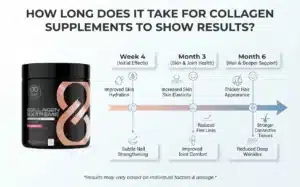
Most people notice their first change from collagen supplements after 4 to 8 weeks, with clearer skin and joint results building between 8 and 12... Continue reading
Add comment