
No products in the cart.
Return To Shop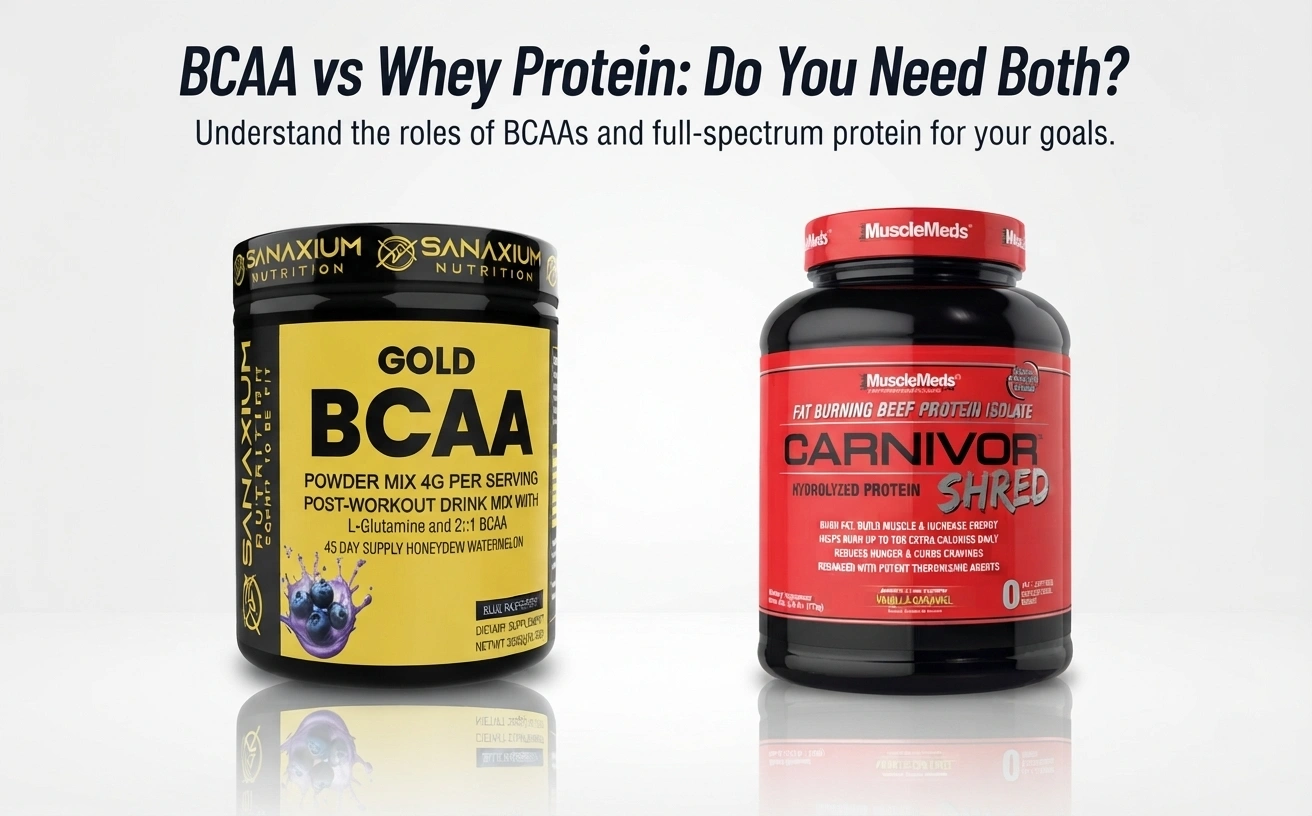
BCAA vs Whey Protein: Do You Need Both?
If you’ve stood in a supplement store or scrolled SportsOne’s shop wondering whether to buy BCAA, whey protein, or both, you’re not alone. It’s one of the most common questions from beginner and intermediate lifters in Pakistan. The short answer: whey protein should come first for almost everyone, and BCAA is a situational add-on, not a replacement. Here’s the full breakdown so you can decide what your training actually needs.
What Is Whey Protein?
Whey protein is a complete, fast-digesting protein extracted from milk during cheese production. It naturally contains all nine essential amino acids including the three BCAAs (leucine, isoleucine, and valine) in ratios your body can use efficiently for muscle protein synthesis. Whether you choose whey protein concentrate or a faster-absorbing isolate, whey remains the foundation of most protein intake strategies because it delivers full nutrition, not just a piece of the puzzle.
What Is BCAA?
BCAA stands for Branched-Chain Amino Acids leucine, isoleucine, and valine, three of the nine essential amino acids. Unlike whey, BCAA supplements are isolated aminos with no other protein components, so they’re lower in calories and absorb almost instantly. They’re popular as an intra-workout drink, especially for people training fasted or doing long sessions where a full protein shake isn’t practical.

BCAA vs Whey Protein: The Core Differences
| Factor | Whey Protein | BCAA |
| Amino acid profile | Complete (all 9 essential aminos) | Only 3 (leucine, isoleucine, valine) |
| Calories | Higher (contains full protein + some carbs/fat) | Very low or zero |
| Absorption speed | Moderate to fast (isolate faster) | Very fast |
| Best use case | Daily protein target, post-workout recovery | Fasted training, long cardio, intra-workout |
| Muscle-building role | Primary driver | Supportive, not primary |
Is BCAA Necessary If You’re Already Taking Whey?
This is the real question behind the keyword, and the honest answer is: for most people, no. Since whey already contains BCAAs as part of its complete amino acid profile, someone hitting their daily protein target through food and a quality whey shake is already getting adequate BCAA intake. Compare this to how glutamine and BCAA serve different post-workout roles neither replaces a base protein source; they support it.
BCAA becomes genuinely useful in specific scenarios:
- Fasted training when you want amino acids in your bloodstream without breaking a fast with calories
- Long endurance or cardio sessions where a heavy protein shake isn’t practical mid-session
- Cutting phases to help preserve lean mass while calories are low
- Between meals as a low-calorie way to keep amino acid levels topped up
If none of these apply to your routine, your money is better spent on a solid whey protein isolate vs concentrate choice than on a separate BCAA tub.
BCAA Benefits Worth Knowing
Even though BCAA isn’t essential for everyone, it does offer real, targeted benefits:
- Faster muscle protein synthesis trigger leucine specifically signals your body to start building muscle
- Reduced exercise-induced soreness several users report less DOMS when BCAA is taken around training
- Lean mass preservation useful during a cut when you’re in a calorie deficit
- Zero/low calorie amino support ideal for anyone tracking strict macros
- Convenient hydration mix most BCAA powders double as a flavoured training drink
For a deeper look at how amino acids function beyond just BCAA, see what amino acid supplements actually do for your body and when to time your amino acid intake.
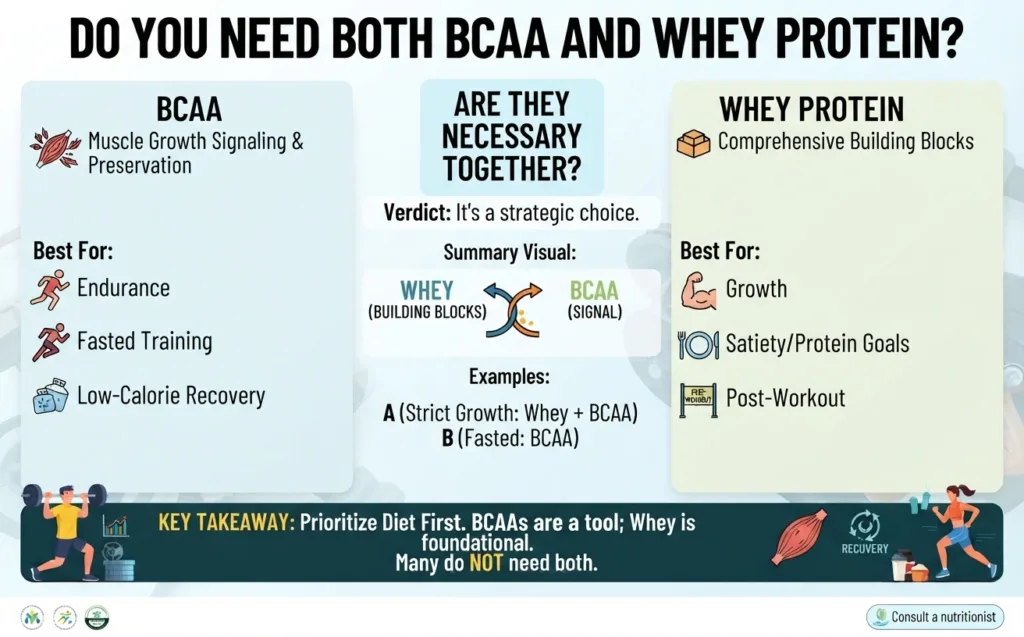
Do You Need Both BCAA and Whey Protein?
For competitive athletes, people training fasted, or anyone doing multiple sessions a day, stacking BCAA intra-workout with a whey shake post-workout can make sense. BCAA keeps amino acids available during training, and whey rebuilds and completes your protein intake afterward. This is different from comparing BCAA against creatine or EAA against BCAA those are separate decisions about which supplement suits your goal, not an either/or against whey.
For the average gym-goer who already eats enough protein and takes whey daily, adding BCAA on top is optional rather than necessary. Start by nailing your daily protein target with whey and whole food first then consider BCAA only if your training schedule genuinely calls for it.
Why Buy From SportsOne
Supplement quality and authenticity matter more than the BCAA-vs-whey debate itself a fake product cancels out any benefit either one offers. SportsOne is an authorised distributor of halal-certified, imported food supplements and proteins in Pakistan, so every whey and BCAA product you buy is verified genuine, properly stored, and sourced directly from the brand not grey-market stock.
Final Verdict
Whey protein is the non-negotiable base of most people’s supplement routine because it’s a complete protein. BCAA is a specialised, low-calorie add-on best suited to fasted training, long cardio, or cutting phases not a replacement for whey, and not necessary for everyone. Assess your training schedule and goals first, then decide if BCAA earns a place alongside your whey shake.
FAQs
Is BCAA necessary if I already drink whey protein?
Not strictly. Whey protein already contains all nine essential amino acids, including the three BCAAs leucine, isoleucine, and valine. Extra BCAA is only worth adding if you train fasted, do long endurance sessions, or want faster amino absorption than a full protein shake offers.
What are the main benefits of BCAA supplements?
BCAA delivers fast-absorbing leucine, isoleucine, and valine that trigger muscle protein synthesis, reduce exercise-induced soreness, and help preserve lean mass during a calorie deficit. It’s calorie-light, mixes easily, and works well during fasted or long training sessions.
Can I take BCAA and whey protein together?
Yes. Many athletes stack BCAA intra-workout with a whey shake post-workout. BCAA supports recovery during training while whey delivers complete protein afterward though this combo isn’t mandatory if your daily protein target is already met through food and whey.
Which is better for muscle building, BCAA or whey protein?
Whey protein wins for muscle building overall since it supplies complete protein, natural amino acid ratios, and extra calories for recovery. BCAA is a targeted, low-calorie addition for specific scenarios it doesn’t replace a full protein source like whey.
Is BCAA a waste of money if my diet already has enough protein?
For most people already eating adequate protein through meals and whey shakes, extra BCAA adds limited benefit. It becomes more useful during fasted training, cutting phases, or endurance work that needs fast amino delivery without extra calories.

About author

Related posts

For most healthy adults, collagen peptides are well tolerated. The side effects people actually report are mild: a feeling of fullness, bloating, an aftertaste or... Continue reading

The short answer: the best time to take collagen is whichever time you will repeat every single day. Research on hydrolysed collagen peptides has not... Continue reading
Neither is universally better. Marine collagen is often preferred for skin, hair and people who avoid beef, while bovine collagen is usually cheaper and offers... Continue reading

Collagen may help support joint comfort in some people, but the evidence is modest, results are slow, and it is not a substitute for medical... Continue reading
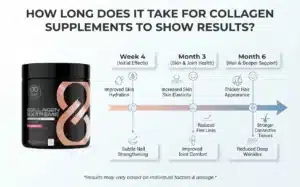
Most people notice their first change from collagen supplements after 4 to 8 weeks, with clearer skin and joint results building between 8 and 12... Continue reading
Add comment