
No products in the cart.
Return To Shop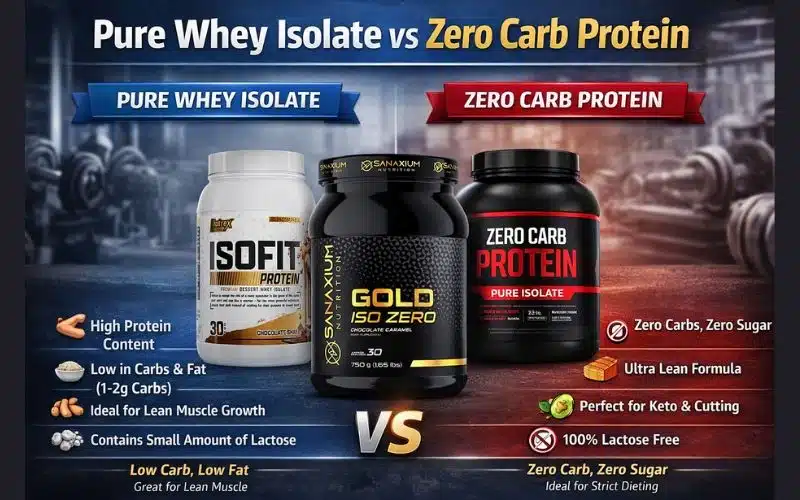
Difference Between Pure Whey Isolate and Zero Carb Protein
When shopping for protein supplements, you’ll encounter terms like pure whey isolate and zero carb protein that might seem interchangeable but actually represent different product categories. Understanding the distinction between these two protein types helps you choose the right supplement for your specific fitness goals, whether you’re cutting fat, building muscle, or following a strict low-carb diet. Let’s break down what makes each unique and which one deserves a spot in your supplement stack.
What is Pure Whey Isolate?
Pure whey protein isolate represents the most refined form of whey protein available. Through advanced filtration processes like microfiltration or ion exchange, manufacturers remove most of the fat, lactose, and other non-protein components from whey, leaving behind a protein powder that’s typically 90% or higher in protein content by weight.
The manufacturing process involves multiple stages of filtration that strip away carbohydrates and fats while preserving the valuable protein fractions. This results in a cleaner, faster-absorbing protein source that delivers approximately 25-30 grams of protein per scoop with minimal additional macronutrients.
What makes whey isolate “pure” is its high concentration of undenatured protein,meaning the protein structure remains intact and bioavailable. This preservation of protein quality makes it ideal for post-workout nutrition when rapid amino acid delivery matters most.
Understanding Zero Carb Protein
Zero carb protein refers to protein supplements specifically formulated to contain virtually no carbohydrates,typically less than 1 gram per serving. These products can be made from various protein sources including whey isolate, casein protein, egg protein, or even beef protein isolate.
The defining characteristic isn’t the protein source but rather the complete elimination of carbohydrates through processing. Manufacturers achieve this through ultra-filtration, enzymatic processing, or by blending multiple low-carb protein sources to create a formula with zero measurable carbohydrate content.
These products specifically target consumers following keto diets, aggressive fat loss phases, or those with diabetes who need to carefully manage carbohydrate intake. The zero carb designation makes calorie and macro tracking straightforward,you know exactly what you’re consuming without hidden sugars or starches.
Key Nutritional Differences
While some whey isolates qualify as zero carb proteins, not all zero carb proteins are whey isolates. This distinction matters when comparing nutritional profiles.
A typical whey isolate contains 25-28 grams of protein per 30-gram scoop with 1-3 grams of carbohydrates and less than 1 gram of fat. Most quality isolates fall into the low-carb category but may not reach true zero carb status. Compare this using our whey protein concentrate vs isolate vs hydrolyzed guide for detailed breakdowns.
Zero carb proteins, specifically marketed as such, guarantee 0-0.5 grams of carbohydrates per serving. These products prioritize carb elimination above all else, sometimes at the expense of protein source quality or amino acid profile completeness..
The protein source diversity also differs. Whey isolate comes exclusively from dairy whey, while zero carb formulas might blend multiple sources including egg whites, beef isolate, or even plant proteins processed to remove all carbohydrate content.
Absorption and Digestion Speed
Pure whey isolate ranks among the fastest-digesting proteins available, with peak amino acid levels occurring within 60-90 minutes of consumption. This rapid absorption makes it the gold standard for muscle building during the anabolic window following training.
Zero carb proteins vary in digestion speed depending on their base protein source. A zero carb whey isolate digests rapidly, while a zero carb casein blend releases amino acids slowly over 4-6 hours. Some zero carb formulas combine fast and slow proteins to provide sustained amino acid release.
This digestion variability affects usage timing. Fast-digesting zero carb options work well around workouts, while slower versions serve better as meal replacements or bedtime protein sources to prevent overnight muscle breakdown.
Best Uses for Whey Isolate
Whey isolate is best used for post-workout recovery, morning protein intake, fat loss phases, and for individuals who need a fast-digesting, low-carb, low-fat protein source.
Understanding when to use whey isolate optimizes your supplementation strategy and maximizes results.
- Post-workout recovery represents the prime opportunity for whey isolate consumption. The rapid digestion delivers amino acids precisely when muscle protein synthesis peaks, accelerating recovery and growth. Mix one scoop with water within 30 minutes of finishing your training session.
- Morning protein intake benefits from whey isolate’s quick absorption, especially after the overnight fasting period. Your muscles crave amino acids first thing in the morning, and whey isolate provides them rapidly without the heaviness of a full meal. Try these breakfast high protein recipes incorporating whey isolate.
- Lactose-intolerant individuals find whey isolate more tolerable than concentrate due to its minimal lactose content. While not completely lactose-free, the reduced lactose levels allow many sensitive individuals to supplement without digestive distress. Learn more about isolate protein for lactose intolerant individuals.
- Weight loss phases benefit from whey isolate’s high protein-to-calorie ratio. Each scoop delivers substantial protein with minimal calories from carbs or fats, helping you maintain muscle mass while creating the caloric deficit necessary for fat loss. Discover whey protein isolate for weight loss strategies.
When Zero Carb Protein Makes Sense
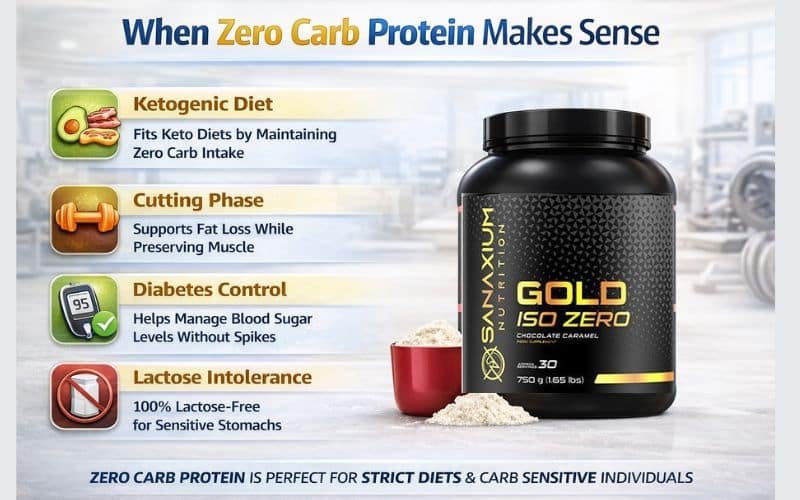
Ketogenic diet followers require strict carbohydrate restriction to maintain ketosis. Even the 2-3 grams of carbs in regular whey isolate can impact daily carb limits when consuming multiple protein servings. Zero carb proteins eliminate this concern entirely, allowing unrestricted use without risking ketone production.
Diabetic individuals managing blood sugar benefit from zero carb formulas that won’t trigger glucose spikes. Every gram of carbohydrate matters when monitoring glycemic response, making zero carb proteins a safer supplementation choice.
Competition prep bodybuilders and physique athletes in the final weeks before a show often eliminate every unnecessary carbohydrate to achieve peak conditioning. Zero carb proteins support high protein intake without adding carbs that might cause water retention or interfere with the depleted, hardened look they’re chasing.
Precise macro tracking becomes simpler with zero carb proteins. If your daily macros call for 200 grams of protein, 50 grams of carbs, and 60 grams of fat, using zero carb protein eliminates variables and makes hitting targets straightforward. Pair this with understanding how many calories to eat daily.
Making Your Choice: Decision Framework
Choosing the right protein supplement depends on your dietary goals, health needs, budget, and how strictly you need to control carbohydrates.
- Selecting between pure whey isolate and zero carb protein requires honest assessment of your specific situation, goals, and constraints.
- Choose whey isolate if you’re a general fitness enthusiast seeking high-quality protein for muscle building and recovery without extreme dietary restrictions. It offers the best balance of effectiveness, affordability, taste, and versatility for most people.
- Select zero carb protein if you’re following strict keto, managing diabetes, competing in physique sports, or need absolute carbohydrate elimination for medical or performance reasons. The premium price and potential taste compromises become worthwhile when carb control matters most.
- Consider hybrid approaches using both products strategically. Use whey to isolate post-workout when absorption speed matters, then switch to zero carb options for other daily protein servings when carb avoidance takes priority..
- Test products before committing to large containers. Most reputable brands offer sample sizes or single-serving packets. This prevents expensive mistakes when taste or digestion issues arise. Browse quality options at Sports One Pakistan.
Your Protein Strategy Moving Forward
The difference between pure whey isolate and zero carb protein ultimately comes down to carbohydrate content and specific dietary requirements rather than muscle-building superiority. Pure whey isolate serves most fitness enthusiasts exceptionally well, offering rapid absorption, complete amino acid profiles, and excellent value.
Zero carb proteins fill a specialized niche for those requiring absolute carbohydrate elimination. Your dedication to training and nutrition consistency will always outweigh minor differences between protein supplement categories.


Related posts
Most people who train seriously know that protein matters for muscle growth, but the conversation gets far more interesting when you zoom in on one... Continue reading
Fast cardio has a loyal following among fat-loss enthusiasts, and for good reason , training on an empty stomach pushes the body to tap into... Continue reading

Lahore is the food capital of Pakistan. From weekend breakfast Halwa Puri and Channa in Anarkali to late-night Karahi and Naan in Lakshmi Chowk, our... Continue reading

Starting your fitness journey is an exciting milestone. Whether you are hitting a local gym in Gulberg, DHA, or Johar Town, the goal is always... Continue reading

If you’ve ever looked in the mirror and felt like you’re somehow both too thin and carrying too much fat you’re not imagining it. The... Continue reading
Add comment