
No products in the cart.
Return To Shop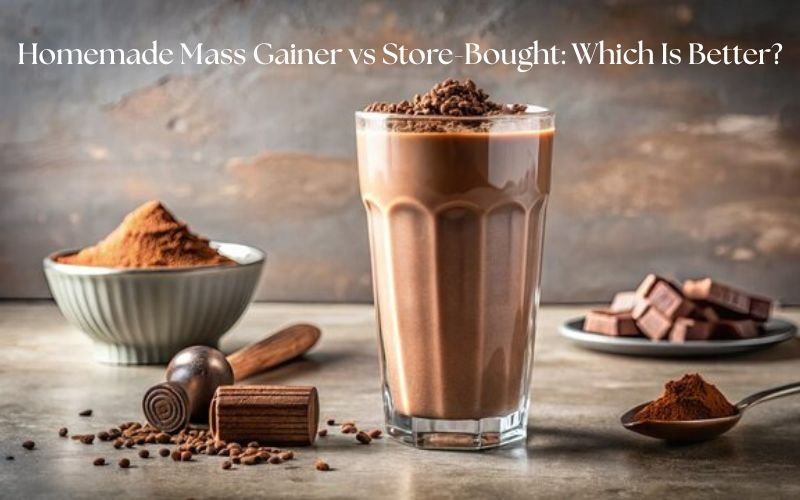
Homemade vs Store-Bought Mass Gainer: Which Is Better in 2026?
Updated: 8 October 2026
Quick answer: choose a homemade mass gainer if you want cheaper calories, full control over ingredients and you have 5 minutes to blend. Choose a store-bought mass gainer if you need 600 to 1,200 reliable calories in one scoop, have a busy schedule or travel often. For most hard gainers, a mix of both works best.
Anyone trying to gain healthy weight eventually asks the same thing: homemade vs store-bought mass gainer, which is better? A mass gainer is simply a high-calorie shake that helps you stay in a calorie surplus, and you can build one in your kitchen or buy it ready-made. Below we compare cost, nutrition, convenience, digestion and results, give you two tested recipes, and show when each option makes sense.
Homemade vs Store-Bought Mass Gainer at a Glance
| Factor | Homemade Mass Gainer | Store-Bought Mass Gainer | Better Choice |
|---|---|---|---|
| Cost per serving (estimate) | Roughly PKR 400 to 550 | Roughly PKR 900 to 1,300 for premium tubs | Homemade |
| Calories per serving | 600 to 800 kcal, adjustable | 600 to 1,200+ kcal | Store-bought for high calories |
| Protein quality | Depends on your whey and milk | Standardised blend, label verified | Tie |
| Ingredient control | Total | Limited to the label | Homemade |
| Convenience | 5 to 10 minutes, needs a blender | 30 seconds with a shaker | Store-bought |
| Added vitamins, minerals, creatine | Only if you add them | Often included | Store-bought |
| Shelf life | Drink fresh | 12 to 24 months sealed | Store-bought |
| Digestive comfort | Usually gentle if you tolerate milk | Varies by formula and sugar level | Homemade |
Editorial note: PKR figures are estimates based on typical Pakistani market prices and pack sizes. Check current prices before publishing and before buying.
What Is a Mass Gainer and Who Needs One?
Mass gainers are calorie-dense powders that combine carbohydrates, protein, a small amount of fat and often vitamins and minerals. They make it easier to reach a daily calorie surplus without forcing down extra plates of food.
They suit three groups of people:
- Hardgainers and ectomorphs who struggle to gain weight despite eating a lot
- Athletes and gym-goers in a bulking phase who burn 3,000 or more calories a day
- People with small appetites, long working hours or a heavy training schedule
For lean muscle gain, most people aim for a surplus of roughly 300 to 500 calories above maintenance and about 1.6 to 2.2 g of protein per kg of body weight. A shake is just one tool to hit those numbers.
Benefits of a Homemade Mass Gainer
1. Full control over ingredients. You decide the milk, oats, banana, peanut butter, dates or whey protein that goes in. That makes it easy to build a shake around allergies, taste or a halal-only kitchen.
2. Less added sugar and no fillers. Some budget gainers boost calories with cheap sugars and maltodextrin. At home you can pick whole-food carbohydrates such as oats and fruit instead.
3. Lower cost per calorie. Milk, bananas, oats and peanut butter are inexpensive staples, so a homemade shake usually costs far less than a premium commercial serving.
4. Easy on the stomach for many people. If supplements make you bloated, a shake made from familiar foods is often more comfortable, as long as you tolerate lactose.
5. Fibre and whole-food nutrients. Oats, fruit and nuts bring fibre, potassium and healthy fats that a plain powder does not.
Downsides of a Homemade Mass Gainer
- Time: shopping, measuring, blending and washing the blender add up when you do it daily.
- Short shelf life: a fresh shake should be drunk within a few hours or kept chilled for a short time.
- Inconsistent macros: without a food scale, it is easy to under or overestimate calories and protein.
- Limited portability: carrying a blended shake to work or the gym is less practical than a shaker bottle.
Advantages of Store-Bought Mass Gainers
1. Convenience. Scoop, add water or milk, shake and drink. It is the fastest way to add calories on a busy day.
2. Verified labels. A reputable brand lists calories, protein, carbs and fat per serving, so tracking your intake is simple.
3. High calorie density. Many commercial gainers deliver 600 to 1,200+ calories per serving. That is hard to match with a home blender without adding a lot of volume.
4. Added extras. Many formulas include creatine, digestive enzymes, BCAAs and a vitamin and mineral blend.
Downsides of Store-Bought Mass Gainers
- Sugar: some products rely on cheap sugars, which can add fat rather than lean mass when you overdo it.
- Price: premium tubs cost more per serving than homemade shakes.
- Quality varies: low-quality protein or filler carbohydrates exist, especially in unverified imports and fakes. Always buy from an authorised distributor.
Homemade Mass Gainer Recipes
Classic Peanut Butter Banana Gainer
Ingredients: 1 banana, 1 cup (240 ml) whole milk, 2 tbsp peanut butter, 1 scoop whey protein in Pakistan, 40 g (about half a cup) oats, 1 tbsp honey.
Approximate nutrition: 780 kcal, 44 g protein, 92 g carbs, 28 g fat. Blend until smooth and drink after training or between meals.
Desi Khajoor Badam Gainer
Ingredients: 1 cup (240 ml) full-cream milk, 4 dates (khajoor), 10 almonds (badam), 1 banana, 1 scoop whey protein.
Approximate nutrition: 670 kcal, 37 g protein, 95 g carbs, 16 g fat. Add a tablespoon of peanut butter for another 100 calories.
Nutrition values are approximate and vary with brand, portion size and ingredients.

Best Store-Bought Mass Gainers in Pakistan
If you decide a ready-made formula suits your routine, browse the full range of weight gainer in pakistan options by calories, brand and budget. Popular choices at Sports One International include:
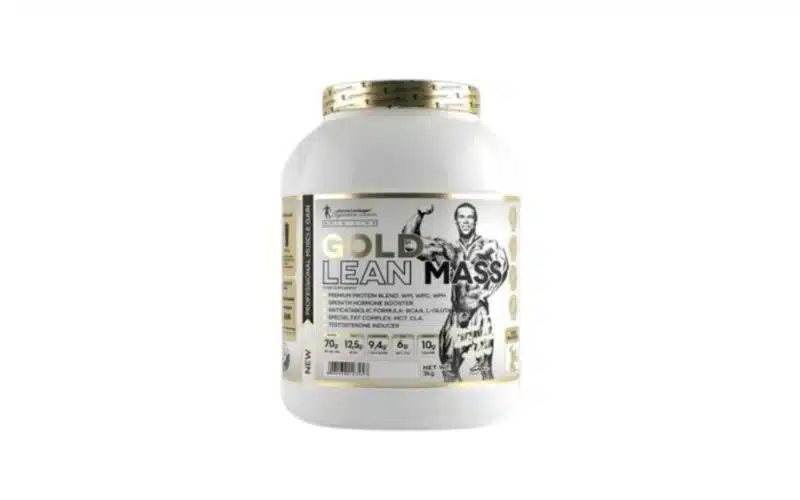
- Gold Lean Mass 3 kg, a lean formula for gaining with less fat
- Levrone Anabolic Mass 3 kg, a higher-calorie option for serious bulking
- Sanaxium Nutrition Anabolic Mass 3 kg, a mid-range 3 kg tub
Not sure how many scoops to take or when? Read our guide on how to use a mass gainer.
When to Choose Homemade Over Store-Bought
Go homemade if you:
- Want full ingredient transparency
- Are on a tight budget
- Prefer whole-food nutrition and can prepare a shake daily
Go store-bought if you:
- Need 800 or more calories in a single quick serving
- Travel, work long shifts or have no time to cook
- Want a verified macro count and added vitamins
Expert Guidance: Build the Hybrid Plan
Whole foods should form the base of any bulking diet, and a shake should fill the gap rather than replace meals. Sports nutrition guidelines generally agree that total daily calories and protein matter more than the source, so the best gainer is the one you will actually drink every day.
A practical hybrid plan looks like this:
- Weekdays and busy days: one store-bought serving after training or at work, mixed with milk for extra calories.
- Weekends and rest days: a homemade shake with oats, fruit and nuts alongside your normal meals.
- Weekly check: weigh yourself at the same time each week. Aim for about 0.25 to 0.5 kg gain per week. Faster than that usually means extra fat.
Sports nutritionists also point out that a shake alone will not build muscle without resistance training and enough sleep. If you are unsure whether you need a gainer at all, see does a mass gainer work without diet and exercise. For a head-to-head on skinny guys, read mass gainer vs homemade shakes for skinny guys, and compare brands in our best mass gainer in Pakistan ranked by price.
Safety note: if you have diabetes, kidney problems, lactose intolerance or any medical condition, speak to a doctor or dietitian before starting a high-calorie shake. This article is educational and not medical advice.
Frequently Asked Questions
Is a homemade mass gainer safe to drink every day?
Yes, for most healthy adults. A shake made with milk, oats, fruit, nuts and protein powder is just food. Keep portions sensible, vary ingredients and make sure it adds to, not replaces, your regular balanced meals.
Can store-bought mass gainers make you fat?
They can if you drink them on top of an already sufficient diet or train too little. Any shake that pushes you well above your calorie needs adds body fat. Choose lower-sugar formulas and track your weekly weight.
How many calories should a mass gainer have?
Aim for 500 to 800 calories per serving if you gain fat easily, and 1,000 or more if you are very lean and struggle to eat. Adjust servings so your total daily surplus stays around 300 to 500 calories.
Can I combine homemade and store-bought mass gainers?
Yes, and many lifters do. Use a ready-made scoop when you are busy or travelling, and a homemade blend when you have time. Just count both toward your daily calories so you do not overshoot.
Which is better for long-term results?
Neither wins on its own. Results depend on total calories, protein, training and consistency. Homemade is cheaper and whole-food based, while store-bought is more convenient and precise. Pick the one you can sustain for months.
Conclusion: Which Mass Gainer Should You Pick?
So, homemade vs store-bought mass gainer, which is better? Homemade wins on cost and ingredient control, store-bought wins on convenience, calorie density and consistency. If you are new to bulking, start with the homemade recipes above, then add a store-bought gainer on days when you cannot hit your calories.
Ready to shop? Explore our full range of weight gainer in pakistan choices, or visit Sports One International for authentic Imported Supplements in Pakistan, delivered nationwide with COD and PKR pricing.


About author

Related posts

For most healthy adults, collagen peptides are well tolerated. The side effects people actually report are mild: a feeling of fullness, bloating, an aftertaste or... Continue reading

The short answer: the best time to take collagen is whichever time you will repeat every single day. Research on hydrolysed collagen peptides has not... Continue reading
Neither is universally better. Marine collagen is often preferred for skin, hair and people who avoid beef, while bovine collagen is usually cheaper and offers... Continue reading

Collagen may help support joint comfort in some people, but the evidence is modest, results are slow, and it is not a substitute for medical... Continue reading
Most people notice their first change from collagen supplements after 4 to 8 weeks, with clearer skin and joint results building between 8 and 12... Continue reading
Add comment