
No products in the cart.
Return To Shop
Vegan Protein Powder in Pakistan: Does Plant Protein Build Muscle?
Yes. A well chosen vegan protein powder in Pakistan can support muscle growth about as well as whey, as long as you hit your daily protein target and take a slightly larger scoop. This guide is written for both strict vegans and the much larger group of vegetarians, dairy avoiders and people who simply prefer plant based nutrition. Most people in Pakistan who ask about plant protein are vegetarian or dairy sensitive rather than fully vegan, so every section below covers both.
If you are comparing options, start with the full range of protein powder in Pakistan and our selection of Imported Supplements in Pakistan, all sold with authorised distributor backing and COD delivery.
Why plant protein is treated as second best, and where that is wrong
The reputation comes from old research on single sources. Early studies compared rice or wheat protein with whey and found whey ahead, mostly because those proteins are low in lysine or leucine. Gym culture then turned “whey is the gold standard” into “plant protein does not work.”
Newer evidence tells a more balanced story. Trials comparing soy or pea protein with whey in people who lift weights have generally found similar gains in muscle thickness and strength when total protein intake is matched. Whey keeps a small edge in how strongly it switches on muscle protein synthesis per gram, but that edge shrinks or disappears when the plant serving is larger or comes from a blend. For a deeper side by side, see our guide on whey vs plant protein in Pakistan.
Amino acid profiles and the leucine question
Muscle protein is built from essential amino acids, and leucine acts as the main trigger. Research often points to roughly 2.5 to 3 g of leucine per meal as a useful target. Whey is rich in leucine, while most plant proteins contain a little less per gram of protein.
| Protein source | Approx. leucine per 100 g protein | Amino acid weak point |
| Whey | 10 to 11 g | None, complete |
| Soy | about 8 g | Slightly low methionine |
| Pea | about 8 g | Low methionine |
| Brown rice | about 8 g | Low lysine |
| Soy, pea and rice blend | about 8 g | Largely covered |
Figures are approximate and vary by brand, so check the amino acid panel on the label. The practical point is simple: a 25 g whey serving and a 30 to 35 g plant serving land in the same leucine range. Our explainer on how much leucine triggers muscle protein synthesis goes further.
Blends vs single source plant proteins
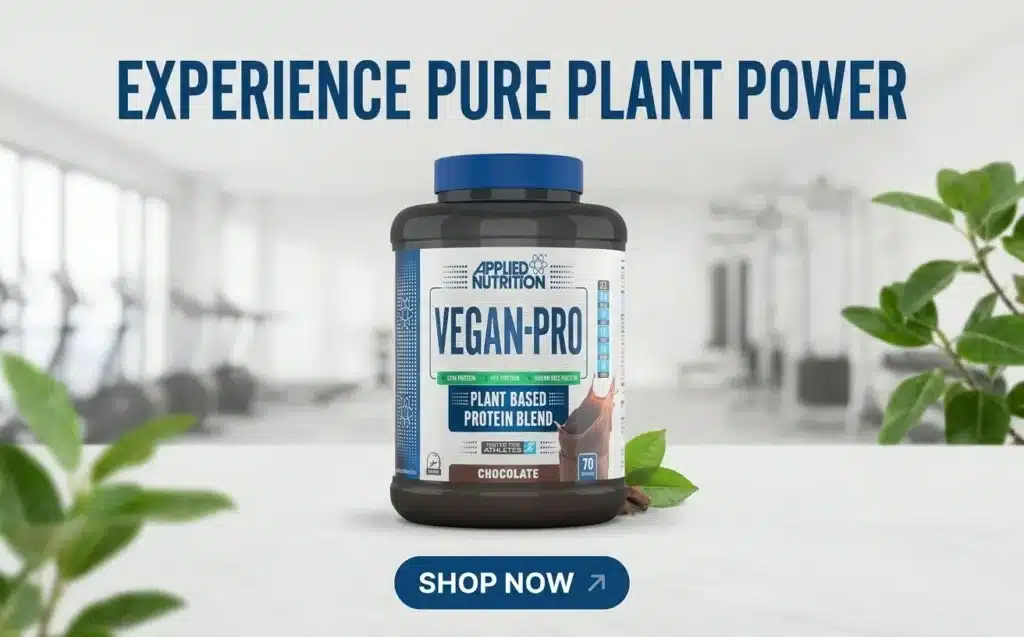
Single source powders are fine for specific goals, but blends are the safer choice for muscle. Pea is high in lysine and short on methionine, while rice is the reverse. Combine them and the profile balances out, and soy adds a complete protein with solid leucine. That is why products such as Vegan Pro and Critical Plant use soy, pea and brown rice together.
- Blends: better amino acid coverage, more consistent results, widely used by athletes.
- Pea only: good for soy allergy, slightly lower methionine.
- Rice only: hypoallergenic, but low in lysine, so less ideal alone.
- Soy only: complete and affordable, though some people prefer to avoid it.
You can also pair plant proteins through food. Our article on combining plant proteins for a complete amino acid profile shows how daal with roti or chana with rice fill the same gaps.
Digestibility, taste and texture, honestly assessed
Digestibility: plant proteins score a little lower than whey on standard digestibility measures because of fibre and natural compounds in the seed. In practice the difference is small for blends. Some people notice mild bloating when they first switch, which usually settles within a week or two. Starting with a half scoop helps.
Taste: expect a slightly earthy, nutty note that flavoured chocolate or vanilla hides well. It will not taste like a whey milkshake, and it is better to say that upfront than to oversell it.
Texture: plant powders are a touch thicker and can feel slightly grainy in plain water. Blending with milk alternatives, banana or oats gives a smoother result, and a shaker with a mixing ball reduces clumps.
Who it suits: vegetarians, dairy intolerance, religious preference
- Vegetarians: if you eat dairy and eggs, whey is also an option, but plant protein is useful when you want variety or avoid animal derived ingredients.
- Vegans: plant protein is the practical way to reach daily targets without dairy or eggs.
- Lactose or dairy intolerance: plant blends are free of lactose. If you tolerate dairy in some forms, see our guide on isolate protein for lactose intolerance.
- Religious or personal preference: many shoppers choose plant protein for fasting periods, household dietary rules or ingredient transparency. Always confirm Halal certification on the pack.
How much more you need to match whey
This is the section most buyers skip, and it is where plant protein either works or disappoints. The aim is not to chase a magic ratio but to meet two targets: a daily protein total and a leucine dose at each main meal.
Daily total: most lifters do well on about 1.6 to 2.0 g of protein per kg of body weight. For a 70 kg person that is roughly 110 to 140 g per day, counting food and powder together. If most of your protein comes from plant sources, aim for the upper half of that range.
Per serving: a typical whey scoop gives about 24 to 25 g of protein and around 2.5 g of leucine. A plant blend scoop with 24 to 25 g of protein provides a little less leucine, so many people take about one third more, around 30 to 35 g of protein. In practice that can mean one full scoop plus a small extra half scoop, or one scoop with a handful of soaked nuts, a glass of milk or a bowl of daal on the side.
Timing: the exact hour matters less than spreading protein across three or four meals. A shake within a couple of hours of training is a convenient habit, not a requirement.
Safety: healthy adults generally tolerate these intakes well, but people with kidney disease, pregnancy, allergies to soy or other legumes, or a medical condition should speak to a doctor or dietitian before using protein powders. Teenagers should rely on food first. Check the allergen statement, since soy and legumes are common in plant blends. Supplements support a balanced diet and do not replace one.
What we stock
SportsOne International carries imported plant proteins from Applied Nutrition. Current PKR pricing and flavour availability are shown on each product page, and you can browse more options in our protein category.
| Product | Size | Servings | Protein base | Best for |
| Applied Nutrition Vegan Pro | 2.1 kg | About 70 | Soy, pea and brown rice blend | Daily users and best value per serving |
| Applied Nutrition Vegan Pro | 450 g | About 15 | Soy, pea and brown rice blend | Trying plant protein for the first time |
| Critical Plant Protein | 450 g | About 15 | Plant protein blend | Dairy free starter option |
Serving counts and protein per scoop depend on the batch and flavour, so confirm them on the pack. If you are still deciding between plant and dairy protein, compare against our whey protein in Pakistan range, or read whey vs soy protein in Pakistan.
FAQs
Is vegan protein powder good for building muscle?
Yes, when daily protein is high enough and you train with progressive overload. Studies comparing soy or pea protein with whey show similar muscle and strength gains. Blends of pea, rice and soy cover each source’s amino acid gaps.
How is plant protein different from whey?
Whey is a complete, fast digesting dairy protein with more leucine per gram. Plant proteins carry slightly less leucine and digest a little slower, so a larger serving closes the gap. Plant blends are also lactose free and dairy free.
Which vegan protein powder is best for muscle in Pakistan?
Choose a soy, pea and brown rice blend with about 24 to 25 g protein per scoop, such as Applied Nutrition Vegan Pro or Critical Plant Protein. Blends give a fuller amino acid profile than rice or pea alone.
Can vegetarians in Pakistan use whey instead of vegan protein?
Most lacto vegetarians who eat dairy can use whey, since it is a milk protein. Plant protein suits lactose intolerance, dairy sensitivity, religious or personal preference, or households wanting one shared powder that suits every family member.
How much plant protein do I need compared with whey?
Aim for roughly one third more powder than a whey serving, about 30 to 35 g of protein instead of 25 g. That brings leucine near the 2.5 to 3 g per meal often linked with muscle protein synthesis.
About author

Related posts
Women do not need a separate “pink” version of every supplement. Protein, creatine and most vitamins work the same way in both sexes. What genuinely... Continue reading

You do not need a gym membership to get stronger. This home workout plan for Pakistan uses only your bodyweight, a chair, a wall and... Continue reading

Clear whey looks like juice, drinks like juice and still delivers whey isolate protein. Regular whey looks and tastes like a milkshake. If you are... Continue reading

Search for drap registered supplements pakistan and you will find a lot of confident claims and very little explanation. Sellers say “DRAP approved” on banners,... Continue reading

Ramadan does not stop your training, but it squeezes everything into two short windows. Most gym members guess their way through the month: protein at... Continue reading
Add comment