
No products in the cart.
Return To Shop
Whey Protein Side Effects: Bloating, Acne & Stomach Issues Explained
If you’ve ever felt bloated, broken out, or gassy after your post-workout shake, you’re not alone. Whey protein side effects like bloating, acne, and stomach discomfort are common complaints but they’re rarely caused by whey protein itself. In most cases, the real culprit is the type of protein you’re using, how much lactose it contains, or how it’s being dosed. This guide breaks down exactly why these side effects happen, who’s most at risk, and how switching to a cleaner isolate can fix the problem for good.
Why Does Whey Protein Cause Side Effects?
Whey protein comes from milk, and most side effects trace back to three things: leftover lactose, low-quality fillers, and taking more than your body can digest in one sitting. Standard whey concentrate keeps a good amount of lactose and fat intact, which is fine for some people but rough on others. If you want to understand exactly what’s in a typical scoop before troubleshooting symptoms, this breakdown of whey protein concentrate is a good starting point.
Whey Protein Bloating: What’s Really Happening
Whey protein bloating almost always comes down to lactose intolerance or an oversized dose. Whey concentrate can contain anywhere from 4–8g of lactose per serving, which is enough to trigger gas and bloating in anyone who’s even mildly lactose-sensitive. You can see exactly how much lactose is in whey protein isolate versus concentrate to understand why isolate is the gentler option. For people whose stomachs are sensitive to dairy in general, hydrolyzed whey protein is pre-broken-down and digests even faster, cutting bloating almost entirely. If you already know you’re lactose intolerant, this guide on isolate protein for lactose-intolerant individuals walks through what to look for on a label.

Does Whey Protein Cause Acne?
This is one of the most searched questions about whey protein, and the honest answer is: sometimes, indirectly. Whey can spike insulin-like growth factor-1 (IGF-1), which in acne-prone individuals may increase oil production and breakouts. It’s not universal genetics and existing skin type plays a big role but if you’ve noticed new breakouts since starting a shake, it’s worth paying attention. We’ve covered this in detail in best whey isolate protein for clear skin and acne prevention, including which formulas tend to be less reactive. On the flip side, protein itself supports collagen and skin repair when it isn’t triggering a hormonal response see benefits of whey protein for skin for the fuller picture.
Whey Protein and Stomach Issues (Gas, Cramps, Nausea)
Beyond bloating, some users report cramping, nausea, or general stomach upset. This is usually one of two things: mixing a large dose too quickly on an empty stomach, or using a concentrate with added gums, fillers, or artificial sweeteners that don’t agree with your gut. Comparing formulas side by side helps here our guide to whey protein concentrate vs isolate vs hydrolyzed explains which form is easiest on digestion. It’s also worth checking whether you’re making one of the usual dosing errors covered in common mistakes using whey protein, since overloading a single shake is one of the most frequent (and easiest to fix) causes of stomach discomfort.
Who Should Be Extra Careful With Whey Protein?
Side effects tend to show up more in certain groups. If any of these apply to you, it’s worth reading the specific guide before continuing your current routine:
- Diabetics whey can affect blood sugar response; see is whey protein safe for diabetic patients.
- Women dosing and hormonal considerations differ; see whey protein safe for women.
- Teenagers growing bodies need adjusted amounts; see whey protein safe for teenagers.
- Beginners starting with too much too soon is common; see how much protein per day for a beginner.
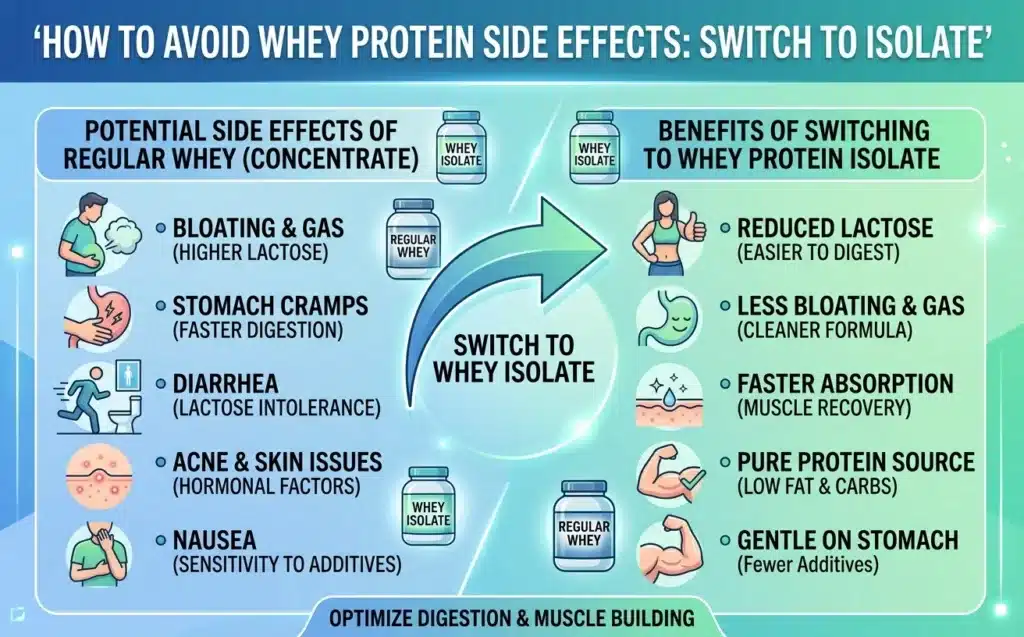
How to Avoid Whey Protein Side Effects: Switch to Isolate
The single most effective fix for bloating, acne flare-ups, and stomach issues is switching from a standard concentrate to a high-purity whey isolate. Isolate strips out almost all the lactose and fat during processing, leaving a cleaner, faster-digesting protein that’s far less likely to upset your stomach or skin. At SportsOne, our isolate options are Halal certified and processed to 90%+ purity, so you get the muscle-building benefits without the digestive baggage of lower-grade whey. You can compare the two directly in our whey isolate vs regular whey breakdown, or check current isolate protein pricing in Pakistan before you switch.
If you’re ready to make the change, browse genuine, imported isolate options like ProScience Nutra Isolate, Rule 1 Whey Isolate, and Isotope 100% Whey Isolate all backed by our Halal-certified, authorized distribution guarantee. You can also explore the full range in our protein shop.
Common Mistakes That Make Side Effects Worse
Even a good protein powder can cause problems if it’s used incorrectly. The most frequent issues we see are mixing shakes too thick, taking protein on a completely empty stomach, and doubling servings to “catch up” on missed days. Our full list of common mistakes when using whey protein covers practical fixes for each of these, and pairs well with a proper beginner’s guide to whey protein if you’re just getting started.
Frequently Asked Questions
Does whey protein cause bloating?
Yes, but usually only whey concentrate, which retains lactose. If you’re lactose-sensitive, bloating is common. Switching to a lactose-stripped isolate or hydrolyzed whey almost always resolves the issue within a few days of consistent use.
Does whey protein cause acne?
It can, in people prone to hormonal breakouts, because whey may raise IGF-1 levels. It’s not guaranteed for everyone. If you notice new acne after starting whey, try a purer isolate and monitor your skin over two to three weeks.
Is whey protein isolate better for stomach issues?
Yes. Isolate removes most of the lactose and fat that cause gas, cramping, and nausea in sensitive individuals. It digests faster and is generally the safer choice for anyone with a history of dairy-related stomach discomfort.
How long do whey protein side effects last?
Mild bloating or gas usually fades within a few days as your gut adjusts, especially if you lower your dose. Persistent symptoms after a week suggest lactose intolerance, meaning a switch to isolate is worth trying.
Is Halal-certified whey protein safer?
Halal certification confirms sourcing and processing standards but doesn’t change digestibility on its own. However, Halal-certified isolate options from trusted, authorized distributors like SportsOne are typically higher-purity, which does reduce side effects.
Bottom line: most whey protein side effects bloating, acne, and stomach issues come down to lactose content and dosage, not the protein itself. If your current shake is causing problems, a 90%+ pure, Halal-certified isolate is the easiest upgrade you can make.


About author

Related posts

For most healthy adults, collagen peptides are well tolerated. The side effects people actually report are mild: a feeling of fullness, bloating, an aftertaste or... Continue reading

The short answer: the best time to take collagen is whichever time you will repeat every single day. Research on hydrolysed collagen peptides has not... Continue reading
Neither is universally better. Marine collagen is often preferred for skin, hair and people who avoid beef, while bovine collagen is usually cheaper and offers... Continue reading
Collagen may help support joint comfort in some people, but the evidence is modest, results are slow, and it is not a substitute for medical... Continue reading
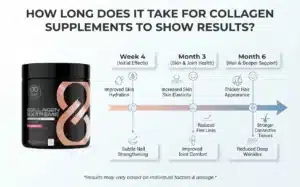
Most people notice their first change from collagen supplements after 4 to 8 weeks, with clearer skin and joint results building between 8 and 12... Continue reading
Add comment