
No products in the cart.
Return To Shop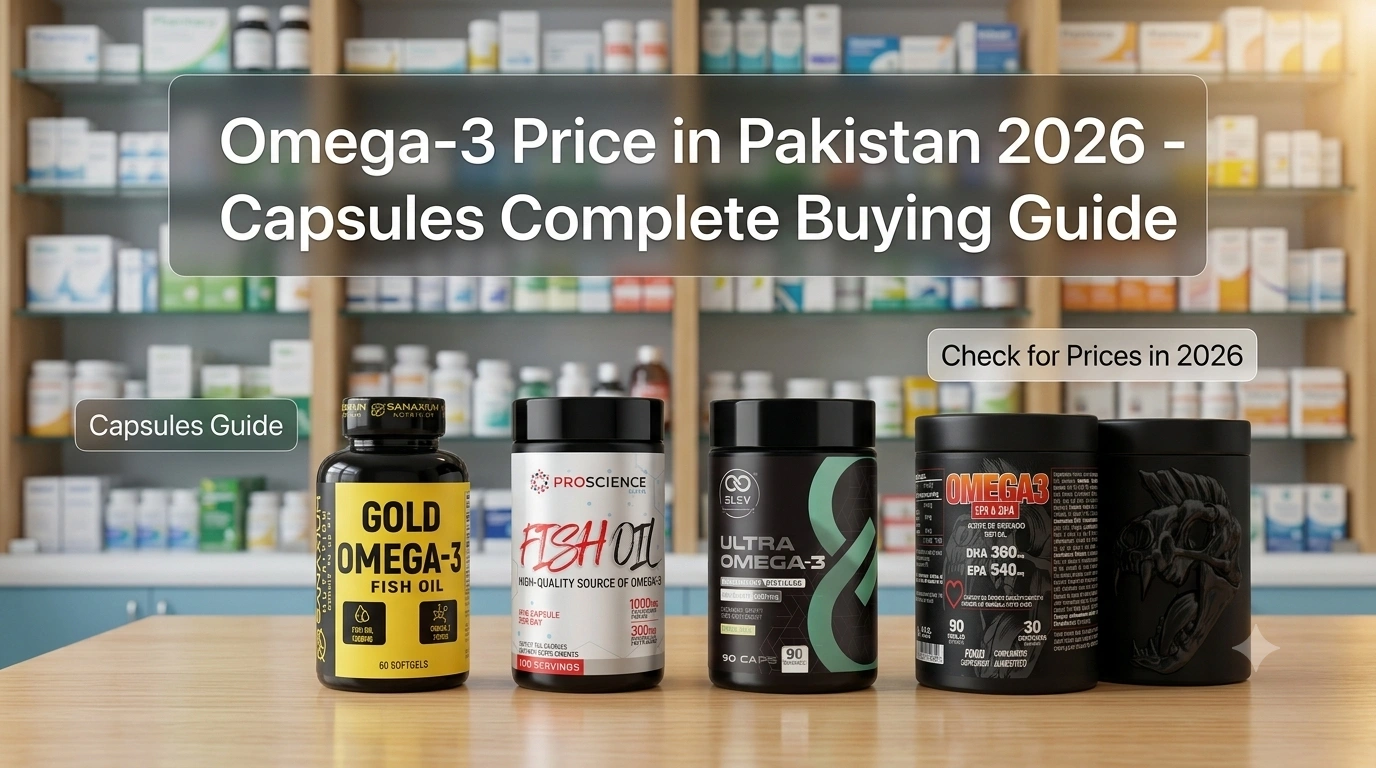
Omega-3 Price in Pakistan 2026 – Imported vs Local Capsules Complete Buying Guide
Last Updated: July 2026
Omega-3 capsules have become one of the most commonly used supplements in Pakistan for heart health, joint support, brain function, and overall wellness. But with a growing mix of imported and local options at very different price points, many consumers struggle to decide which product offers genuine value versus cheap filler. This guide cuts through marketing claims with updated July 2026 pricing, a full EPA/DHA comparison table, certification guidance, halal status information, and clear recommendations for every type of Pakistani buyer.
Why Omega-3 Supplements Matter – The Science in Pakistan’s Context
Omega-3 fatty acids – specifically EPA (eicosapentaenoic acid) and DHA (docosahexaenoic acid) – are polyunsaturated fats that the human body cannot synthesise efficiently on its own. They must come from diet or supplementation. Pakistani diets are generally low in oily fish like salmon, mackerel, and sardines, which are the richest dietary sources of EPA and DHA. Most Pakistani households consume significantly less omega-3 than the minimum recommended daily intake.
This dietary gap makes omega-3 supplementation particularly relevant for Pakistani adults. Clinical research consistently supports omega-3’s role in cardiovascular health (reducing triglyceride levels), joint comfort and inflammation reduction, brain and cognitive function, eye health (DHA is concentrated in the retina), and skin health and hydration. For athletes and gym-goers, omega-3 also reduces exercise-induced inflammation and supports recovery alongside a whey protein and creatine based supplement stack.

Understanding EPA, DHA, and Why They Are Not the Same as “Fish Oil”
One of the most important things Pakistani buyers miss is the difference between “fish oil” content and actual omega-3 content. A capsule labelled “1000 mg fish oil” does not mean 1000 mg of EPA and DHA. Fish oil is the raw material; EPA and DHA are the active omega-3 compounds within it. A 1000 mg fish oil softgel might contain only 180 mg EPA and 120 mg DHA – just 300 mg of active omega-3, leaving 700 mg as other fats.
Always read labels for the combined EPA plus DHA figure, not just total fish oil weight. This single distinction separates effective omega-3 supplements from ineffective ones regardless of price or brand origin.
| Label Term | What It Means | What to Look For |
|---|---|---|
| Fish Oil (mg) | Total weight of fish oil per capsule including all fatty acids | Not useful on its own – always look beyond this |
| EPA (mg) | Eicosapentaenoic acid – primary anti-inflammatory omega-3 | Minimum 200mg per serving for meaningful benefit |
| DHA (mg) | Docosahexaenoic acid – critical for brain and eye health | Minimum 150mg per serving for meaningful benefit |
| Total EPA + DHA (mg) | The actual active omega-3 content per serving | Target: 500-1000mg combined EPA + DHA daily |
| Omega-3 Index | Percentage of EPA + DHA in red blood cell membranes – measure of your body’s omega-3 status | Optimal is 8% or above. Most Pakistanis are below 4%. |
Triglyceride Form vs Ethyl Ester – Which Is Better?
Omega-3 supplements come in two main molecular forms, and this distinction significantly affects absorption and cost.
| Form | Absorption | Stability | Price | Common In |
|---|---|---|---|---|
| Triglyceride (TG) Form | Superior – 70% better than ethyl ester | More stable against oxidation | Higher | Premium imported brands, re-esterified products |
| Ethyl Ester (EE) Form | Standard – requires dietary fat for absorption | More prone to oxidation | Lower | Most budget and mid-range fish oil capsules |
For Pakistani buyers taking omega-3 with meals (as recommended), ethyl ester form is adequate and cost-effective. Triglyceride form is superior for those who sometimes take supplements without food, or for users with fat malabsorption issues.
Quality Certifications – What IFOS, GOED, and Molecular Distillation Mean
Quality certifications are the most reliable way to verify an omega-3 supplement’s purity beyond what the label claims.
- IFOS (International Fish Oil Standards): The most recognised independent testing programme for fish oil. IFOS-certified products are tested for EPA/DHA content accuracy, heavy metals (mercury, lead, arsenic, cadmium), PCBs, dioxins, and oxidation levels. A 5-star IFOS rating is the gold standard for omega-3 purity.
- GOED (Global Organization for EPA and DHA Omega-3): An industry body whose members commit to voluntary quality standards including oxidation limits and contaminant thresholds. GOED membership indicates a minimum quality commitment.
- Molecular distillation: A purification process that removes heavy metals, PCBs, and other contaminants from fish oil at the manufacturing stage. All quality imported omega-3 supplements use molecular distillation – its absence in local products is a concern.
- Third-party testing: Any independent lab verification of label claims and contaminant levels, even without IFOS or GOED specifically. Always preferred over self-certification.
Fish Source – Wild-Caught, Anchovies, Sardines, and Why It Matters
The fish species used as the source for omega-3 oil significantly affects both purity and sustainability.
- Small wild-caught fish (anchovies, sardines, mackerel): The preferred source for quality omega-3 supplements. Small fish have shorter lifespans and occupy lower trophic levels in the food chain, meaning they accumulate far less mercury, lead, and other heavy metals than large predatory fish like tuna or swordfish.
- Wild-caught vs farmed: Wild-caught fish have naturally higher omega-3 content because their diet consists of marine algae and smaller omega-3-rich organisms. Farmed fish omega-3 content varies with their feed and may be lower.
- Krill oil: An alternative omega-3 source from Antarctic krill (small crustaceans). Krill oil omega-3 is in phospholipid form which may absorb more efficiently than standard fish oil, though at significantly higher cost. Not widely available in Pakistan.
- Algae omega-3: The plant-based omega-3 source appropriate for vegetarians and vegans. Algae is actually where fish get their omega-3 from originally. Available in Pakistan in limited form through specialist health stores.

Omega-3 Price in Pakistan – July 2026 Pricing Table
Here is the current verified pricing landscape for omega-3 supplements available in Pakistan as of July 2026. The Omega-3 price in Pakistan varies significantly based on EPA/DHA concentration, certification level, and brand origin.
| Product | Type | Capsules | EPA per Serving | DHA per Serving | Price (PKR) July 2026 | Cost Per Day | Certification |
|---|---|---|---|---|---|---|---|
| ELEV Ultra Omega-3 90 Capsules | Imported fish oil softgels | 90 | Check label | Check label | PKR 3,200 – 3,800 | ~PKR 106 – 127 | Third-party tested |
| Zoomadlabs Omega-3 90 Tablets | Imported softgels | 90 | Check label | Check label | PKR 2,800 – 3,500 | ~PKR 93 – 117 | Third-party tested |
| Premium imported brands (IFOS certified, 1000mg EPA+DHA) | High-potency triglyceride form | 60 – 90 | 600mg+ | 400mg+ | PKR 6,000 – 12,000 | ~PKR 133 – 200 | IFOS 5-star, GOED |
| Mid-range imported (ethyl ester, 500mg EPA+DHA) | Standard fish oil | 60 – 90 | 300mg | 200mg | PKR 3,000 – 6,000 | ~PKR 67 – 100 | Varies |
| Local pharmacy brands (typical 1000mg fish oil) | Basic fish oil capsule | 30 – 60 | ~180mg | ~120mg | PKR 800 – 2,000 | ~PKR 27 – 67 | Typically none |
All imported product prices are from SportsOne International authorised listings, July 2026. Local pharmacy prices are market estimates subject to significant variation. Always confirm combined EPA + DHA per serving, not just fish oil weight, when comparing prices.
Shop ELEV Ultra Omega-3 and check current Omega-3 price in Pakistan at SportsOne
Imported vs Local Omega-3 Capsules – Full Comparison
| Factor | Premium Imported Omega-3 | Mid-Range Imported Omega-3 | Local Pharmacy Omega-3 |
|---|---|---|---|
| EPA + DHA per capsule | 500 – 1000mg+ | 300 – 500mg | 180 – 300mg (often lower than labelled) |
| Fish source disclosed | Yes – anchovies, sardines, wild-caught | Usually yes | Often not disclosed |
| Molecular distillation | Yes | Usually yes | Rarely confirmed |
| Heavy metal testing | Yes – third-party verified | Varies | Typically absent |
| IFOS or GOED certification | Often yes | Sometimes | No |
| Halal certification | Check product (gelatin source matters) | Check product | Often uses porcine gelatin – check carefully |
| Oxidation freshness | Low TOTOX score, minimal fishy burp | Moderate | Variable – fishy taste often indicates oxidation |
| Molecular form | Triglyceride (re-esterified) or ethyl ester | Usually ethyl ester | Ethyl ester or unspecified |
| Price per capsule (PKR) | PKR 100 – 200 | PKR 50 – 100 | PKR 20 – 50 |
| Cost per 500mg EPA+DHA | PKR 100 – 150 | PKR 100 – 200 | PKR 150 – 300+ (due to lower concentration) |
| Best for | Cardiovascular health, athletes, higher EPA/DHA needs | General wellness, daily maintenance | Very low budget, maintenance only |
The key insight in the cost-per-effective-dose column: local omega-3 capsules appear cheaper per capsule but often cost more per 500mg of actual EPA+DHA because the concentration per capsule is so much lower. A product that costs PKR 20 per capsule at 180mg EPA+DHA costs PKR 111 per 500mg of active omega-3. A product that costs PKR 120 per capsule at 700mg EPA+DHA costs only PKR 86 per 500mg of active omega-3.
Halal Omega-3 Supplements in Pakistan – What to Check
For Pakistani Muslim consumers, halal status of omega-3 capsules requires checking two things: the fish source itself (fish is permissible), and the capsule shell material. Conventional softgels use gelatin derived from either bovine (cattle) or porcine (pig) sources. Porcine gelatin makes the product non-halal regardless of the fish oil inside.
- Halal-certified bovine gelatin capsules: Available in quality imported brands. Look for explicit halal certification on the packaging, not just an assumption that fish products are automatically halal.
- Fish gelatin or vegetarian capsules: An alternative used in some specialty products. Appropriate for halal compliance and for users who prefer avoiding mammalian products entirely.
- Local pharmacy omega-3: Many local products do not disclose their gelatin source clearly. This is a meaningful concern for Pakistani Muslim buyers and an area where imported brands distributed through authorised channels like SportsOne International have a transparency advantage.
Recommended Daily Dosage – EPA and DHA for Different Pakistani Health Goals
| Health Goal | Recommended Daily EPA + DHA | Notes |
|---|---|---|
| General health maintenance | 250 – 500mg | Minimum effective dose for general wellness |
| Cardiovascular health and cholesterol support | 1,000mg (1g) | Most cardiac benefit research uses 1g EPA+DHA daily |
| Triglyceride reduction | 2,000 – 4,000mg | Only under medical supervision at these doses |
| Joint health and inflammation | 1,000 – 2,000mg | Anti-inflammatory effects more pronounced at higher doses |
| Brain health and cognitive support | 500 – 1,000mg (DHA-focused) | DHA is the primary omega-3 for brain function |
| Athletic recovery | 1,000 – 2,000mg | Reduces exercise-induced inflammation and muscle soreness |
| Children (5-12 years) | 250mg DHA minimum | Always use age-appropriate products and consult a paediatrician |
How to Choose Omega-3 Capsules in Pakistan – Practical Checklist
- Focus on combined EPA + DHA, not total fish oil mg. A product listing “1000mg omega-3” must specify how much of that is EPA and DHA to be meaningful.
- Check for third-party testing. IFOS certification or an independent lab certificate is the best verification of label accuracy and heavy metal safety.
- Verify the gelatin source for halal compliance. Ask the distributor for documentation if the label is not clear.
- Look for low oxidation indicators. A minimal or no fishy aftertaste is a reliable sign of freshness. Strong fishy burps indicate oxidised (rancid) oil that has degraded in quality.
- Disclose the fish species. Products sourced from anchovies or sardines are lower in heavy metal risk than unspecified sources.
- Store correctly. In Pakistan’s heat, keep omega-3 capsules in a cool, dry place away from direct sunlight. Refrigeration is appropriate for opened bottles in summer months. Never store near a stove or in a car.
- Take with food. Omega-3 absorption is significantly improved when taken alongside a meal containing fat, particularly for ethyl ester form products.

Quality Indicators Most Pakistani Buyers Ignore
Many consumers assume all omega-3 capsules work the same, which is not accurate. Here are the most commonly overlooked quality factors:
- TOTOX score: A measure of oxidation in fish oil (Total Oxidation Value). Lower is better. Products with a TOTOX above 26 are considered oxidised and less beneficial. Quality imported products publish or can provide their TOTOX scores; local products almost never can.
- Omega-3 Index testing: Your personal omega-3 status can be measured through a blood test looking at the percentage of EPA + DHA in your red blood cell membranes. Most Pakistanis test below 4%, while an optimal level is 8% or above. Supplementation at adequate doses raises this over 3-6 months.
- PCB and dioxin testing: Persistent environmental pollutants that concentrate in fish oil if not properly purified through molecular distillation. Quality IFOS-certified products test below safe thresholds.
- Re-esterified triglyceride (rTG) form: The highest-quality omega-3 processing that converts ethyl ester back to a natural triglyceride form for superior absorption. More expensive but meaningfully better bioavailability than standard ethyl ester products.
Benefits of Omega-3 Capsules – Clinical Evidence for Pakistani Users
- Cardiovascular health: The most well-documented omega-3 benefit. EPA and DHA reduce blood triglyceride levels by 20-30% at 1g+ daily doses. High triglycerides are a significant cardiovascular risk factor particularly common in Pakistani adults consuming high-fat, high-carbohydrate diets.
- Joint comfort and inflammation: EPA is the primary anti-inflammatory omega-3. Consistent supplementation at 1-2g EPA+DHA daily reduces inflammatory markers and joint pain in clinical studies. Relevant for Pakistani adults with early arthritis or athletes experiencing chronic exercise-induced inflammation.
- Brain and cognitive function: DHA constitutes approximately 40% of the polyunsaturated fatty acids in the brain and 60% in the retina. Adequate DHA intake is associated with better memory, focus, and reduced cognitive decline risk. Particularly relevant for students and working professionals in Pakistan’s high-stress urban environments.
- Eye health: DHA is the most abundant fatty acid in the retina. Regular omega-3 supplementation is associated with reduced risk of age-related macular degeneration, particularly relevant in Pakistan where screen time has risen sharply since 2020.
- Skin health: Omega-3 supports skin barrier function, reduces inflammatory skin conditions like acne and psoriasis, and improves skin hydration – a practical benefit for Pakistani users dealing with sun exposure and environmental pollution effects.
Side Effects and Safety Considerations
Omega-3 capsules are generally safe for daily use at recommended doses for healthy adults. Potential side effects include:
- Mild digestive discomfort or fishy burps, particularly with lower-quality oxidised products. Taking capsules with food largely eliminates this.
- Blood-thinning effect at high doses (above 3g EPA+DHA daily). Individuals on warfarin, aspirin, or other anticoagulant medications must consult a physician before supplementing.
- Mild blood sugar effects at very high doses in people with type 2 diabetes. Standard doses (1-2g EPA+DHA) do not significantly affect blood sugar in most studies.
- Allergic reactions in individuals with severe fish or shellfish allergies. Algae-based omega-3 is the appropriate alternative for these users.
Who Should Choose Imported Omega-3 in Pakistan?
- Athletes and active individuals who need anti-inflammatory omega-3 support alongside training recovery
- Anyone targeting specific health outcomes such as cardiovascular health, joint support, or cognitive performance at clinically effective doses
- Users who want third-party testing verification and heavy metal safety documentation
- People requiring fewer capsules per day – high-potency imported products deliver therapeutic doses in 1-2 capsules versus 4-6 local capsules
- Pakistani Muslims who need verified halal-certified gelatin documentation
Who Can Use Local Omega-3 Capsules?
- Very budget-constrained users who cannot access imported products, provided they verify EPA+DHA content carefully and accept the certification limitations
- Users seeking minimal maintenance-level supplementation (250mg EPA+DHA daily) where the concentration difference is less critical
- Short-term supplementation while transitioning to a higher-quality product
Note: The apparent cost saving of local omega-3 capsules frequently disappears when you calculate the actual cost per 500mg EPA+DHA and factor in the absence of heavy metal testing. See the cost-per-dose column in the comparison table above.
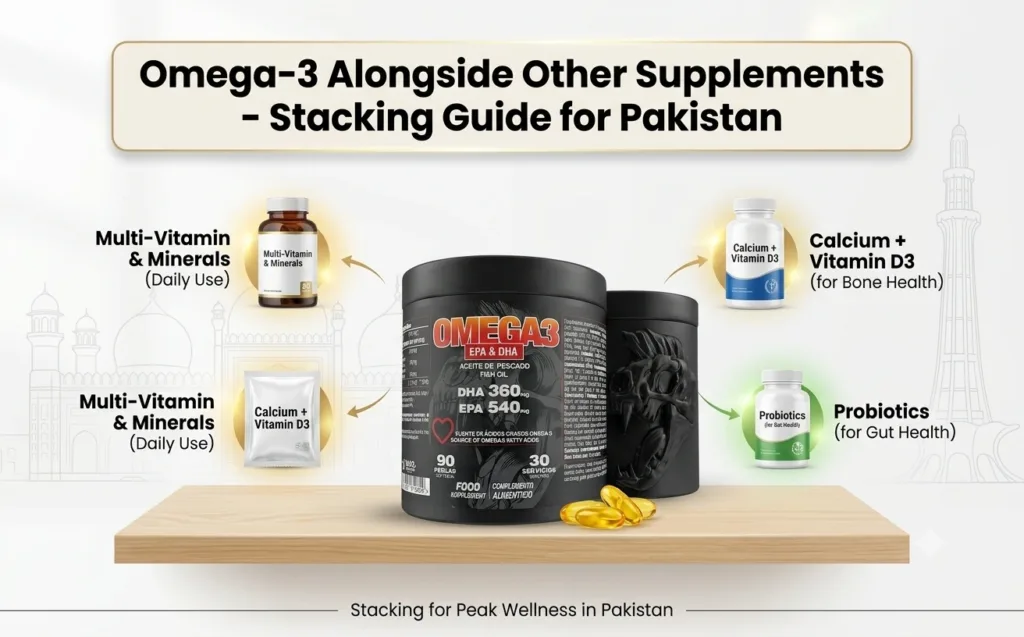
Omega-3 Alongside Other Supplements – Stacking Guide for Pakistan
Omega-3 works well alongside several other supplements commonly used by Pakistani athletes and health-conscious adults:
- Omega-3 + Multivitamin: The most practical general health combination. Omega-3 provides the EPA/DHA that most multivitamins do not include. Together they cover most common nutritional gaps in a Pakistani diet. See the vitamins and minerals range.
- Omega-3 + Whey Protein: Omega-3 reduces exercise-induced inflammation that impairs recovery. Combined with whey protein for muscle repair, they form the most evidence-backed two-supplement approach for active Pakistani adults.
- Omega-3 + Vitamin D: Both nutrients are commonly deficient in Pakistani adults. Vitamin D deficiency is widespread due to sun avoidance in urban areas. They work complementarily for immune function and bone health.
- Omega-3 + Creatine: For strength athletes, combining creatine with omega-3 provides complementary benefits – creatine for power output and lean mass, omega-3 for anti-inflammatory recovery support. No interaction concerns between the two.
- Omega-3 + Collagen: For joint health specifically, omega-3 (anti-inflammatory) and collagen (structural joint protein) provide complementary support. A common combination for Pakistani adults over 35 or anyone with joint concerns.
Where to Buy Authentic Omega-3 in Pakistan
Counterfeit and substandard omega-3 products are common in Pakistan’s open pharmacy and marketplace channels. When purchasing omega-3 supplements, always verify:
- Seller is an authorised distributor with documented import records
- Product carries a batch number and expiry date clearly printed on the label
- Gelatin source is disclosed on the label or available from the seller on request
- EPA and DHA amounts are explicitly listed on the label, not just total fish oil
SportsOne International is Pakistan’s authorised distributor for imported omega-3 and other health supplements, offering nationwide cash on delivery and Halal-certified products with full import documentation.
Frequently Asked Questions
What is the Omega-3 price in Pakistan in July 2026?
The Omega-3 price in Pakistan ranges from PKR 800-2,000 for basic local pharmacy products (90 capsules) to PKR 2,800-3,800 for quality imported options like ELEV Ultra Omega-3 and Zoomadlabs Omega-3, and PKR 6,000-12,000 for premium IFOS-certified high-potency imported products. When comparing prices, always use cost per 500mg of EPA+DHA rather than cost per capsule, as the active content varies enormously.
Is imported omega-3 better than local in Pakistan?
In most cases, yes. Imported omega-3 capsules typically provide higher EPA+DHA concentration per capsule, molecular distillation purification to remove heavy metals, third-party testing through IFOS or similar programmes, and clearer disclosure of fish source and gelatin type. Local products may appear cheaper per capsule but often cost more per effective dose once you calculate the actual EPA+DHA content.
What is the daily dose of omega-3 for heart health in Pakistan?
For general cardiovascular support, 1,000mg (1g) of combined EPA+DHA daily is the most clinically supported dose. This typically requires 2-3 local pharmacy capsules (at 300mg EPA+DHA each) or 1-2 quality imported capsules (at 500-700mg EPA+DHA each). Never use “1000mg fish oil” as the dose measure – always read the EPA+DHA values.
Are omega-3 capsules halal in Pakistan?
Fish oil itself is halal. The concern is the capsule shell, which may be made from porcine (pig) gelatin. Products using bovine halal-certified gelatin or fish gelatin are appropriate for Muslim consumers. Always check packaging for explicit halal gelatin certification, and request documentation from your distributor if it is not on the label. Authorised products from SportsOne International include halal-certified options.
Are cheap omega-3 capsules effective?
They can be, if they contain sufficient EPA+DHA and are not oxidised. Price alone does not define quality. A cheap product with 180mg EPA+DHA per capsule requiring 5 capsules per day to reach 1g is neither economical nor convenient. A product at moderate price with 700mg EPA+DHA per capsule achieving the same dose in one or two capsules offers better value and lower oxidation exposure.
How long does omega-3 take to work?
Initial anti-inflammatory and joint comfort improvements typically appear within 3-6 weeks of consistent daily use. Cardiovascular benefits including triglyceride reduction are generally measurable after 6-8 weeks. Brain health and cognitive improvements from DHA tend to require 3-6 months of consistent supplementation. Omega-3 Index (blood omega-3 status) takes 3-4 months to reach a new stable level.
Can I take omega-3 with multivitamins?
Yes. Omega-3 and multivitamin supplements complement each other well. Most multivitamins do not include meaningful amounts of EPA and DHA, so omega-3 fills that specific gap. Take them together with food for best absorption of both fat-soluble vitamins and omega-3 fatty acids.
Can omega-3 be taken long-term?
Yes. Omega-3 is safe for long-term daily use within recommended doses (up to 3g EPA+DHA daily for healthy adults). Choose quality products with heavy metal testing verification, and consult a physician if you are on blood-thinning medication, as omega-3 has mild anticoagulant effects at higher doses.
Conclusion
The Omega-3 price in Pakistan in July 2026 spans a wide range, and the gap between cheap and quality products is real and measurable – in EPA+DHA content, heavy metal testing, oxidation freshness, halal certification, and molecular form. For most Pakistani adults, an imported omega-3 product providing 500-1000mg of combined EPA+DHA daily from anchovies or sardines, with third-party heavy metal testing and clear halal gelatin documentation, represents the most responsible and cost-effective choice when calculated on a per-dose rather than per-capsule basis.
Explore authentic, Halal-certified omega-3 supplements including ELEV Ultra Omega-3 and Zoomadlabs at SportsOne International – Pakistan’s authorised distributor for imported health and sports nutrition supplements, with nationwide delivery and full product verification support.

About author

Related posts

For most healthy adults, collagen peptides are well tolerated. The side effects people actually report are mild: a feeling of fullness, bloating, an aftertaste or... Continue reading

The short answer: the best time to take collagen is whichever time you will repeat every single day. Research on hydrolysed collagen peptides has not... Continue reading
Neither is universally better. Marine collagen is often preferred for skin, hair and people who avoid beef, while bovine collagen is usually cheaper and offers... Continue reading

Collagen may help support joint comfort in some people, but the evidence is modest, results are slow, and it is not a substitute for medical... Continue reading
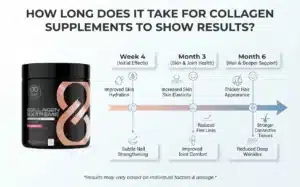
Most people notice their first change from collagen supplements after 4 to 8 weeks, with clearer skin and joint results building between 8 and 12... Continue reading
Add comment